Echoes of the Past: Open Studio Harmonises Heritage and Play in Singapore's New Bahru Hall Transformation
A Resonant Transformation: New Bahru Hall by Open Studio
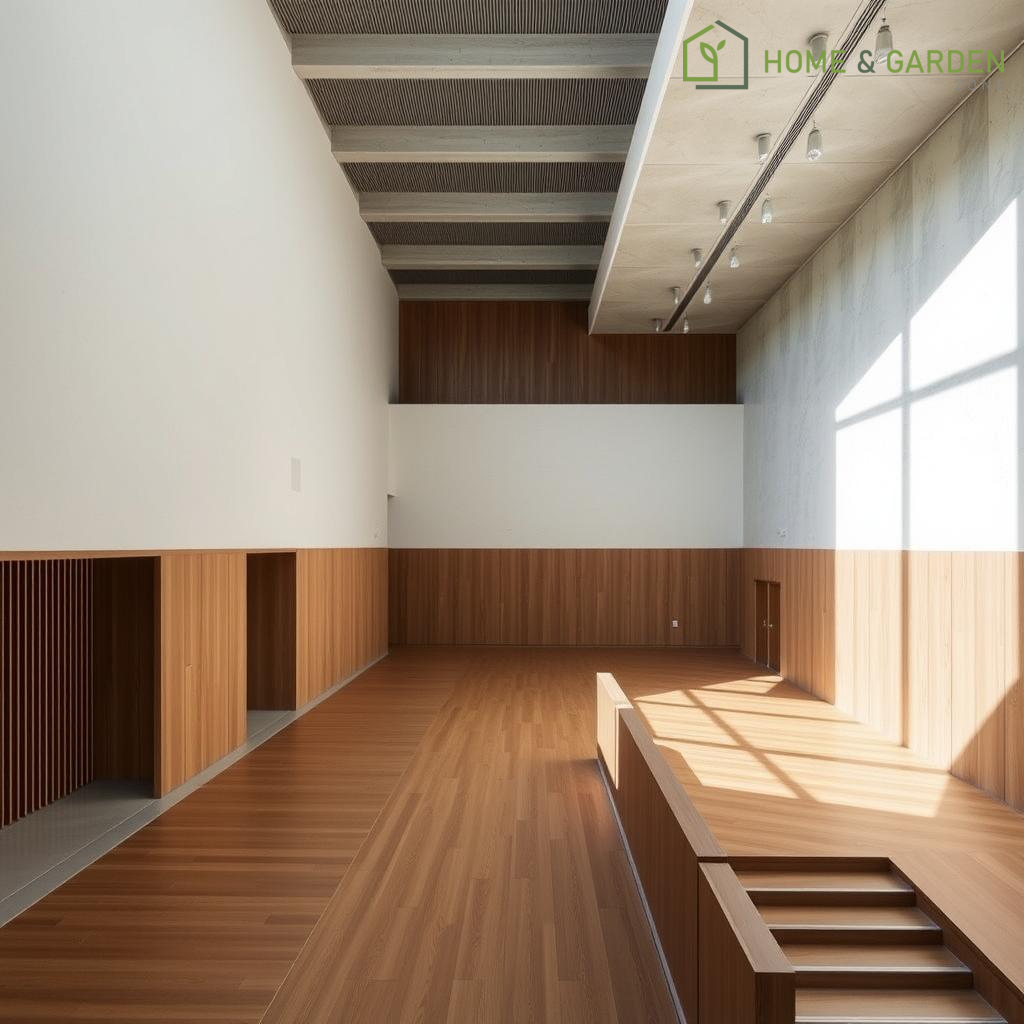
In a compelling example of adaptive reuse, Singapore-based Open Studio has masterfully reimagined New Bahru Hall, a building steeped in 1960s history, into a vibrant pickleball court. This transformation, exclusively revealed, forms a key component of a broader initiative to revitalise a former school complex into a dynamic mixed-use destination featuring shopping, dining, and serviced apartments. Open Studio's design philosophy, characterised by what they term "quiet material richness," orchestrates a nuanced dialogue between the building's original architectural integrity and its new contemporary function.
The Heritage Canvas: A Mid-Century Legacy
The original New Bahru Hall presented Open Studio with a rich architectural tapestry from the mid-20th century. Constructed in the 1960s, the hall boasted distinctive features that spoke to its era: lower walls clad in elegant teak panelling and floors adorned with intricate mosaic tiles. These elements, redolent with the patina of time and past use, provided a foundational layer of character that the architects sought not to erase but to respectfully integrate into the building's next chapter. The challenge lay in preserving this inherent material wealth while introducing a completely new programmatic demand.
Contemporary Intervention: Juxtaposing Old with New
Open Studio’s intervention is a study in thoughtful juxtaposition. Against the warm, aged textures of teak and the detailed patterns of the mosaic flooring, the firm introduced elements crafted from galvanised steel. This material, with its industrial aesthetic and utilitarian strength, delineates the new functions within the historic shell. Steel detailing manifests in practical components such as bleachers for spectators, safety railings, and the structural supports for the pickleball net. The deliberate contrast between the robust new steel and the refined existing finishes creates a visual tension that highlights both the past and the present, without one overshadowing the other. The former school’s breeze-block-clad exterior also contributes to this architectural narrative of enduring functionality and subtle transformation.
Open Studio's Philosophy: Quiet Material Richness
The concept of "quiet material richness" is central to Open Studio's approach for New Bahru Hall. This philosophy advocates for a design where new interventions, rather than clamouring for attention, gently underscore the inherent qualities and historical layers of the existing structure. It is about an understated elegance that allows materials to speak for themselves, celebrating their texture, origin, and the story they tell. In the context of New Bahru Hall, this meant a careful selection of new materials that could stand in respectful contrast to the old, creating a sense of continuity and evolution rather than rupture. The result is a space that feels both profoundly rooted in its history and entirely relevant to its modern purpose.
Conclusion: A Model for Adaptive Reuse
The transformation of New Bahru Hall by Open Studio serves as an exemplary model for adaptive reuse in urban environments. By thoughtfully blending historical preservation with contemporary functionality, the project demonstrates how architectural heritage can be revitalised for new generations without sacrificing its soul. The hall now functions not merely as a sports facility but as a living testament to Singapore’s architectural past, reimagined with an innovative spirit that respects its origins while boldly embracing its future. It exemplifies how "quiet material richness" can yield profoundly impactful results, creating spaces that are both functionally efficient and deeply evocative.
Resources
- Dezeen: Open Studio juxtaposes old and new in Singapore school hall transformed into pickleball court
- Open Studio Official Website: Open Studio
- ArchDaily (for general adaptive reuse context in Singapore): ArchDaily
Details
Author


Latest articles


 }})
You can now watch HBO Max for $10
A Resonant Transformation: New Bahru Hall by Open Studio
In a compelling example of adaptive reuse, Singapore-based Open Studio has masterfully reimagined New Bahru Hall, a building steeped in 1960s history, into a vibrant pickleball court. This transformation, exclusively revealed, forms a key component of a broader initiative to revitalise a former school complex into a dynamic mixed-use destination featuring shopping, dining, and serviced apartments. Open Studio's design philosophy, characterised by what they term "quiet material richness," orchestrates a nuanced dialogue between the building's original architectural integrity and its new contemporary function.
The Heritage Canvas: A Mid-Century Legacy
The original New Bahru Hall presented Open Studio with a rich architectural tapestry from the mid-20th century. Constructed in the 1960s, the hall boasted distinctive features that spoke to its era: lower walls clad in elegant teak panelling and floors adorned with intricate mosaic tiles. These elements, redolent with the patina of time and past use, provided a foundational layer of character that the architects sought not to erase but to respectfully integrate into the building's next chapter. The challenge lay in preserving this inherent material wealth while introducing a completely new programmatic demand.
Contemporary Intervention: Juxtaposing Old with New
Open Studio’s intervention is a study in thoughtful juxtaposition. Against the warm, aged textures of teak and the detailed patterns of the mosaic flooring, the firm introduced elements crafted from galvanised steel. This material, with its industrial aesthetic and utilitarian strength, delineates the new functions within the historic shell. Steel detailing manifests in practical components such as bleachers for spectators, safety railings, and the structural supports for the pickleball net. The deliberate contrast between the robust new steel and the refined existing finishes creates a visual tension that highlights both the past and the present, without one overshadowing the other. The former school’s breeze-block-clad exterior also contributes to this architectural narrative of enduring functionality and subtle transformation.
Open Studio's Philosophy: Quiet Material Richness
The concept of "quiet material richness" is central to Open Studio's approach for New Bahru Hall. This philosophy advocates for a design where new interventions, rather than clamouring for attention, gently underscore the inherent qualities and historical layers of the existing structure. It is about an understated elegance that allows materials to speak for themselves, celebrating their texture, origin, and the story they tell. In the context of New Bahru Hall, this meant a careful selection of new materials that could stand in respectful contrast to the old, creating a sense of continuity and evolution rather than rupture. The result is a space that feels both profoundly rooted in its history and entirely relevant to its modern purpose.
Conclusion: A Model for Adaptive Reuse
The transformation of New Bahru Hall by Open Studio serves as an exemplary model for adaptive reuse in urban environments. By thoughtfully blending historical preservation with contemporary functionality, the project demonstrates how architectural heritage can be revitalised for new generations without sacrificing its soul. The hall now functions not merely as a sports facility but as a living testament to Singapore’s architectural past, reimagined with an innovative spirit that respects its origins while boldly embracing its future. It exemplifies how "quiet material richness" can yield profoundly impactful results, creating spaces that are both functionally efficient and deeply evocative.
Resources
- Dezeen: Open Studio juxtaposes old and new in Singapore school hall transformed into pickleball court
- Open Studio Official Website: Open Studio
- ArchDaily (for general adaptive reuse context in Singapore): ArchDaily
Latest articles
You can now watch HBO Max for $10
Similar posts


This is a page that only logged-in people can visit. Don't you feel special? Try clicking on a button below to do some things you can't do when you're logged out.
Example modal
At your leisure, please peruse this excerpt from a whale of a tale.
Chapter 1: Loomings.
Call me Ishmael. Some years ago—never mind how long precisely—having little or no money in my purse, and nothing particular to interest me on shore, I thought I would sail about a little and see the watery part of the world. It is a way I have of driving off the spleen and regulating the circulation. Whenever I find myself growing grim about the mouth; whenever it is a damp, drizzly November in my soul; whenever I find myself involuntarily pausing before coffin warehouses, and bringing up the rear of every funeral I meet; and especially whenever my hypos get such an upper hand of me, that it requires a strong moral principle to prevent me from deliberately stepping into the street, and methodically knocking people's hats off—then, I account it high time to get to sea as soon as I can. This is my substitute for pistol and ball. With a philosophical flourish Cato throws himself upon his sword; I quietly take to the ship. There is nothing surprising in this. If they but knew it, almost all men in their degree, some time or other, cherish very nearly the same feelings towards the ocean with me.
Comment