GAMPworks Unveils Poké Court: A Reimagined Pokémon Card Sanctuary in New York City's Meatpacking District
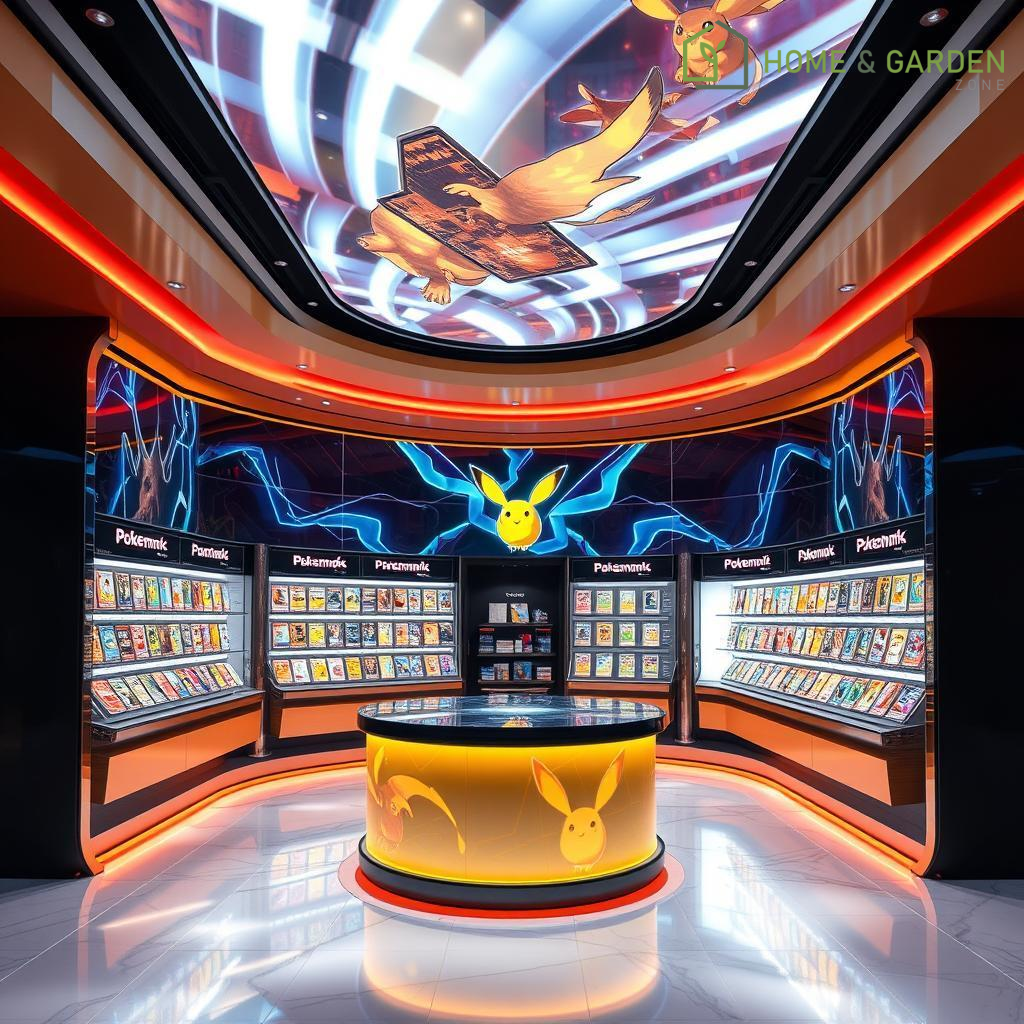
A New Era for Card Collecting: GAMPworks' Vision for Poké Court
In a bold departure from conventional retail, local design studio GAMPworks has introduced Poké Court, a flagship Pokémon card store poised to redefine the collector’s experience. Located within Manhattan's dynamic Meatpacking District, the establishment transcends mere commerce, offering a meticulously crafted environment designed for community, exchange, and the shared passion for Pokémon.
Design Philosophy: Blending Urban Grit with Japanese Aesthetics
Poké Court stands as a testament to thoughtful design, seamlessly merging the rugged, industrial essence of New York City with the refined, often minimalist aesthetics inherent to Pokémon's Japanese origins. At its core, the store features a distinctive tiled bar-top—a communal altar where enthusiasts converge. Here, transactions unfold into interactions: visitors acquire new decks, engage in the ritual of unwrapping, and forge connections with fellow collectors. This central element actively encourages social engagement, moving beyond the traditional transactional model of a card shop.
GAMPworks’ design intent was to cultivate a space that feels both aspirational and intimately welcoming. Materials such as custom-designed tiles, exposed concrete accents, and strategic lighting work in concert to evoke a sense of discovery and excitement, while also providing a sophisticated backdrop for the vibrant world of Pokémon.
Beyond Retail: Cultivating a Community Hub
The vision for Poké Court extends far beyond selling trading cards. It is conceived as a vibrant gathering place, a modern-day salon for the Pokémon community. The intentional layout fosters a sense of belonging, inviting visitors to linger, share strategies, and celebrate their collections. This emphasis on community interaction and immersive experience marks a significant evolution in retail design, particularly within a niche hobby market.
By transforming the act of buying and opening card packs into a shared, performative event at the bespoke bar, GAMPworks has successfully injected a new dimension of engagement into the hobby. The store functions not just as a point of sale, but as a cultural touchstone for Pokémon aficionados in the heart of New York City.
Summary
Poké Court by GAMPworks represents a pioneering effort in retail design, particularly for specialized hobby stores. By prioritising communal experience over pure transaction, and skillfully blending diverse architectural influences, the studio has created a flagship destination that enriches the Pokémon collecting culture. It stands as a prime example of how innovative design can foster stronger communities and elevate niche retail into significant cultural spaces.
Resources
- Dezeen: A leading online architecture and design magazine that extensively covered the project.
- GAMPworks Official Website: Provides portfolio details and insights into their design philosophy.
- Architectural Digest / Interior Design Magazine: Reputable publications often featuring unique retail spaces and architectural innovations.
Details
Author




Latest articles



 }})
You can now watch HBO Max for $10
A New Era for Card Collecting: GAMPworks' Vision for Poké Court
In a bold departure from conventional retail, local design studio GAMPworks has introduced Poké Court, a flagship Pokémon card store poised to redefine the collector’s experience. Located within Manhattan's dynamic Meatpacking District, the establishment transcends mere commerce, offering a meticulously crafted environment designed for community, exchange, and the shared passion for Pokémon.
Design Philosophy: Blending Urban Grit with Japanese Aesthetics
Poké Court stands as a testament to thoughtful design, seamlessly merging the rugged, industrial essence of New York City with the refined, often minimalist aesthetics inherent to Pokémon's Japanese origins. At its core, the store features a distinctive tiled bar-top—a communal altar where enthusiasts converge. Here, transactions unfold into interactions: visitors acquire new decks, engage in the ritual of unwrapping, and forge connections with fellow collectors. This central element actively encourages social engagement, moving beyond the traditional transactional model of a card shop.
GAMPworks’ design intent was to cultivate a space that feels both aspirational and intimately welcoming. Materials such as custom-designed tiles, exposed concrete accents, and strategic lighting work in concert to evoke a sense of discovery and excitement, while also providing a sophisticated backdrop for the vibrant world of Pokémon.
Beyond Retail: Cultivating a Community Hub
The vision for Poké Court extends far beyond selling trading cards. It is conceived as a vibrant gathering place, a modern-day salon for the Pokémon community. The intentional layout fosters a sense of belonging, inviting visitors to linger, share strategies, and celebrate their collections. This emphasis on community interaction and immersive experience marks a significant evolution in retail design, particularly within a niche hobby market.
By transforming the act of buying and opening card packs into a shared, performative event at the bespoke bar, GAMPworks has successfully injected a new dimension of engagement into the hobby. The store functions not just as a point of sale, but as a cultural touchstone for Pokémon aficionados in the heart of New York City.
Summary
Poké Court by GAMPworks represents a pioneering effort in retail design, particularly for specialized hobby stores. By prioritising communal experience over pure transaction, and skillfully blending diverse architectural influences, the studio has created a flagship destination that enriches the Pokémon collecting culture. It stands as a prime example of how innovative design can foster stronger communities and elevate niche retail into significant cultural spaces.
Resources
- Dezeen: A leading online architecture and design magazine that extensively covered the project.
- GAMPworks Official Website: Provides portfolio details and insights into their design philosophy.
- Architectural Digest / Interior Design Magazine: Reputable publications often featuring unique retail spaces and architectural innovations.
Latest articles
You can now watch HBO Max for $10
Similar posts


This is a page that only logged-in people can visit. Don't you feel special? Try clicking on a button below to do some things you can't do when you're logged out.
Example modal
At your leisure, please peruse this excerpt from a whale of a tale.
Chapter 1: Loomings.
Call me Ishmael. Some years ago—never mind how long precisely—having little or no money in my purse, and nothing particular to interest me on shore, I thought I would sail about a little and see the watery part of the world. It is a way I have of driving off the spleen and regulating the circulation. Whenever I find myself growing grim about the mouth; whenever it is a damp, drizzly November in my soul; whenever I find myself involuntarily pausing before coffin warehouses, and bringing up the rear of every funeral I meet; and especially whenever my hypos get such an upper hand of me, that it requires a strong moral principle to prevent me from deliberately stepping into the street, and methodically knocking people's hats off—then, I account it high time to get to sea as soon as I can. This is my substitute for pistol and ball. With a philosophical flourish Cato throws himself upon his sword; I quietly take to the ship. There is nothing surprising in this. If they but knew it, almost all men in their degree, some time or other, cherish very nearly the same feelings towards the ocean with me.
Comment