Integrating History with Modern Living: A Latvian Seaside Home Reimagines Soviet Bunkers Beneath a Verdant Roof
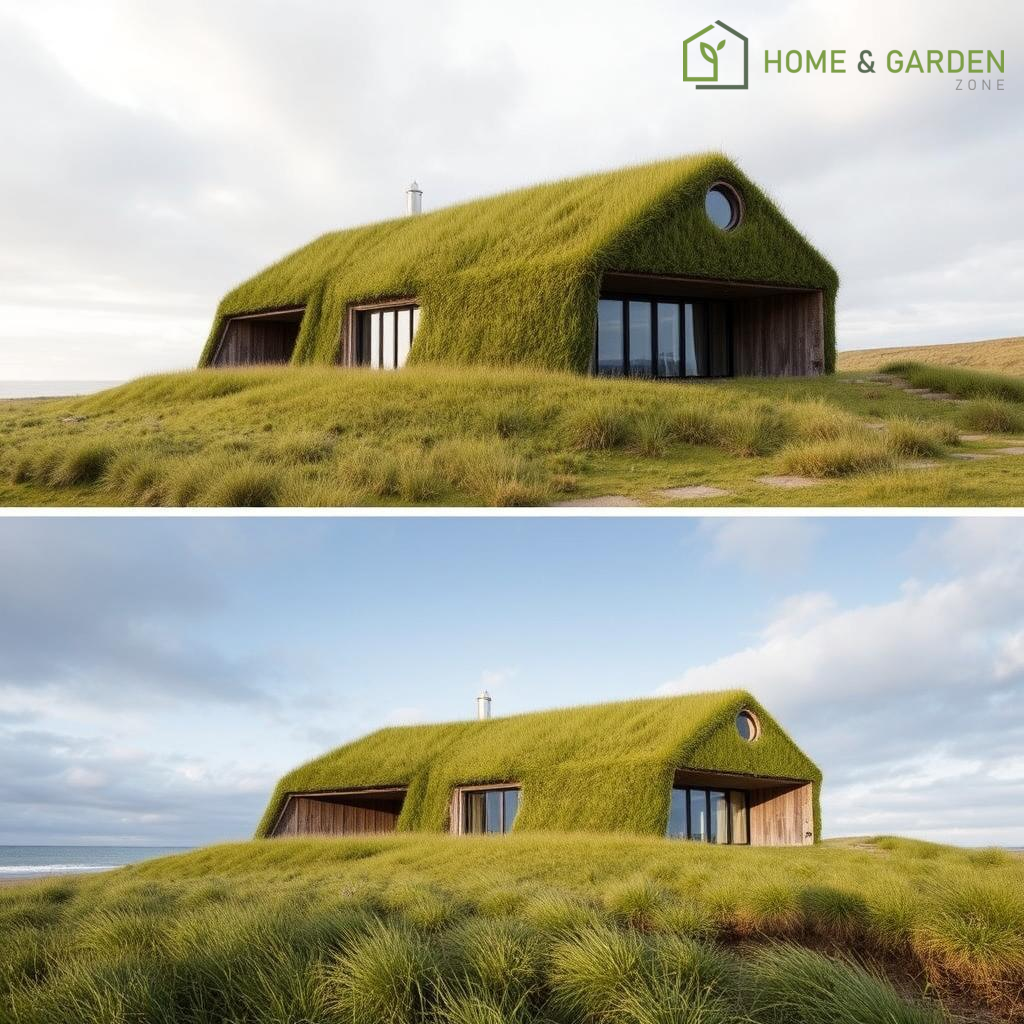
Along the Baltic Sea coastline of Latvia, where echoes of a bygone era still resonate through abandoned military installations, a remarkable architectural project has emerged, transforming the remnants of Soviet-era bunkers into a contemporary family residence. This innovative adaptive reuse initiative not only preserves a piece of regional history but also demonstrates a profound commitment to sustainable living and sensitive integration with the natural landscape.
From Cold War Relic to Modern Dwelling
The project, a distinctive seaside home, leverages the robust concrete foundations of former Soviet military bunkers as the structural bedrock for a new residential complex. These formidable, often forgotten, subterranean structures once served strategic purposes, their heavy construction designed for endurance. Instead of demolition, the architects envisioned a respectful metamorphosis, embedding modern living spaces within and atop these historical elements.
Architectural Ingenuity and Environmental Harmony
The design philosophy centered on minimizing environmental impact while maximizing the unique potential of the existing structures. The initial brief, as highlighted by publications covering the project, involved constructing a new home that would utilize the existing bunkers as its base. This approach required meticulous planning to ensure structural integrity and seamless integration. A distinguishing feature of the residence is its expansive grass-covered roof, a deliberate choice that serves multiple purposes: it visually blends the home into the undulating dune landscape, provides natural insulation, and promotes biodiversity. This green roof creates a continuous flow with the surrounding topography, making the house appear to rise organically from the terrain rather than imposing itself upon it.
Interior spaces are thoughtfully arranged, often exploiting the robust, sheltered nature of the bunkers for utility areas, while lighter, more open living zones are cantilevered or built above, offering panoramic views of the sea. Material palettes typically reflect the surrounding natural environment—wood, glass, and exposed concrete—creating a harmonious dialogue between the past and the present, the man-made and the organic.
Summary
This Latvian family home stands as a powerful testament to the possibilities of adaptive reuse. By re-envisioning abandoned military infrastructure, the project not only salvages historical remnants but also crafts a highly sustainable and aesthetically compelling dwelling. It embodies a forward-thinking approach to architecture, where history, ecology, and modern comfort coalesce to create a truly unique living experience along the Baltic coast.
Resources
Details
Author



Latest articles


 }})
You can now watch HBO Max for $10
Along the Baltic Sea coastline of Latvia, where echoes of a bygone era still resonate through abandoned military installations, a remarkable architectural project has emerged, transforming the remnants of Soviet-era bunkers into a contemporary family residence. This innovative adaptive reuse initiative not only preserves a piece of regional history but also demonstrates a profound commitment to sustainable living and sensitive integration with the natural landscape.
From Cold War Relic to Modern Dwelling
The project, a distinctive seaside home, leverages the robust concrete foundations of former Soviet military bunkers as the structural bedrock for a new residential complex. These formidable, often forgotten, subterranean structures once served strategic purposes, their heavy construction designed for endurance. Instead of demolition, the architects envisioned a respectful metamorphosis, embedding modern living spaces within and atop these historical elements.
Architectural Ingenuity and Environmental Harmony
The design philosophy centered on minimizing environmental impact while maximizing the unique potential of the existing structures. The initial brief, as highlighted by publications covering the project, involved constructing a new home that would utilize the existing bunkers as its base. This approach required meticulous planning to ensure structural integrity and seamless integration. A distinguishing feature of the residence is its expansive grass-covered roof, a deliberate choice that serves multiple purposes: it visually blends the home into the undulating dune landscape, provides natural insulation, and promotes biodiversity. This green roof creates a continuous flow with the surrounding topography, making the house appear to rise organically from the terrain rather than imposing itself upon it.
Interior spaces are thoughtfully arranged, often exploiting the robust, sheltered nature of the bunkers for utility areas, while lighter, more open living zones are cantilevered or built above, offering panoramic views of the sea. Material palettes typically reflect the surrounding natural environment—wood, glass, and exposed concrete—creating a harmonious dialogue between the past and the present, the man-made and the organic.
Summary
This Latvian family home stands as a powerful testament to the possibilities of adaptive reuse. By re-envisioning abandoned military infrastructure, the project not only salvages historical remnants but also crafts a highly sustainable and aesthetically compelling dwelling. It embodies a forward-thinking approach to architecture, where history, ecology, and modern comfort coalesce to create a truly unique living experience along the Baltic coast.
Resources
Latest articles
You can now watch HBO Max for $10
Similar posts


This is a page that only logged-in people can visit. Don't you feel special? Try clicking on a button below to do some things you can't do when you're logged out.
Example modal
At your leisure, please peruse this excerpt from a whale of a tale.
Chapter 1: Loomings.
Call me Ishmael. Some years ago—never mind how long precisely—having little or no money in my purse, and nothing particular to interest me on shore, I thought I would sail about a little and see the watery part of the world. It is a way I have of driving off the spleen and regulating the circulation. Whenever I find myself growing grim about the mouth; whenever it is a damp, drizzly November in my soul; whenever I find myself involuntarily pausing before coffin warehouses, and bringing up the rear of every funeral I meet; and especially whenever my hypos get such an upper hand of me, that it requires a strong moral principle to prevent me from deliberately stepping into the street, and methodically knocking people's hats off—then, I account it high time to get to sea as soon as I can. This is my substitute for pistol and ball. With a philosophical flourish Cato throws himself upon his sword; I quietly take to the ship. There is nothing surprising in this. If they but knew it, almost all men in their degree, some time or other, cherish very nearly the same feelings towards the ocean with me.
Comment