EHDD Unveils AIA Global Campus: A Landmark Net-Zero Renovation in Washington D.C.
A Paradigm Shift in Sustainable Urban Architecture
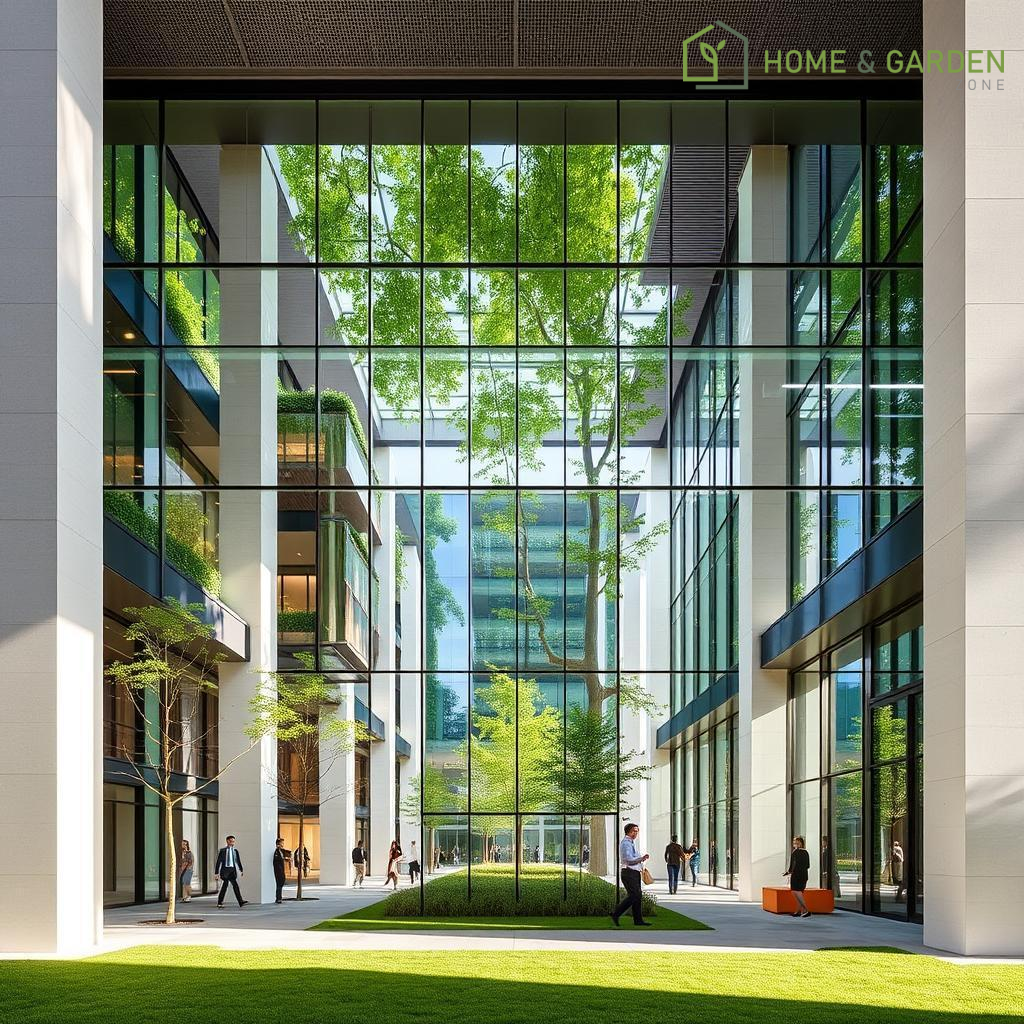
Washington D.C. now hosts a pioneering example of sustainable architectural renovation with the completion of the American Institute of Architects (AIA) Global Campus for Architecture & Design. Designed by San Francisco-based firm EHDD, this ambitious project redefines urban sustainability, positioning itself as one of the United States' first major fully decarbonized renovations.
The transformation of the AIA's historic headquarters into a net-zero energy campus underscores a critical commitment to environmental stewardship within the architectural profession. This extensive renovation is not merely an aesthetic overhaul but a deep energy retrofit that integrates advanced sustainable technologies and design principles to achieve its ambitious climate goals.
Design Philosophy and Key Features
EHDD's design approach centered on minimizing the building's carbon footprint throughout its lifecycle. The project involved a comprehensive strategy to reduce energy consumption, primarily through an all-electric system, enhanced insulation, high-performance glazing, and efficient HVAC systems. The integration of renewable energy sources, likely on-site solar photovoltaic panels, plays a crucial role in offsetting the campus's energy demands, leading to its net-zero status.
The "net-zero campus" concept extends beyond the main building to encompass a cohesive architectural and public realm experience. This includes a revitalized outdoor courtyard, intended to serve as an urban oasis and a gathering space for the architectural community and the public. Furthermore, the campus integrates the AIA Design Shop and "Grace," a likely reference to a food service or community space, all operating within the same sustainable framework.
The project stands as a testament to the potential of retrofitting existing building stock to meet stringent environmental performance targets. By demonstrating that historic structures can be adapted for a low-carbon future, the AIA Global Campus provides a scalable model for urban development and sustainable renovation nationwide.
Implications for the Architectural Profession
As the primary professional organization for architects in the U.S., the AIA's decision to pursue a net-zero renovation for its own campus sends a powerful message to the industry. It serves as a living laboratory and a public declaration of the organization's commitment to combating climate change through architectural practice. The campus will likely become a hub for education, advocacy, and innovation in sustainable design, influencing countless future projects and inspiring architects to integrate similar principles into their work.
The project aligns with broader initiatives within the AIA, such as the "AIA 2030 Commitment," which challenges firms to design projects that are carbon neutral by 2030. The Global Campus serves as a tangible manifestation of these goals, providing a real-world example of how to achieve them.
Summary
The EHDD-designed AIA Global Campus for Architecture & Design in Washington D.C. represents a significant milestone in sustainable architecture. Through a meticulous net-zero renovation, the project has transformed the AIA's headquarters into a fully decarbonized facility, showcasing the potential for existing buildings to achieve exemplary environmental performance. This landmark campus, including its outdoor courtyard, AIA Design Shop, and "Grace," serves as a beacon for the architectural profession, demonstrating a clear path towards a more sustainable built environment.
Resources
- American Institute of Architects (AIA) - Official Website
- EHDD Architecture - Official Website
- Dezeen - Architectural and design magazine
Details
Author




Latest articles





 }})
You can now watch HBO Max for $10
A Paradigm Shift in Sustainable Urban Architecture
Washington D.C. now hosts a pioneering example of sustainable architectural renovation with the completion of the American Institute of Architects (AIA) Global Campus for Architecture & Design. Designed by San Francisco-based firm EHDD, this ambitious project redefines urban sustainability, positioning itself as one of the United States' first major fully decarbonized renovations.
The transformation of the AIA's historic headquarters into a net-zero energy campus underscores a critical commitment to environmental stewardship within the architectural profession. This extensive renovation is not merely an aesthetic overhaul but a deep energy retrofit that integrates advanced sustainable technologies and design principles to achieve its ambitious climate goals.
Design Philosophy and Key Features
EHDD's design approach centered on minimizing the building's carbon footprint throughout its lifecycle. The project involved a comprehensive strategy to reduce energy consumption, primarily through an all-electric system, enhanced insulation, high-performance glazing, and efficient HVAC systems. The integration of renewable energy sources, likely on-site solar photovoltaic panels, plays a crucial role in offsetting the campus's energy demands, leading to its net-zero status.
The "net-zero campus" concept extends beyond the main building to encompass a cohesive architectural and public realm experience. This includes a revitalized outdoor courtyard, intended to serve as an urban oasis and a gathering space for the architectural community and the public. Furthermore, the campus integrates the AIA Design Shop and "Grace," a likely reference to a food service or community space, all operating within the same sustainable framework.
The project stands as a testament to the potential of retrofitting existing building stock to meet stringent environmental performance targets. By demonstrating that historic structures can be adapted for a low-carbon future, the AIA Global Campus provides a scalable model for urban development and sustainable renovation nationwide.
Implications for the Architectural Profession
As the primary professional organization for architects in the U.S., the AIA's decision to pursue a net-zero renovation for its own campus sends a powerful message to the industry. It serves as a living laboratory and a public declaration of the organization's commitment to combating climate change through architectural practice. The campus will likely become a hub for education, advocacy, and innovation in sustainable design, influencing countless future projects and inspiring architects to integrate similar principles into their work.
The project aligns with broader initiatives within the AIA, such as the "AIA 2030 Commitment," which challenges firms to design projects that are carbon neutral by 2030. The Global Campus serves as a tangible manifestation of these goals, providing a real-world example of how to achieve them.
Summary
The EHDD-designed AIA Global Campus for Architecture & Design in Washington D.C. represents a significant milestone in sustainable architecture. Through a meticulous net-zero renovation, the project has transformed the AIA's headquarters into a fully decarbonized facility, showcasing the potential for existing buildings to achieve exemplary environmental performance. This landmark campus, including its outdoor courtyard, AIA Design Shop, and "Grace," serves as a beacon for the architectural profession, demonstrating a clear path towards a more sustainable built environment.
Resources
- American Institute of Architects (AIA) - Official Website
- EHDD Architecture - Official Website
- Dezeen - Architectural and design magazine
Latest articles
You can now watch HBO Max for $10
Similar posts


This is a page that only logged-in people can visit. Don't you feel special? Try clicking on a button below to do some things you can't do when you're logged out.
Example modal
At your leisure, please peruse this excerpt from a whale of a tale.
Chapter 1: Loomings.
Call me Ishmael. Some years ago—never mind how long precisely—having little or no money in my purse, and nothing particular to interest me on shore, I thought I would sail about a little and see the watery part of the world. It is a way I have of driving off the spleen and regulating the circulation. Whenever I find myself growing grim about the mouth; whenever it is a damp, drizzly November in my soul; whenever I find myself involuntarily pausing before coffin warehouses, and bringing up the rear of every funeral I meet; and especially whenever my hypos get such an upper hand of me, that it requires a strong moral principle to prevent me from deliberately stepping into the street, and methodically knocking people's hats off—then, I account it high time to get to sea as soon as I can. This is my substitute for pistol and ball. With a philosophical flourish Cato throws himself upon his sword; I quietly take to the ship. There is nothing surprising in this. If they but knew it, almost all men in their degree, some time or other, cherish very nearly the same feelings towards the ocean with me.
Comment