Mycelium Miracles: How Fungal Materials Are Building a Sustainable Future, From Earth to the Cosmos
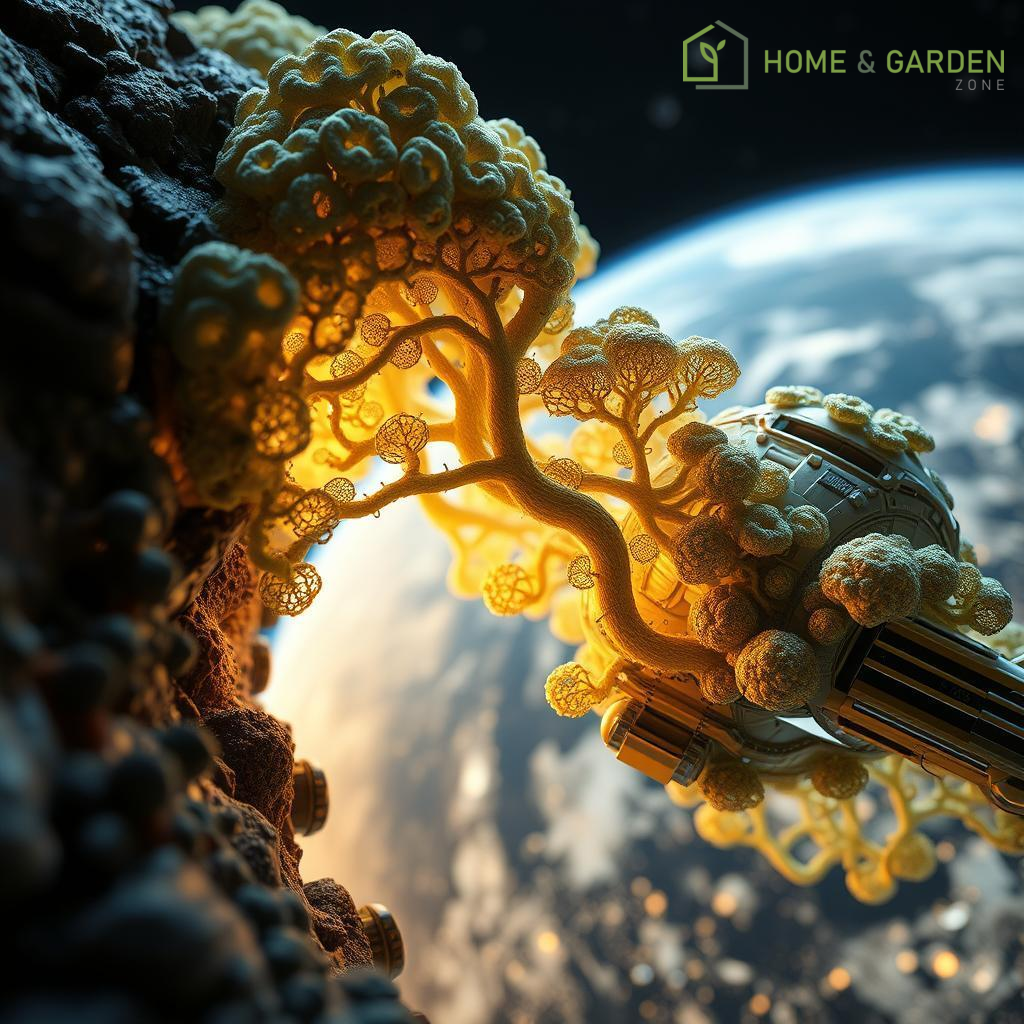
The Rise of Mycelium: A Biological Revolution in Materials Science
In the quest for sustainable alternatives to traditional manufacturing and construction, a silent, subterranean network is emerging as a surprising hero: mycelium, the root-like structure of fungi. Far beyond their role in decomposition, fungi are proving to be biological architects, capable of growing robust, versatile, and eco-friendly materials that promise to redefine industries from packaging to aerospace.
Earth-Bound Innovations: Building Greener
On Earth, mycelium-based materials are already making significant inroads. Their production process is inherently sustainable, requiring minimal energy and resources compared to synthetic counterparts. Agricultural waste, such as corn husks or wood chips, serves as a substrate, which the mycelium colonizes and binds together, forming a dense, interlocking network of chitin fibers. This natural process yields materials that are:
- Biodegradable: They return to nature at the end of their lifecycle, minimizing landfill waste.
- Lightweight and Strong: Offering excellent insulation and structural integrity for various applications.
- Fire-Resistant: A natural property that enhances safety in construction.
- Acoustically Dampening: Ideal for soundproofing solutions.
These properties have led to applications in sustainable packaging, replacing polystyrene foams; acoustic panels and insulation for buildings; and even fashion, where mycelium is being engineered into leather-like textiles. Companies and researchers are continuously pushing the boundaries, developing mycelium bricks, furniture, and even entire architectural components that "grow" into shape.
Extraterrestrial Ambitions: Fungi in Space
The potential of fungal materials extends far beyond our planet. As humanity eyes longer-duration space missions and eventual extraterrestrial colonization, the challenges of transporting building materials become immense. Mycelium offers a compelling solution for in-situ resource utilization (ISRU) – growing structures directly in space or on other celestial bodies.
NASA and various research institutions are actively exploring how mycelium could be cultivated in microgravity or on the Moon and Mars using local resources. Imagine inflatable habitats seeded with fungal spores, which then expand and solidify into durable, self-supporting structures. These "myco-architecture" concepts could provide:
- Habitats: Lightweight, deployable structures that become rigid and robust once grown.
- Radiation Shielding: The dense, organic composition of mycelium could offer protection against harmful cosmic radiation.
- Bioregenerative Life Support: Integrated systems where fungi play a role in waste recycling or food production.
- Tools and Components: Growing specific shapes for repairs or new equipment.
The ability of fungi to thrive in diverse environments, coupled with their minimal resource requirements and self-assembly capabilities, makes them an ideal candidate for pioneering sustainable living beyond Earth.
Summary
Fungal materials, particularly those derived from mycelium, represent a paradigm shift in how we conceive and produce materials. Their inherent sustainability, remarkable versatility, and potential for self-assembly position them as critical components for a future where resource efficiency and environmental stewardship are paramount. From crafting eco-conscious products on Earth to constructing the first off-world human settlements, fungi are not just growing the future; they are actively shaping it, one mycelial thread at a time.
Resources
Details
Author


Latest articles




 }})
You can now watch HBO Max for $10
The Rise of Mycelium: A Biological Revolution in Materials Science
In the quest for sustainable alternatives to traditional manufacturing and construction, a silent, subterranean network is emerging as a surprising hero: mycelium, the root-like structure of fungi. Far beyond their role in decomposition, fungi are proving to be biological architects, capable of growing robust, versatile, and eco-friendly materials that promise to redefine industries from packaging to aerospace.
Earth-Bound Innovations: Building Greener
On Earth, mycelium-based materials are already making significant inroads. Their production process is inherently sustainable, requiring minimal energy and resources compared to synthetic counterparts. Agricultural waste, such as corn husks or wood chips, serves as a substrate, which the mycelium colonizes and binds together, forming a dense, interlocking network of chitin fibers. This natural process yields materials that are:
- Biodegradable: They return to nature at the end of their lifecycle, minimizing landfill waste.
- Lightweight and Strong: Offering excellent insulation and structural integrity for various applications.
- Fire-Resistant: A natural property that enhances safety in construction.
- Acoustically Dampening: Ideal for soundproofing solutions.
These properties have led to applications in sustainable packaging, replacing polystyrene foams; acoustic panels and insulation for buildings; and even fashion, where mycelium is being engineered into leather-like textiles. Companies and researchers are continuously pushing the boundaries, developing mycelium bricks, furniture, and even entire architectural components that "grow" into shape.
Extraterrestrial Ambitions: Fungi in Space
The potential of fungal materials extends far beyond our planet. As humanity eyes longer-duration space missions and eventual extraterrestrial colonization, the challenges of transporting building materials become immense. Mycelium offers a compelling solution for in-situ resource utilization (ISRU) – growing structures directly in space or on other celestial bodies.
NASA and various research institutions are actively exploring how mycelium could be cultivated in microgravity or on the Moon and Mars using local resources. Imagine inflatable habitats seeded with fungal spores, which then expand and solidify into durable, self-supporting structures. These "myco-architecture" concepts could provide:
- Habitats: Lightweight, deployable structures that become rigid and robust once grown.
- Radiation Shielding: The dense, organic composition of mycelium could offer protection against harmful cosmic radiation.
- Bioregenerative Life Support: Integrated systems where fungi play a role in waste recycling or food production.
- Tools and Components: Growing specific shapes for repairs or new equipment.
The ability of fungi to thrive in diverse environments, coupled with their minimal resource requirements and self-assembly capabilities, makes them an ideal candidate for pioneering sustainable living beyond Earth.
Summary
Fungal materials, particularly those derived from mycelium, represent a paradigm shift in how we conceive and produce materials. Their inherent sustainability, remarkable versatility, and potential for self-assembly position them as critical components for a future where resource efficiency and environmental stewardship are paramount. From crafting eco-conscious products on Earth to constructing the first off-world human settlements, fungi are not just growing the future; they are actively shaping it, one mycelial thread at a time.
Resources
Latest articles
You can now watch HBO Max for $10
Similar posts


This is a page that only logged-in people can visit. Don't you feel special? Try clicking on a button below to do some things you can't do when you're logged out.
Example modal
At your leisure, please peruse this excerpt from a whale of a tale.
Chapter 1: Loomings.
Call me Ishmael. Some years ago—never mind how long precisely—having little or no money in my purse, and nothing particular to interest me on shore, I thought I would sail about a little and see the watery part of the world. It is a way I have of driving off the spleen and regulating the circulation. Whenever I find myself growing grim about the mouth; whenever it is a damp, drizzly November in my soul; whenever I find myself involuntarily pausing before coffin warehouses, and bringing up the rear of every funeral I meet; and especially whenever my hypos get such an upper hand of me, that it requires a strong moral principle to prevent me from deliberately stepping into the street, and methodically knocking people's hats off—then, I account it high time to get to sea as soon as I can. This is my substitute for pistol and ball. With a philosophical flourish Cato throws himself upon his sword; I quietly take to the ship. There is nothing surprising in this. If they but knew it, almost all men in their degree, some time or other, cherish very nearly the same feelings towards the ocean with me.
Comment