Engineering's Next Frontier: How Generative AI is Revolutionizing Pedagogical Approaches and Skill Development

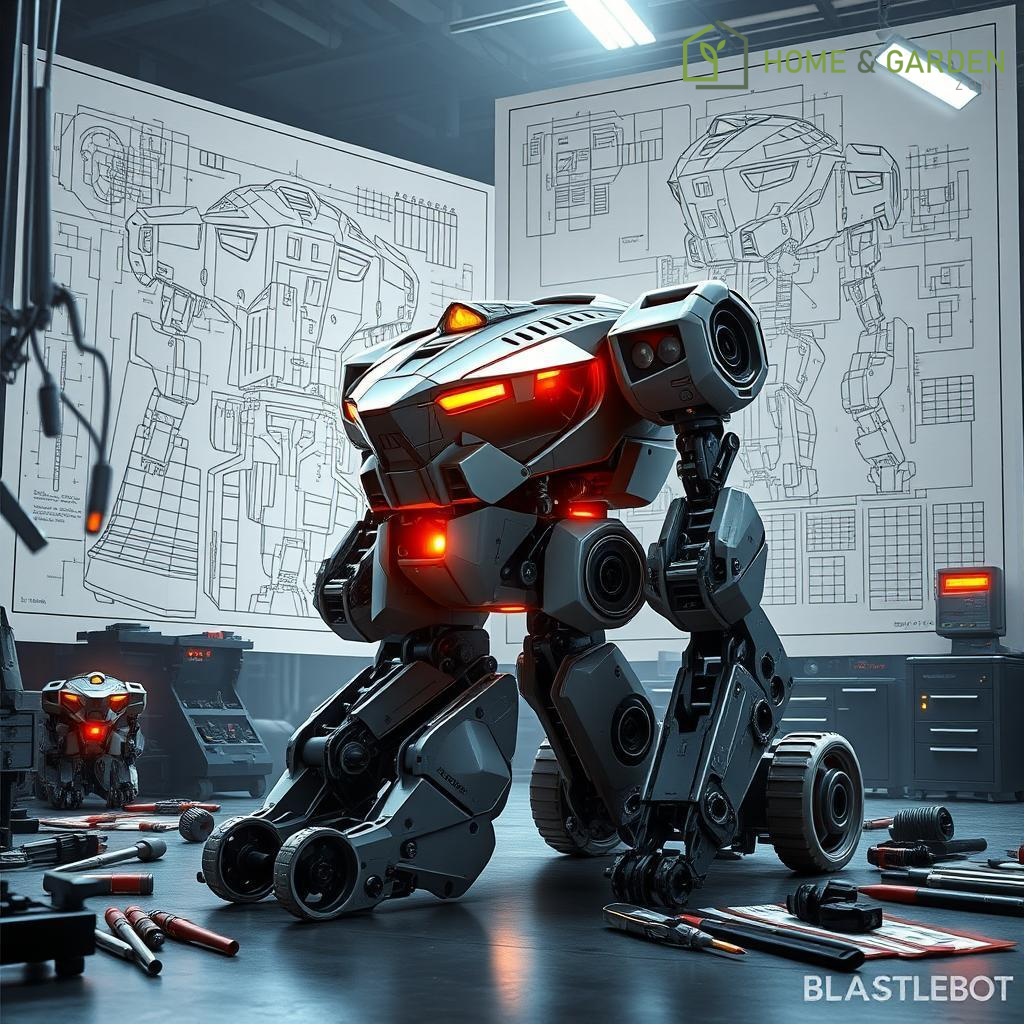
The landscape of engineering education is undergoing a profound transformation, propelled by the rapid integration of generative artificial intelligence. Far from being a mere technological add-on, generative AI is redefining how future engineers learn, design, and innovate, challenging established pedagogical models and demanding a proactive re-evaluation of curricula.
The Paradigm Shift in Engineering Pedagogy
Historically, engineering education has emphasized foundational principles, analytical problem-solving, and practical application through structured projects. Generative AI tools, capable of producing code, designs, simulations, and complex analyses from natural language prompts, are now augmenting and, in some cases, automating aspects of these processes. This shift necessitates educators move beyond rote learning and into fostering a deeper understanding of underlying concepts, critical evaluation of AI outputs, and ethical considerations.
Empowering Design and Problem-Solving
Generative AI offers unprecedented opportunities to accelerate design iterations, explore vast solution spaces, and conduct complex simulations with greater efficiency. Students can leverage these tools to rapidly prototype ideas, optimize designs based on specific parameters, and visualize theoretical concepts in practical applications. This capability allows for more ambitious and complex project work, moving students from basic problem-solving to tackling real-world engineering challenges with sophisticated digital assistance. The focus shifts from executing every step manually to intelligently orchestrating AI tools to achieve desired outcomes.
Cultivating New Competencies for an AI-Driven World
The emergence of generative AI mandates a new set of core competencies for aspiring engineers. Proficiency in 'prompt engineering'—the art of crafting effective inputs for AI models—is becoming as crucial as mastering traditional software. Furthermore, students must develop robust critical thinking skills to validate AI-generated solutions, understand their limitations, and identify potential biases or inaccuracies. Ethical reasoning concerning AI's impact on society, data privacy, and intellectual property also moves to the forefront of essential engineering knowledge, preparing graduates for a professional environment deeply integrated with AI technologies.
Navigating Ethical Complexities and Academic Integrity
While the benefits are substantial, the integration of generative AI also presents significant challenges, particularly regarding academic integrity. Educational institutions are grappling with how to define appropriate use, prevent over-reliance, and ensure that AI acts as a co-pilot rather than a substitute for genuine understanding and individual effort. This requires innovative assessment methods that prioritize higher-order thinking, creativity, and the ability to critically integrate AI outputs rather than merely reproducing them. Open dialogue and clear guidelines between faculty and students are paramount to navigating this evolving landscape responsibly.
Conclusion: Forging the Future Engineer
Generative AI is not merely a shortcut; it is a fundamental reconfigurator of engineering education. By embracing these tools thoughtfully, educators can empower a new generation of engineers with advanced capabilities, critical discernment, and an ethical framework necessary to thrive in an increasingly AI-centric world. The goal is to cultivate engineers who are not just users of AI, but astute architects and ethical stewards of future technological advancements.
Resources
- IEEE Spectrum: "How AI Is Reshaping Engineering Education"
- MIT News: "MIT introduces new courses, programs on AI and ethics"
- American Society for Engineering Education (ASEE): Various publications on AI integration in engineering curricula.
Details
Author




Latest articles





 }})
You can now watch HBO Max for $10
The landscape of engineering education is undergoing a profound transformation, propelled by the rapid integration of generative artificial intelligence. Far from being a mere technological add-on, generative AI is redefining how future engineers learn, design, and innovate, challenging established pedagogical models and demanding a proactive re-evaluation of curricula.
The Paradigm Shift in Engineering Pedagogy
Historically, engineering education has emphasized foundational principles, analytical problem-solving, and practical application through structured projects. Generative AI tools, capable of producing code, designs, simulations, and complex analyses from natural language prompts, are now augmenting and, in some cases, automating aspects of these processes. This shift necessitates educators move beyond rote learning and into fostering a deeper understanding of underlying concepts, critical evaluation of AI outputs, and ethical considerations.
Empowering Design and Problem-Solving
Generative AI offers unprecedented opportunities to accelerate design iterations, explore vast solution spaces, and conduct complex simulations with greater efficiency. Students can leverage these tools to rapidly prototype ideas, optimize designs based on specific parameters, and visualize theoretical concepts in practical applications. This capability allows for more ambitious and complex project work, moving students from basic problem-solving to tackling real-world engineering challenges with sophisticated digital assistance. The focus shifts from executing every step manually to intelligently orchestrating AI tools to achieve desired outcomes.
Cultivating New Competencies for an AI-Driven World
The emergence of generative AI mandates a new set of core competencies for aspiring engineers. Proficiency in 'prompt engineering'—the art of crafting effective inputs for AI models—is becoming as crucial as mastering traditional software. Furthermore, students must develop robust critical thinking skills to validate AI-generated solutions, understand their limitations, and identify potential biases or inaccuracies. Ethical reasoning concerning AI's impact on society, data privacy, and intellectual property also moves to the forefront of essential engineering knowledge, preparing graduates for a professional environment deeply integrated with AI technologies.
Navigating Ethical Complexities and Academic Integrity
While the benefits are substantial, the integration of generative AI also presents significant challenges, particularly regarding academic integrity. Educational institutions are grappling with how to define appropriate use, prevent over-reliance, and ensure that AI acts as a co-pilot rather than a substitute for genuine understanding and individual effort. This requires innovative assessment methods that prioritize higher-order thinking, creativity, and the ability to critically integrate AI outputs rather than merely reproducing them. Open dialogue and clear guidelines between faculty and students are paramount to navigating this evolving landscape responsibly.
Conclusion: Forging the Future Engineer
Generative AI is not merely a shortcut; it is a fundamental reconfigurator of engineering education. By embracing these tools thoughtfully, educators can empower a new generation of engineers with advanced capabilities, critical discernment, and an ethical framework necessary to thrive in an increasingly AI-centric world. The goal is to cultivate engineers who are not just users of AI, but astute architects and ethical stewards of future technological advancements.
Resources
- IEEE Spectrum: "How AI Is Reshaping Engineering Education"
- MIT News: "MIT introduces new courses, programs on AI and ethics"
- American Society for Engineering Education (ASEE): Various publications on AI integration in engineering curricula.
Latest articles
You can now watch HBO Max for $10
Similar posts



This is a page that only logged-in people can visit. Don't you feel special? Try clicking on a button below to do some things you can't do when you're logged out.
Example modal
At your leisure, please peruse this excerpt from a whale of a tale.
Chapter 1: Loomings.
Call me Ishmael. Some years ago—never mind how long precisely—having little or no money in my purse, and nothing particular to interest me on shore, I thought I would sail about a little and see the watery part of the world. It is a way I have of driving off the spleen and regulating the circulation. Whenever I find myself growing grim about the mouth; whenever it is a damp, drizzly November in my soul; whenever I find myself involuntarily pausing before coffin warehouses, and bringing up the rear of every funeral I meet; and especially whenever my hypos get such an upper hand of me, that it requires a strong moral principle to prevent me from deliberately stepping into the street, and methodically knocking people's hats off—then, I account it high time to get to sea as soon as I can. This is my substitute for pistol and ball. With a philosophical flourish Cato throws himself upon his sword; I quietly take to the ship. There is nothing surprising in this. If they but knew it, almost all men in their degree, some time or other, cherish very nearly the same feelings towards the ocean with me.
Comment