Revolutionizing Craft: The Rise of the 3D-Printed Wood Lathe for Accessible Woodworking
The Dawn of Desktop Wood Turning: A New Era for Makers
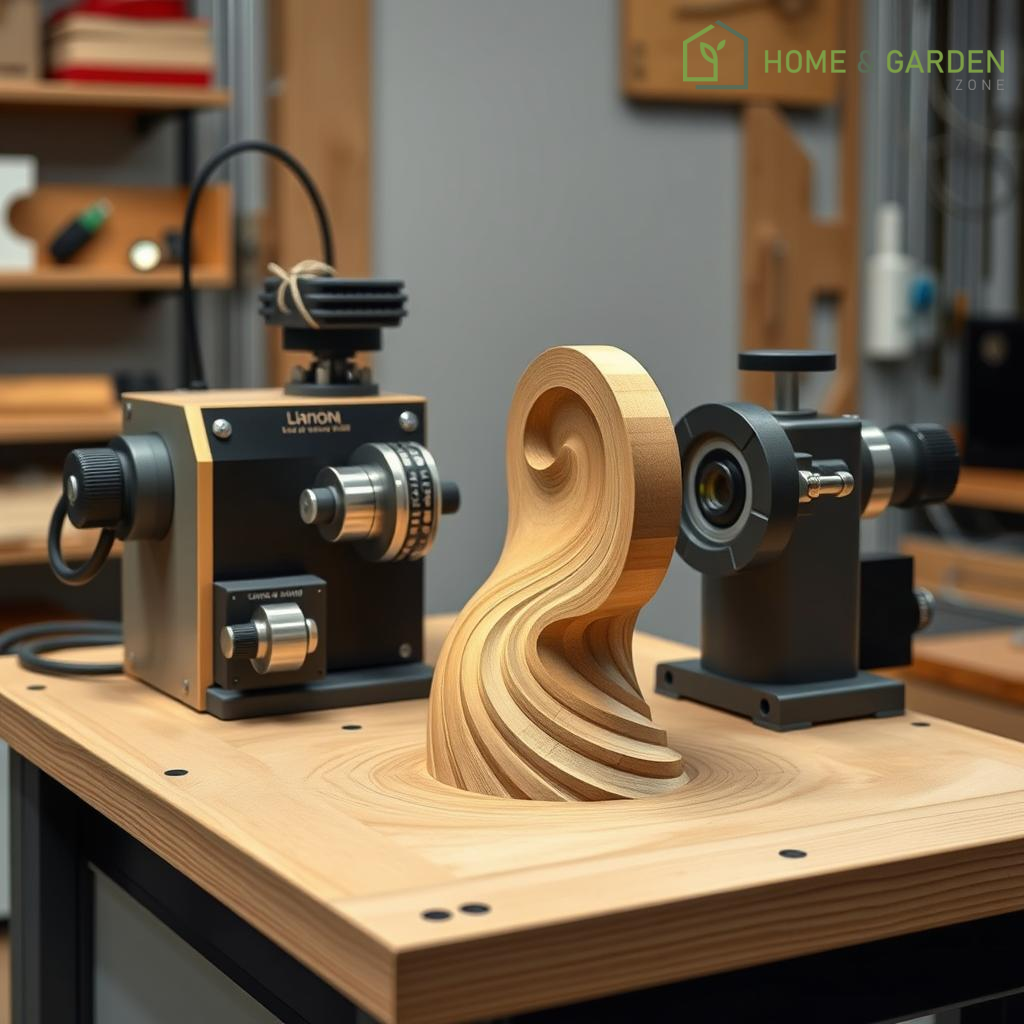
In a compelling demonstration of ingenuity and accessible manufacturing, the concept of a 3D-printed wood lathe is transforming traditional woodworking, making it attainable for a broader audience. Moving beyond the conventional and often costly heavy machinery, innovators are leveraging additive manufacturing to construct functional, low-cost lathes, enabling enthusiasts to turn wood with precision from their workshops or even desktops.
Engineering a Lathe from Filament
The core appeal of a 3D-printed wood lathe lies in its democratic nature. By designing and printing components from durable plastics like PLA or PETG, makers can assemble a machine capable of shaping wood with remarkable accuracy. While not intended to replace industrial-grade equipment for heavy-duty tasks, these printed lathes are perfectly suited for smaller projects: crafting pens, intricate chess pieces, delicate spindles, or custom tool handles. The process typically involves a combination of 3D-printed parts for the frame, headstock, and tailstock, integrated with readily available hardware such as threaded rods, bearings, and a small DC motor for rotation. This "long way" approach to woodworking—building the tool itself—empowers the maker with a deeper understanding of both the machinery and the craft.
Key Advantages and Practicalities
- Cost-Effectiveness: The most significant advantage is the drastic reduction in cost compared to purchasing a commercial wood lathe.
- Accessibility: For individuals with a 3D printer, the barrier to entry into woodturning is significantly lowered.
- Customization: Designs can be easily modified and scaled to suit specific project needs or available components.
- Educational Value: The construction process itself serves as a valuable learning experience in engineering, mechanics, and design principles.
Challenges and Considerations
While innovative, 3D-printed lathes come with inherent limitations. The strength of plastic components dictates the size and type of wood that can be turned; larger, denser pieces risk stressing or breaking the printed parts. Stability and vibration management are also critical, often requiring robust designs and careful assembly. Safety remains paramount, as rotating machinery always presents risks, necessitating proper guards and careful operation even with smaller, lower-power setups.
Summary
The emergence of the 3D-printed wood lathe represents a pivotal moment in the maker community, embodying the spirit of DIY and technological integration. It democratizes access to a historically specialized craft, allowing more individuals to experiment, learn, and create. While considerations for material strength and safety are crucial, the potential for personalized, cost-effective woodworking tools is undeniable, pushing the boundaries of what can be achieved with a desktop 3D printer.
Resources
- Hackaday - A prominent resource for hardware hacks, DIY projects, and open-source hardware, often featuring projects like 3D-printed tools.
- PrusaPrinters (Printables.com) - A vast repository of 3D models, including many functional tools and machine parts, often with detailed build instructions.
- Make: Magazine - A long-standing publication dedicated to DIY projects, maker culture, and technological exploration.
Details
Author




Latest articles





 }})
You can now watch HBO Max for $10
The Dawn of Desktop Wood Turning: A New Era for Makers
In a compelling demonstration of ingenuity and accessible manufacturing, the concept of a 3D-printed wood lathe is transforming traditional woodworking, making it attainable for a broader audience. Moving beyond the conventional and often costly heavy machinery, innovators are leveraging additive manufacturing to construct functional, low-cost lathes, enabling enthusiasts to turn wood with precision from their workshops or even desktops.
Engineering a Lathe from Filament
The core appeal of a 3D-printed wood lathe lies in its democratic nature. By designing and printing components from durable plastics like PLA or PETG, makers can assemble a machine capable of shaping wood with remarkable accuracy. While not intended to replace industrial-grade equipment for heavy-duty tasks, these printed lathes are perfectly suited for smaller projects: crafting pens, intricate chess pieces, delicate spindles, or custom tool handles. The process typically involves a combination of 3D-printed parts for the frame, headstock, and tailstock, integrated with readily available hardware such as threaded rods, bearings, and a small DC motor for rotation. This "long way" approach to woodworking—building the tool itself—empowers the maker with a deeper understanding of both the machinery and the craft.
Key Advantages and Practicalities
- Cost-Effectiveness: The most significant advantage is the drastic reduction in cost compared to purchasing a commercial wood lathe.
- Accessibility: For individuals with a 3D printer, the barrier to entry into woodturning is significantly lowered.
- Customization: Designs can be easily modified and scaled to suit specific project needs or available components.
- Educational Value: The construction process itself serves as a valuable learning experience in engineering, mechanics, and design principles.
Challenges and Considerations
While innovative, 3D-printed lathes come with inherent limitations. The strength of plastic components dictates the size and type of wood that can be turned; larger, denser pieces risk stressing or breaking the printed parts. Stability and vibration management are also critical, often requiring robust designs and careful assembly. Safety remains paramount, as rotating machinery always presents risks, necessitating proper guards and careful operation even with smaller, lower-power setups.
Summary
The emergence of the 3D-printed wood lathe represents a pivotal moment in the maker community, embodying the spirit of DIY and technological integration. It democratizes access to a historically specialized craft, allowing more individuals to experiment, learn, and create. While considerations for material strength and safety are crucial, the potential for personalized, cost-effective woodworking tools is undeniable, pushing the boundaries of what can be achieved with a desktop 3D printer.
Resources
- Hackaday - A prominent resource for hardware hacks, DIY projects, and open-source hardware, often featuring projects like 3D-printed tools.
- PrusaPrinters (Printables.com) - A vast repository of 3D models, including many functional tools and machine parts, often with detailed build instructions.
- Make: Magazine - A long-standing publication dedicated to DIY projects, maker culture, and technological exploration.
Latest articles
You can now watch HBO Max for $10
Similar posts




This is a page that only logged-in people can visit. Don't you feel special? Try clicking on a button below to do some things you can't do when you're logged out.
Example modal
At your leisure, please peruse this excerpt from a whale of a tale.
Chapter 1: Loomings.
Call me Ishmael. Some years ago—never mind how long precisely—having little or no money in my purse, and nothing particular to interest me on shore, I thought I would sail about a little and see the watery part of the world. It is a way I have of driving off the spleen and regulating the circulation. Whenever I find myself growing grim about the mouth; whenever it is a damp, drizzly November in my soul; whenever I find myself involuntarily pausing before coffin warehouses, and bringing up the rear of every funeral I meet; and especially whenever my hypos get such an upper hand of me, that it requires a strong moral principle to prevent me from deliberately stepping into the street, and methodically knocking people's hats off—then, I account it high time to get to sea as soon as I can. This is my substitute for pistol and ball. With a philosophical flourish Cato throws himself upon his sword; I quietly take to the ship. There is nothing surprising in this. If they but knew it, almost all men in their degree, some time or other, cherish very nearly the same feelings towards the ocean with me.
Comment