Eight Interiors Illuminated: The Enduring Allure of Translucent Shoji Screens in Contemporary Design
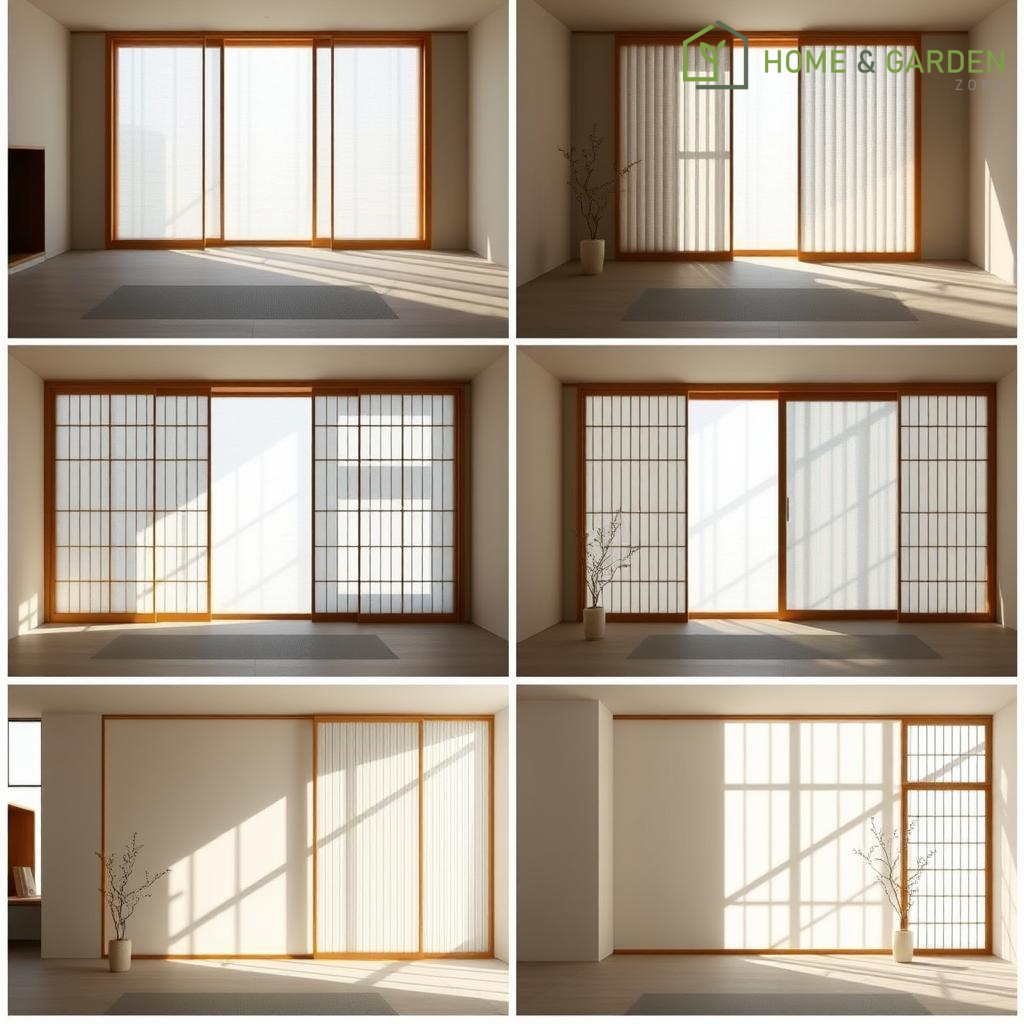
In the realm of interior architecture, few elements possess the timeless elegance and functional versatility of the Japanese shoji screen. Traditionally crafted from a delicate wooden lattice covered with translucent paper, these screens are far more than mere partitions; they are masterful instruments of light, privacy, and spatial fluidity. For our latest lookbook, we delve into eight distinct interiors across the globe where shoji screens have been innovatively employed to transform spaces, allowing natural light to filter through with a soft, ethereal glow while offering practical benefits.
The Art of Diffusion: Modern Adaptations of Shoji
1. The Silicon Valley Sanctuary, USA
Nestled in the tech heartland, a modernist residence has been thoughtfully updated with custom shoji panels. Here, these screens define the transition between a expansive living area and a verdant garden, establishing distinct zones without sacrificing the inherent openness of the mid-century design. The diffused light entering through the screens effectively mitigates harsh glare, creating a perpetually serene environment.
2. Tokyo’s Urban Oasis, Japan
In a bustling Tokyo district, a creative agency’s office exemplifies the contemporary application of shoji. Translucent screens delineate meeting rooms and individual workstations, fostering an environment conducive to concentration while preserving an airy, collaborative spirit. Natural timber frames complement the office's organic material palette, reinforcing a connection to nature amidst the urban sprawl.
3. Copenhagen’s Minimalist Loft, Denmark
A minimalist loft in the Danish capital utilizes shoji screens as flexible partitions. Deployed between the sleeping area and the main living space, these screens allow abundant natural light from expansive windows to permeate deeper into the apartment, enhancing the sense of spaciousness in a compact urban dwelling.
4. Kyoto’s Timeless Ryokan, Japan
Returning to their roots, a traditional ryokan in Kyoto showcases the quintessential use of shoji. Here, the screens are integral to the guest rooms, providing subtle privacy, precise light modulation, and a harmonious connection to the external garden landscapes, embodying centuries of refined design wisdom.
5. The London Gallery’s Flexible Canvas, UK
A contemporary art gallery in London employs oversized shoji screens to reconfigure exhibition spaces with ease. They provide a soft, consistent light backdrop, ideal for viewing diverse artworks, allowing the gallery to adapt its layout for various installations while maintaining an elegant aesthetic.
6. Sydney’s Serene Yoga Studio, Australia
In a wellness studio in Sydney, shoji screens craft individual practice zones. This application offers a vital sense of enclosure and personal space without isolating practitioners, contributing significantly to a tranquil and focused atmosphere conducive to mindfulness.
7. Manhattan’s Compact Studio Apartment, USA
A cleverly designed studio apartment in Manhattan deploys sliding shoji screens to discreetly conceal a sleeping alcove and a compact kitchen. This ingenious solution maximizes the perceived space within the apartment, ensuring natural light reaches every corner throughout the day, making the modest footprint feel expansive.
8. Parisian Boutique’s Elegant Divisions, France
A high-end fashion boutique in Paris utilizes shoji screens as both elegant dressing room entrances and subtle dividers for display areas. They infuse the retail space with a touch of refined simplicity and a softly diffused ambiance, elevating the entire shopping experience.
Conclusion
The enduring appeal of translucent shoji screens lies in their remarkable ability to transcend cultural boundaries and adapt to modern architectural demands. From serene homes and bustling offices to artistic galleries and retail spaces, these screens consistently prove their worth by enhancing natural light, optimizing spatial dynamics, and infusing interiors with a unique sense of tranquility and understated beauty. As designers continue to seek sustainable and aesthetically pleasing solutions, the humble shoji screen remains a powerful tool in crafting luminous and harmonious environments.
Resources
- The Art of Japanese Architecture: A Study of Traditional and Modern Adaptations.
- Architectural Digest: Features on minimalist design and innovative partitions in contemporary residences.
- Dezeen: Articles exploring natural light integration and material innovation in commercial and residential projects.
Details
Author


Latest articles



 }})
You can now watch HBO Max for $10
In the realm of interior architecture, few elements possess the timeless elegance and functional versatility of the Japanese shoji screen. Traditionally crafted from a delicate wooden lattice covered with translucent paper, these screens are far more than mere partitions; they are masterful instruments of light, privacy, and spatial fluidity. For our latest lookbook, we delve into eight distinct interiors across the globe where shoji screens have been innovatively employed to transform spaces, allowing natural light to filter through with a soft, ethereal glow while offering practical benefits.
The Art of Diffusion: Modern Adaptations of Shoji
1. The Silicon Valley Sanctuary, USA
Nestled in the tech heartland, a modernist residence has been thoughtfully updated with custom shoji panels. Here, these screens define the transition between a expansive living area and a verdant garden, establishing distinct zones without sacrificing the inherent openness of the mid-century design. The diffused light entering through the screens effectively mitigates harsh glare, creating a perpetually serene environment.
2. Tokyo’s Urban Oasis, Japan
In a bustling Tokyo district, a creative agency’s office exemplifies the contemporary application of shoji. Translucent screens delineate meeting rooms and individual workstations, fostering an environment conducive to concentration while preserving an airy, collaborative spirit. Natural timber frames complement the office's organic material palette, reinforcing a connection to nature amidst the urban sprawl.
3. Copenhagen’s Minimalist Loft, Denmark
A minimalist loft in the Danish capital utilizes shoji screens as flexible partitions. Deployed between the sleeping area and the main living space, these screens allow abundant natural light from expansive windows to permeate deeper into the apartment, enhancing the sense of spaciousness in a compact urban dwelling.
4. Kyoto’s Timeless Ryokan, Japan
Returning to their roots, a traditional ryokan in Kyoto showcases the quintessential use of shoji. Here, the screens are integral to the guest rooms, providing subtle privacy, precise light modulation, and a harmonious connection to the external garden landscapes, embodying centuries of refined design wisdom.
5. The London Gallery’s Flexible Canvas, UK
A contemporary art gallery in London employs oversized shoji screens to reconfigure exhibition spaces with ease. They provide a soft, consistent light backdrop, ideal for viewing diverse artworks, allowing the gallery to adapt its layout for various installations while maintaining an elegant aesthetic.
6. Sydney’s Serene Yoga Studio, Australia
In a wellness studio in Sydney, shoji screens craft individual practice zones. This application offers a vital sense of enclosure and personal space without isolating practitioners, contributing significantly to a tranquil and focused atmosphere conducive to mindfulness.
7. Manhattan’s Compact Studio Apartment, USA
A cleverly designed studio apartment in Manhattan deploys sliding shoji screens to discreetly conceal a sleeping alcove and a compact kitchen. This ingenious solution maximizes the perceived space within the apartment, ensuring natural light reaches every corner throughout the day, making the modest footprint feel expansive.
8. Parisian Boutique’s Elegant Divisions, France
A high-end fashion boutique in Paris utilizes shoji screens as both elegant dressing room entrances and subtle dividers for display areas. They infuse the retail space with a touch of refined simplicity and a softly diffused ambiance, elevating the entire shopping experience.
Conclusion
The enduring appeal of translucent shoji screens lies in their remarkable ability to transcend cultural boundaries and adapt to modern architectural demands. From serene homes and bustling offices to artistic galleries and retail spaces, these screens consistently prove their worth by enhancing natural light, optimizing spatial dynamics, and infusing interiors with a unique sense of tranquility and understated beauty. As designers continue to seek sustainable and aesthetically pleasing solutions, the humble shoji screen remains a powerful tool in crafting luminous and harmonious environments.
Resources
- The Art of Japanese Architecture: A Study of Traditional and Modern Adaptations.
- Architectural Digest: Features on minimalist design and innovative partitions in contemporary residences.
- Dezeen: Articles exploring natural light integration and material innovation in commercial and residential projects.
Latest articles
You can now watch HBO Max for $10
Similar posts


This is a page that only logged-in people can visit. Don't you feel special? Try clicking on a button below to do some things you can't do when you're logged out.
Example modal
At your leisure, please peruse this excerpt from a whale of a tale.
Chapter 1: Loomings.
Call me Ishmael. Some years ago—never mind how long precisely—having little or no money in my purse, and nothing particular to interest me on shore, I thought I would sail about a little and see the watery part of the world. It is a way I have of driving off the spleen and regulating the circulation. Whenever I find myself growing grim about the mouth; whenever it is a damp, drizzly November in my soul; whenever I find myself involuntarily pausing before coffin warehouses, and bringing up the rear of every funeral I meet; and especially whenever my hypos get such an upper hand of me, that it requires a strong moral principle to prevent me from deliberately stepping into the street, and methodically knocking people's hats off—then, I account it high time to get to sea as soon as I can. This is my substitute for pistol and ball. With a philosophical flourish Cato throws himself upon his sword; I quietly take to the ship. There is nothing surprising in this. If they but knew it, almost all men in their degree, some time or other, cherish very nearly the same feelings towards the ocean with me.
Comment