Chile Verde: A Culinary Expedition into Mexico's Hearty, Flavorful Green Stew
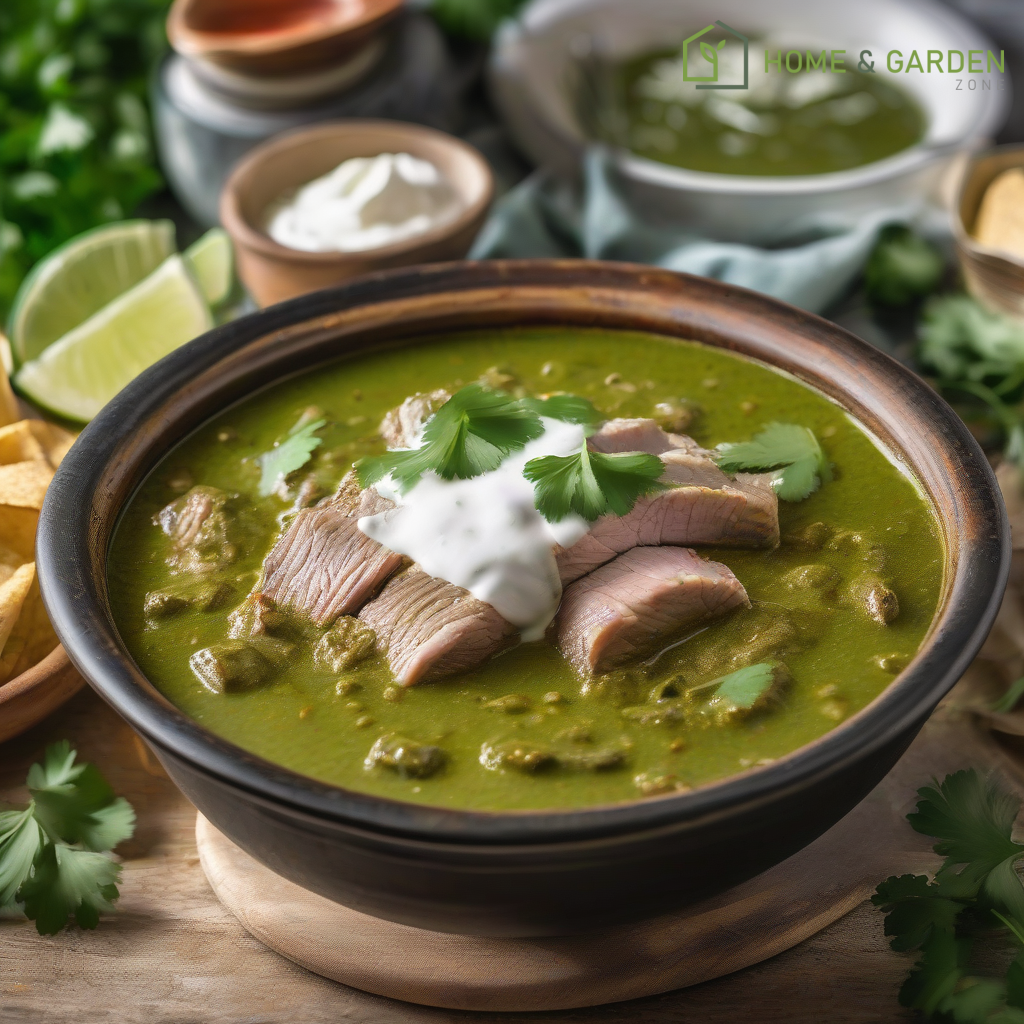
Chile Verde, a vibrant and robust stew, stands as a testament to the comforting power of Mexican cuisine. This dish, celebrated for its tender cuts of pork swimming in a piquant, herbaceous green chile sauce, offers a culinary journey that is both accessible to the home cook and deeply satisfying to the palate. Often hailed as a prime example of "broil and stir" simplicity, Chile Verde belies its humble preparation with layers of complex flavor, making it a perennial favorite across kitchens from New Mexico to Jalisco.
The Genesis of Green: A Historical Perspective
While the precise origins of Chile Verde are debated, its roots are firmly planted in the culinary traditions of Mexico and the American Southwest. The dish embodies the region's reliance on local produce, particularly the diverse array of green chiles and tomatillos. Historically, slow-cooked stews were a practical and flavorful way to utilize cuts of meat, allowing tough fibers to tenderize over hours, absorbing the rich essences of their liquid medium. Early iterations would have leveraged regional chiles like Hatch or poblano, combined with the tart brightness of tomatillos, forming the foundational "verde" (green) sauce that defines the dish today.
Deconstructing the Chile Verde Experience
At its core, Chile Verde is a masterpiece of contrasts and harmonies. The fatty richness of pork shoulder or butt, often browned to develop a deep umami, is counterbalanced by the bright acidity of the tomatillo and the earthy spice of roasted green chiles. This combination creates a sauce that is simultaneously refreshing and profoundly savory.
Key Components:
- The Pork: Typically, pork shoulder (carnitas meat) is chosen for its marbling and ability to withstand long cooking times, rendering it fork-tender and succulent.
- The Verde Sauce: The soul of the dish. It's a vibrant blend, usually featuring roasted tomatillos, various green chiles (jalapeño, serrano for heat; poblano, Anaheim for depth), garlic, and onion. Roasting these ingredients prior to blending adds a crucial smoky dimension and mellows their raw edges.
- Aromatic Foundations: Onions, garlic, and sometimes cilantro are sautéed to build a fragrant base before the chile sauce and pork are introduced.
Crafting the Perfect Green Chile Sauce
The success of Chile Verde hinges on its namesake sauce. The process typically begins with charring the tomatillos and chiles—often under a broiler or on a comal—until they are softened and slightly blackened. This step is critical; it intensifies their flavor and makes them easier to blend into a smooth, emulsified sauce. Once roasted, these ingredients are blended with fresh cilantro, a touch of water or broth, and seasonings to achieve a balanced consistency and flavor profile. The sauce is then simmered with the browned pork, allowing the flavors to meld and the meat to become exquisitely tender.
From Pot to Plate: Serving and Pairings
Chile Verde is a remarkably versatile dish. It can be served simply with warm tortillas, allowing diners to sop up every drop of the delectable sauce. Alternatively, it makes an excellent filling for burritos or tacos, a topping for rice, or even a hearty base for a bowl of soupy beans. Garnish with a sprinkle of fresh cilantro, a dollop of sour cream, or crumbled cotija cheese for an added layer of texture and flavor. Its robust character pairs well with simple sides like Mexican rice or refried beans.
Beyond Chile Verde: Exploring Related Culinary Traditions
For those who appreciate the comforting depth of Chile Verde, the culinary landscape offers similar delights. Pozole, another iconic Mexican stew, often features hominy and various meats in either a red (rojo) or green (verde) broth, offering a different textural experience. Similarly, Sancocho, a hearty stew popular across Latin America and the Caribbean, showcases a rich medley of meats and root vegetables, emphasizing a deeply savory broth that speaks to shared indigenous and colonial culinary influences.
Summary
Chile Verde is more than just a stew; it is a culinary embrace, offering profound comfort through its simple ingredients and robust flavors. Its preparation, centered around the creation of a vibrant green chile and tomatillo sauce and the slow braising of pork, demonstrates how straightforward techniques can yield extraordinary results. This dish stands as a testament to the enduring appeal of Mexican cuisine: hearty, flavorful, and always inviting.
Resources
Details
Author




Latest articles




 }})
You can now watch HBO Max for $10
Chile Verde, a vibrant and robust stew, stands as a testament to the comforting power of Mexican cuisine. This dish, celebrated for its tender cuts of pork swimming in a piquant, herbaceous green chile sauce, offers a culinary journey that is both accessible to the home cook and deeply satisfying to the palate. Often hailed as a prime example of "broil and stir" simplicity, Chile Verde belies its humble preparation with layers of complex flavor, making it a perennial favorite across kitchens from New Mexico to Jalisco.
The Genesis of Green: A Historical Perspective
While the precise origins of Chile Verde are debated, its roots are firmly planted in the culinary traditions of Mexico and the American Southwest. The dish embodies the region's reliance on local produce, particularly the diverse array of green chiles and tomatillos. Historically, slow-cooked stews were a practical and flavorful way to utilize cuts of meat, allowing tough fibers to tenderize over hours, absorbing the rich essences of their liquid medium. Early iterations would have leveraged regional chiles like Hatch or poblano, combined with the tart brightness of tomatillos, forming the foundational "verde" (green) sauce that defines the dish today.
Deconstructing the Chile Verde Experience
At its core, Chile Verde is a masterpiece of contrasts and harmonies. The fatty richness of pork shoulder or butt, often browned to develop a deep umami, is counterbalanced by the bright acidity of the tomatillo and the earthy spice of roasted green chiles. This combination creates a sauce that is simultaneously refreshing and profoundly savory.
Key Components:
- The Pork: Typically, pork shoulder (carnitas meat) is chosen for its marbling and ability to withstand long cooking times, rendering it fork-tender and succulent.
- The Verde Sauce: The soul of the dish. It's a vibrant blend, usually featuring roasted tomatillos, various green chiles (jalapeño, serrano for heat; poblano, Anaheim for depth), garlic, and onion. Roasting these ingredients prior to blending adds a crucial smoky dimension and mellows their raw edges.
- Aromatic Foundations: Onions, garlic, and sometimes cilantro are sautéed to build a fragrant base before the chile sauce and pork are introduced.
Crafting the Perfect Green Chile Sauce
The success of Chile Verde hinges on its namesake sauce. The process typically begins with charring the tomatillos and chiles—often under a broiler or on a comal—until they are softened and slightly blackened. This step is critical; it intensifies their flavor and makes them easier to blend into a smooth, emulsified sauce. Once roasted, these ingredients are blended with fresh cilantro, a touch of water or broth, and seasonings to achieve a balanced consistency and flavor profile. The sauce is then simmered with the browned pork, allowing the flavors to meld and the meat to become exquisitely tender.
From Pot to Plate: Serving and Pairings
Chile Verde is a remarkably versatile dish. It can be served simply with warm tortillas, allowing diners to sop up every drop of the delectable sauce. Alternatively, it makes an excellent filling for burritos or tacos, a topping for rice, or even a hearty base for a bowl of soupy beans. Garnish with a sprinkle of fresh cilantro, a dollop of sour cream, or crumbled cotija cheese for an added layer of texture and flavor. Its robust character pairs well with simple sides like Mexican rice or refried beans.
Beyond Chile Verde: Exploring Related Culinary Traditions
For those who appreciate the comforting depth of Chile Verde, the culinary landscape offers similar delights. Pozole, another iconic Mexican stew, often features hominy and various meats in either a red (rojo) or green (verde) broth, offering a different textural experience. Similarly, Sancocho, a hearty stew popular across Latin America and the Caribbean, showcases a rich medley of meats and root vegetables, emphasizing a deeply savory broth that speaks to shared indigenous and colonial culinary influences.
Summary
Chile Verde is more than just a stew; it is a culinary embrace, offering profound comfort through its simple ingredients and robust flavors. Its preparation, centered around the creation of a vibrant green chile and tomatillo sauce and the slow braising of pork, demonstrates how straightforward techniques can yield extraordinary results. This dish stands as a testament to the enduring appeal of Mexican cuisine: hearty, flavorful, and always inviting.
Resources
Latest articles
You can now watch HBO Max for $10
Similar posts




This is a page that only logged-in people can visit. Don't you feel special? Try clicking on a button below to do some things you can't do when you're logged out.
Example modal
At your leisure, please peruse this excerpt from a whale of a tale.
Chapter 1: Loomings.
Call me Ishmael. Some years ago—never mind how long precisely—having little or no money in my purse, and nothing particular to interest me on shore, I thought I would sail about a little and see the watery part of the world. It is a way I have of driving off the spleen and regulating the circulation. Whenever I find myself growing grim about the mouth; whenever it is a damp, drizzly November in my soul; whenever I find myself involuntarily pausing before coffin warehouses, and bringing up the rear of every funeral I meet; and especially whenever my hypos get such an upper hand of me, that it requires a strong moral principle to prevent me from deliberately stepping into the street, and methodically knocking people's hats off—then, I account it high time to get to sea as soon as I can. This is my substitute for pistol and ball. With a philosophical flourish Cato throws himself upon his sword; I quietly take to the ship. There is nothing surprising in this. If they but knew it, almost all men in their degree, some time or other, cherish very nearly the same feelings towards the ocean with me.
Comment