Vertical Layering: Reimagining a 1891 Berlin House for Contemporary Family Life
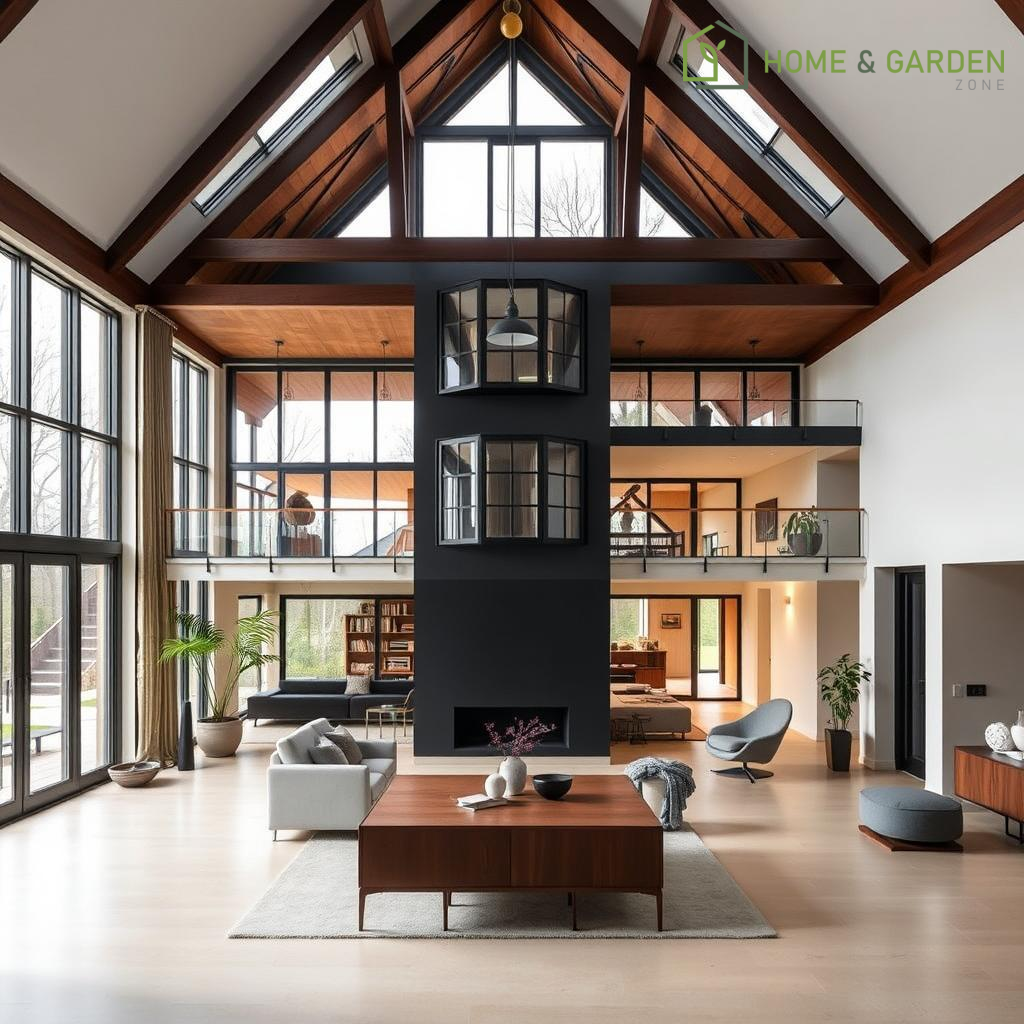
A Historic Canvas Reimagined: The Berlin Townhouse F Transformation
In the bustling heart of Berlin, a townhouse dating back to 1891 has undergone a profound metamorphosis, artfully transformed into a modern family residence. This ambitious project, spearheaded by the architectural firm ATELIER ST, exemplifies a meticulous balance between historical restoration, bold spatial reconfiguration, and the seamless integration of contemporary materials. The intervention showcases how a deep respect for a building's past can coexist harmoniously with the demands and aesthetics of present-day living, creating a dwelling that is both a homage to its origins and a beacon of modern design.
ATELIER ST's Vision: Vertical Layering as a Guiding Principle
The core philosophy driving the renovation of what is known as "Townhouse F" was 'vertical layering' – a strategy designed to unlock the full potential of its narrow, deep plot. This concept transcended mere aesthetic updates, acting as a structural and conceptual framework that redefined the dwelling's internal logic and flow.
Balancing Past and Present: Restoration and Integration
A fundamental aspect of ATELIER ST’s approach was the careful restoration of the original 1891 structure. Instead of erasing history, the architects chose to highlight existing features, allowing the building’s century-old character to inform new additions. This delicate balance ensured that while the home gained modern functionality, its historical essence remained palpable. Original textures and structural elements were preserved or meticulously repaired, forming a rich dialogue with the new interventions.
Spatial Alchemy: Reconfiguring for Modern Living
The traditional, often compartmentalized layout of 19th-century townhouses presented a significant challenge for contemporary family life. Through vertical layering, ATELIER ST ingeniously reconfigured the internal volumes, creating open, interconnected spaces across multiple levels. New staircases became more than just connectors; they were sculptural elements that fostered visual and social links between floors, allowing light to penetrate deep into the plan. This thoughtful reordering created a sense of expansive living, where various family activities could unfold simultaneously yet remain harmoniously linked, blurring the lines between different zones and promoting an intuitive flow throughout the home.
Material Dialogue: A Harmonious Palette
The material selection played a pivotal role in bridging the chronological gap between the original structure and its modern iteration. A considered palette of raw and refined materials—such as exposed concrete, warm timber, elegant steel, and smooth plaster—was employed. These materials were chosen not only for their aesthetic qualities but also for their ability to contribute to the project's overall narrative: a conversation between the aged and the new. The tactile qualities of these surfaces add depth and character, ensuring that the modern additions feel integrated and authentic rather than superimposed.
Summary: A Modern Family Home Rooted in History
The transformation of the 1891 Berlin townhouse into a modern family home through the principle of vertical layering stands as a testament to considered architectural intervention. ATELIER ST has masterfully crafted a residence that respects its historical provenance while providing a highly functional, light-filled, and aesthetically refined environment for contemporary living. The project is a compelling example of how architectural heritage can be not just preserved, but dynamically reinterpreted to meet the evolving needs of a new era.
Resources
Details
Author


Latest articles

 }})
You can now watch HBO Max for $10
A Historic Canvas Reimagined: The Berlin Townhouse F Transformation
In the bustling heart of Berlin, a townhouse dating back to 1891 has undergone a profound metamorphosis, artfully transformed into a modern family residence. This ambitious project, spearheaded by the architectural firm ATELIER ST, exemplifies a meticulous balance between historical restoration, bold spatial reconfiguration, and the seamless integration of contemporary materials. The intervention showcases how a deep respect for a building's past can coexist harmoniously with the demands and aesthetics of present-day living, creating a dwelling that is both a homage to its origins and a beacon of modern design.
ATELIER ST's Vision: Vertical Layering as a Guiding Principle
The core philosophy driving the renovation of what is known as "Townhouse F" was 'vertical layering' – a strategy designed to unlock the full potential of its narrow, deep plot. This concept transcended mere aesthetic updates, acting as a structural and conceptual framework that redefined the dwelling's internal logic and flow.
Balancing Past and Present: Restoration and Integration
A fundamental aspect of ATELIER ST’s approach was the careful restoration of the original 1891 structure. Instead of erasing history, the architects chose to highlight existing features, allowing the building’s century-old character to inform new additions. This delicate balance ensured that while the home gained modern functionality, its historical essence remained palpable. Original textures and structural elements were preserved or meticulously repaired, forming a rich dialogue with the new interventions.
Spatial Alchemy: Reconfiguring for Modern Living
The traditional, often compartmentalized layout of 19th-century townhouses presented a significant challenge for contemporary family life. Through vertical layering, ATELIER ST ingeniously reconfigured the internal volumes, creating open, interconnected spaces across multiple levels. New staircases became more than just connectors; they were sculptural elements that fostered visual and social links between floors, allowing light to penetrate deep into the plan. This thoughtful reordering created a sense of expansive living, where various family activities could unfold simultaneously yet remain harmoniously linked, blurring the lines between different zones and promoting an intuitive flow throughout the home.
Material Dialogue: A Harmonious Palette
The material selection played a pivotal role in bridging the chronological gap between the original structure and its modern iteration. A considered palette of raw and refined materials—such as exposed concrete, warm timber, elegant steel, and smooth plaster—was employed. These materials were chosen not only for their aesthetic qualities but also for their ability to contribute to the project's overall narrative: a conversation between the aged and the new. The tactile qualities of these surfaces add depth and character, ensuring that the modern additions feel integrated and authentic rather than superimposed.
Summary: A Modern Family Home Rooted in History
The transformation of the 1891 Berlin townhouse into a modern family home through the principle of vertical layering stands as a testament to considered architectural intervention. ATELIER ST has masterfully crafted a residence that respects its historical provenance while providing a highly functional, light-filled, and aesthetically refined environment for contemporary living. The project is a compelling example of how architectural heritage can be not just preserved, but dynamically reinterpreted to meet the evolving needs of a new era.
Resources
Latest articles
You can now watch HBO Max for $10
Similar posts


This is a page that only logged-in people can visit. Don't you feel special? Try clicking on a button below to do some things you can't do when you're logged out.
Example modal
At your leisure, please peruse this excerpt from a whale of a tale.
Chapter 1: Loomings.
Call me Ishmael. Some years ago—never mind how long precisely—having little or no money in my purse, and nothing particular to interest me on shore, I thought I would sail about a little and see the watery part of the world. It is a way I have of driving off the spleen and regulating the circulation. Whenever I find myself growing grim about the mouth; whenever it is a damp, drizzly November in my soul; whenever I find myself involuntarily pausing before coffin warehouses, and bringing up the rear of every funeral I meet; and especially whenever my hypos get such an upper hand of me, that it requires a strong moral principle to prevent me from deliberately stepping into the street, and methodically knocking people's hats off—then, I account it high time to get to sea as soon as I can. This is my substitute for pistol and ball. With a philosophical flourish Cato throws himself upon his sword; I quietly take to the ship. There is nothing surprising in this. If they but knew it, almost all men in their degree, some time or other, cherish very nearly the same feelings towards the ocean with me.
Comment