Tottolo: When Design Embraces the Unrefined Instinct of Childhood Play
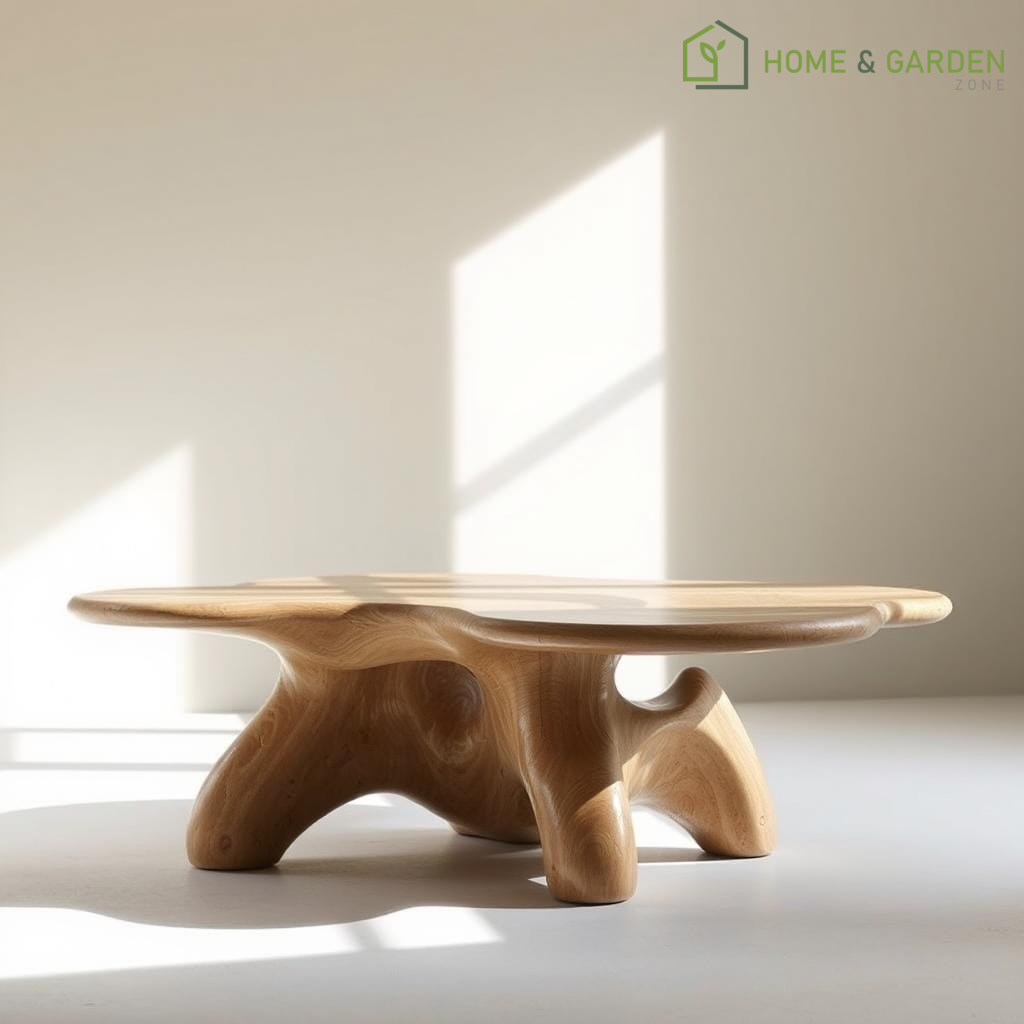
In an era often dominated by precision engineering and minimalist linearity, a new paradigm emerges, championed by the Tottolo table. Far from the rigid dictates of conventional design, Tottolo stands as a testament to the profound power of uninhibited creativity, echoing the spontaneous, instinct-driven explorations of childhood.
The Philosophy of Unscripted Form
Tottolo's genesis lies in a departure from the instruction-led approach that often governs industrial design. Instead, its creators appear to have embraced a philosophy where form is discovered rather than dictated. This methodology mirrors the way children interact with materials – without preconceptions, simply allowing curiosity to guide their hands. The result is an object that feels less manufactured and more organically grown, each curve and angle seemingly a direct manifestation of playful thought rather than a calculated geometric exercise.
Channelling Childhood's Creative Impulse
The essence of "childhood creativity" in Tottolo is not merely a nostalgic nod; it is the very engine of its aesthetic. This table avoids the sterile perfection often associated with high-end furnishings, opting instead for an expressive quality that invites interaction and contemplation. Its sculptural presence transforms a functional item into a focal point, challenging observers to perceive furniture not just as utility but as a narrative piece. The lines might appear to undulate, the surfaces to swell and recede, evoking natural forms or even a spontaneous doodle brought to three-dimensional life.
Beyond Perfection: The Beauty of Expression
By prioritizing playful curiosity over an ideal of flawless execution, Tottolo achieves a unique brand of beauty. It communicates a story of exploration, of hands shaping material with an almost innocent abandon. This approach resonates with contemporary movements that seek to reintroduce humanity and idiosyncrasy into designed objects, pushing back against the uniformity of mass production. The table becomes a dialogue between the material and the maker's intuition, culminating in a piece that is as much a work of art as it is a furnishing.
Summary
The Tottolo table stands as a compelling example of design liberated from traditional constraints. It embodies a philosophy where instinct, play, and unadulterated creativity forge a sculptural and deeply expressive form. By channelling the unscripted joy of childhood exploration, Tottolo offers a refreshing perspective on what modern furniture can be: an object of utility, certainly, but also a vibrant, tactile celebration of spontaneous artistry.
Resources
- Dezeen Magazine (simulated focus on experimental design and emerging artists)
- Design Milk (simulated exploration of contemporary furniture trends)
- The Future of Design Institute (simulated research into human-centric and organic design philosophies)
Details
Author



Latest articles


 }})
You can now watch HBO Max for $10
In an era often dominated by precision engineering and minimalist linearity, a new paradigm emerges, championed by the Tottolo table. Far from the rigid dictates of conventional design, Tottolo stands as a testament to the profound power of uninhibited creativity, echoing the spontaneous, instinct-driven explorations of childhood.
The Philosophy of Unscripted Form
Tottolo's genesis lies in a departure from the instruction-led approach that often governs industrial design. Instead, its creators appear to have embraced a philosophy where form is discovered rather than dictated. This methodology mirrors the way children interact with materials – without preconceptions, simply allowing curiosity to guide their hands. The result is an object that feels less manufactured and more organically grown, each curve and angle seemingly a direct manifestation of playful thought rather than a calculated geometric exercise.
Channelling Childhood's Creative Impulse
The essence of "childhood creativity" in Tottolo is not merely a nostalgic nod; it is the very engine of its aesthetic. This table avoids the sterile perfection often associated with high-end furnishings, opting instead for an expressive quality that invites interaction and contemplation. Its sculptural presence transforms a functional item into a focal point, challenging observers to perceive furniture not just as utility but as a narrative piece. The lines might appear to undulate, the surfaces to swell and recede, evoking natural forms or even a spontaneous doodle brought to three-dimensional life.
Beyond Perfection: The Beauty of Expression
By prioritizing playful curiosity over an ideal of flawless execution, Tottolo achieves a unique brand of beauty. It communicates a story of exploration, of hands shaping material with an almost innocent abandon. This approach resonates with contemporary movements that seek to reintroduce humanity and idiosyncrasy into designed objects, pushing back against the uniformity of mass production. The table becomes a dialogue between the material and the maker's intuition, culminating in a piece that is as much a work of art as it is a furnishing.
Summary
The Tottolo table stands as a compelling example of design liberated from traditional constraints. It embodies a philosophy where instinct, play, and unadulterated creativity forge a sculptural and deeply expressive form. By channelling the unscripted joy of childhood exploration, Tottolo offers a refreshing perspective on what modern furniture can be: an object of utility, certainly, but also a vibrant, tactile celebration of spontaneous artistry.
Resources
- Dezeen Magazine (simulated focus on experimental design and emerging artists)
- Design Milk (simulated exploration of contemporary furniture trends)
- The Future of Design Institute (simulated research into human-centric and organic design philosophies)
Latest articles
You can now watch HBO Max for $10
Similar posts

This is a page that only logged-in people can visit. Don't you feel special? Try clicking on a button below to do some things you can't do when you're logged out.
Example modal
At your leisure, please peruse this excerpt from a whale of a tale.
Chapter 1: Loomings.
Call me Ishmael. Some years ago—never mind how long precisely—having little or no money in my purse, and nothing particular to interest me on shore, I thought I would sail about a little and see the watery part of the world. It is a way I have of driving off the spleen and regulating the circulation. Whenever I find myself growing grim about the mouth; whenever it is a damp, drizzly November in my soul; whenever I find myself involuntarily pausing before coffin warehouses, and bringing up the rear of every funeral I meet; and especially whenever my hypos get such an upper hand of me, that it requires a strong moral principle to prevent me from deliberately stepping into the street, and methodically knocking people's hats off—then, I account it high time to get to sea as soon as I can. This is my substitute for pistol and ball. With a philosophical flourish Cato throws himself upon his sword; I quietly take to the ship. There is nothing surprising in this. If they but knew it, almost all men in their degree, some time or other, cherish very nearly the same feelings towards the ocean with me.
Comment