Lithuania's 'Lost Shtetl' Jewish Museum Emerges as a Clustered Village, Honoring Vanished Communities
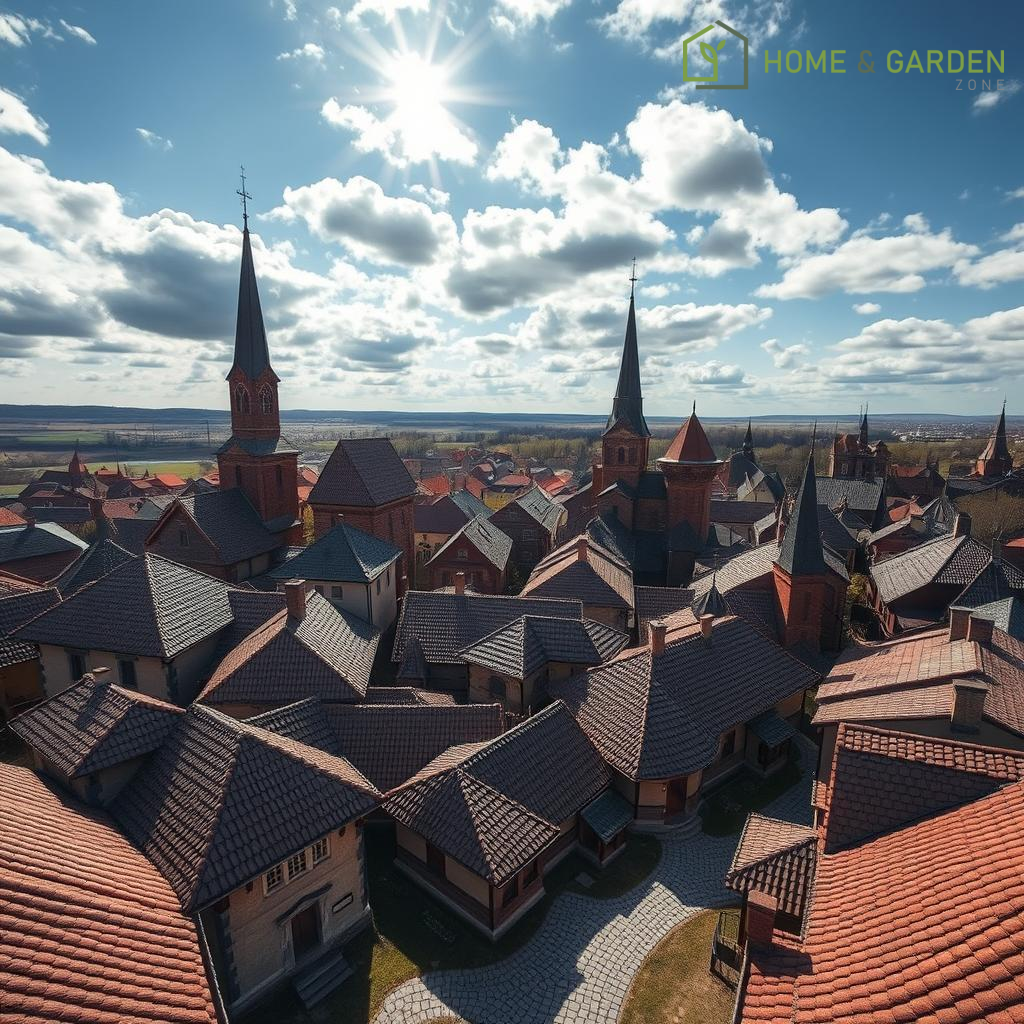
A Contemplative Landscape of Memory
In the heart of Lithuania, a profound architectural undertaking by Finnish firm Lahdelma & Mahlamäki is giving tangible form to an intangible loss. The ‘Lost Shtetl Jewish Museum’ transcends conventional museum design, transforming the somber memory of a destroyed village into a gleaming, clustered architectural narrative. This innovative project near Šeduva is not merely a repository of artifacts; it is a meticulously crafted landscape that seeks to embody the fragmented yet resilient spirit of the hundreds of Jewish shtetls eradicated during the Holocaust.
The concept behind the museum deliberately moves away from a singular, monumental structure. Instead, the architects have envisioned a series of distinct, village-like volumes, each contributing to a collective experience that mirrors the intimate scale and communal essence of the traditional Jewish settlements. This design choice powerfully communicates the idea of a community shattered but not entirely erased, with each cluster representing a facet of a vibrant past now remembered.
Architectural Vision and Materiality
Lahdelma & Mahlamäki’s approach is characterized by a deep respect for both historical context and the natural environment. The museum’s forms are imbued with a quiet dignity, utilizing local materials such as wood and stone to ensure a harmonious integration with the Lithuanian landscape. The architecture speaks in hushed tones, allowing the contemplation of history to take precedence over overt grandiosity. The interplay of light and shadow within and between the clustered buildings further enhances the reflective atmosphere, guiding visitors through spaces designed for remembrance and education.
Each module within the museum complex serves a specific purpose, from exhibition halls detailing the rich cultural life of the shtetls to research facilities dedicated to the study of Lithuanian Jewry. The thoughtful arrangement of these spaces encourages a journey of discovery, offering insights into Jewish traditions, daily life, and the devastating impact of the Shoah. The project stands as a testament to the enduring power of architecture to address complex historical narratives with sensitivity and innovation.
Summary
The ‘Lost Shtetl Jewish Museum’ represents a significant contribution to Holocaust remembrance and cultural preservation. Through its unique clustered village design, Lahdelma & Mahlamäki has created a living memorial that both mourns a profound loss and celebrates a rich heritage. The museum serves as a vital educational institution, ensuring that the stories and lives of Lithuanian Jewry are neither forgotten nor diminished, but rather illuminated for future generations in a contemplative and engaging setting.
Resources
Details
Author



Latest articles


 }})
You can now watch HBO Max for $10
A Contemplative Landscape of Memory
In the heart of Lithuania, a profound architectural undertaking by Finnish firm Lahdelma & Mahlamäki is giving tangible form to an intangible loss. The ‘Lost Shtetl Jewish Museum’ transcends conventional museum design, transforming the somber memory of a destroyed village into a gleaming, clustered architectural narrative. This innovative project near Šeduva is not merely a repository of artifacts; it is a meticulously crafted landscape that seeks to embody the fragmented yet resilient spirit of the hundreds of Jewish shtetls eradicated during the Holocaust.
The concept behind the museum deliberately moves away from a singular, monumental structure. Instead, the architects have envisioned a series of distinct, village-like volumes, each contributing to a collective experience that mirrors the intimate scale and communal essence of the traditional Jewish settlements. This design choice powerfully communicates the idea of a community shattered but not entirely erased, with each cluster representing a facet of a vibrant past now remembered.
Architectural Vision and Materiality
Lahdelma & Mahlamäki’s approach is characterized by a deep respect for both historical context and the natural environment. The museum’s forms are imbued with a quiet dignity, utilizing local materials such as wood and stone to ensure a harmonious integration with the Lithuanian landscape. The architecture speaks in hushed tones, allowing the contemplation of history to take precedence over overt grandiosity. The interplay of light and shadow within and between the clustered buildings further enhances the reflective atmosphere, guiding visitors through spaces designed for remembrance and education.
Each module within the museum complex serves a specific purpose, from exhibition halls detailing the rich cultural life of the shtetls to research facilities dedicated to the study of Lithuanian Jewry. The thoughtful arrangement of these spaces encourages a journey of discovery, offering insights into Jewish traditions, daily life, and the devastating impact of the Shoah. The project stands as a testament to the enduring power of architecture to address complex historical narratives with sensitivity and innovation.
Summary
The ‘Lost Shtetl Jewish Museum’ represents a significant contribution to Holocaust remembrance and cultural preservation. Through its unique clustered village design, Lahdelma & Mahlamäki has created a living memorial that both mourns a profound loss and celebrates a rich heritage. The museum serves as a vital educational institution, ensuring that the stories and lives of Lithuanian Jewry are neither forgotten nor diminished, but rather illuminated for future generations in a contemplative and engaging setting.
Resources
Latest articles
You can now watch HBO Max for $10
Similar posts



This is a page that only logged-in people can visit. Don't you feel special? Try clicking on a button below to do some things you can't do when you're logged out.
Example modal
At your leisure, please peruse this excerpt from a whale of a tale.
Chapter 1: Loomings.
Call me Ishmael. Some years ago—never mind how long precisely—having little or no money in my purse, and nothing particular to interest me on shore, I thought I would sail about a little and see the watery part of the world. It is a way I have of driving off the spleen and regulating the circulation. Whenever I find myself growing grim about the mouth; whenever it is a damp, drizzly November in my soul; whenever I find myself involuntarily pausing before coffin warehouses, and bringing up the rear of every funeral I meet; and especially whenever my hypos get such an upper hand of me, that it requires a strong moral principle to prevent me from deliberately stepping into the street, and methodically knocking people's hats off—then, I account it high time to get to sea as soon as I can. This is my substitute for pistol and ball. With a philosophical flourish Cato throws himself upon his sword; I quietly take to the ship. There is nothing surprising in this. If they but knew it, almost all men in their degree, some time or other, cherish very nearly the same feelings towards the ocean with me.
Comment