Horticulture Sprouts a Green Revolution: Reclaiming Organic Waste for Biodegradable Plant Pots
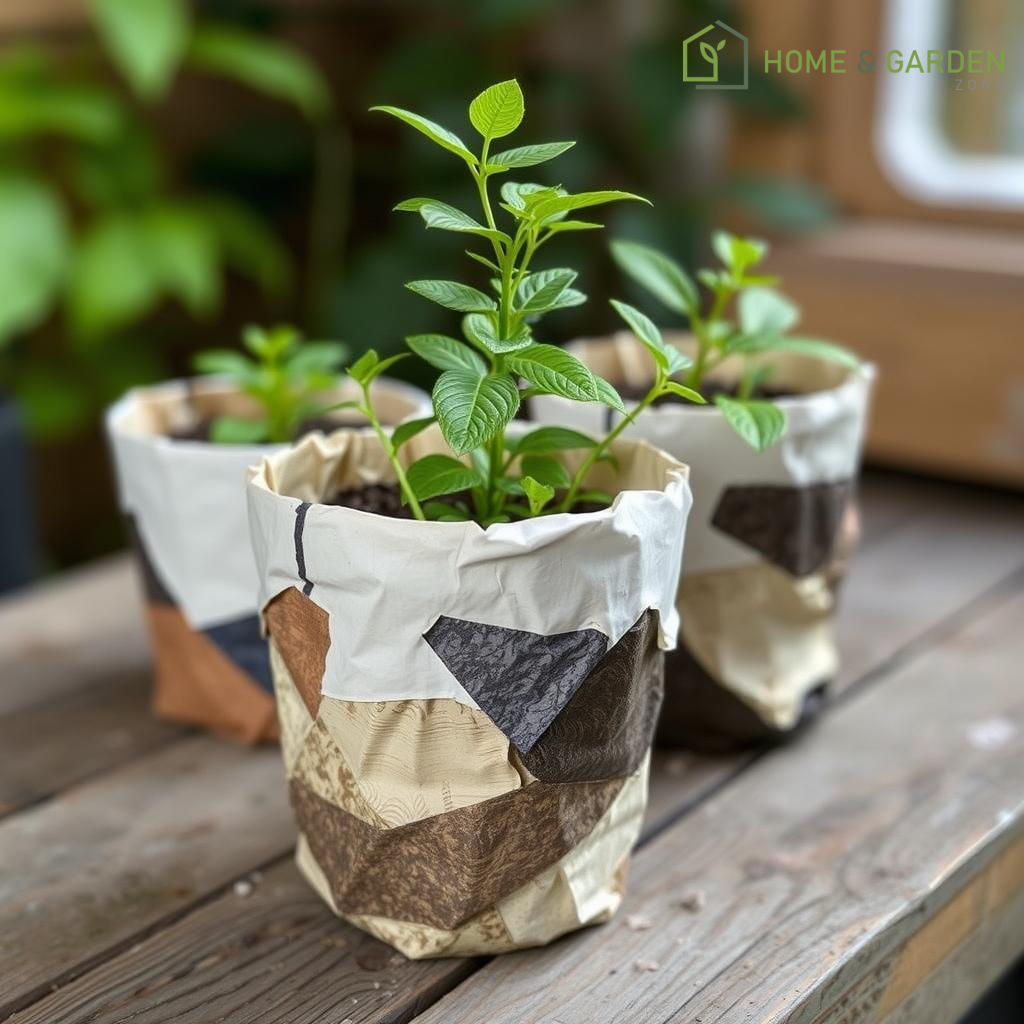
The global horticultural industry faces an escalating environmental challenge: the pervasive use of plastic containers. From nurseries to home gardens, billions of plastic pots are discarded annually, contributing significantly to landfill waste and microplastic pollution. This pressing issue has spurred a critical material research project, spotlighting an innovative solution that promises to revolutionize cultivation practices: plastic-free, biodegradable plant pots composed entirely of reclaimed organic waste.
The Pervasive Problem of Plastic in Horticulture
For decades, plastic pots have been the industry standard due to their durability, cost-effectiveness, and light weight. However, their convenience comes at a severe ecological cost. The vast majority of these pots are made from polypropylene (PP), a petroleum-based plastic that is rarely recycled through municipal streams, largely due to contamination from soil and plant matter. Consequently, these containers accumulate in landfills, persist in the environment for hundreds of years, and degrade into harmful microplastics that infiltrate ecosystems, water sources, and even the food chain. The environmental footprint extends beyond disposal, encompassing the energy-intensive production processes of virgin plastics.
Innovation from Organic Waste: A Sustainable Solution Emerges
Responding to this urgent crisis, material science is now championing a paradigm shift. Researchers and designers are harnessing the inherent properties of various organic waste streams to engineer functional, fully biodegradable alternatives. This ground-breaking approach not only diverts waste from landfills but also introduces a regenerative cycle back into nature.
Material Composition and Biodegradability
These next-generation plant pots are crafted from a diverse array of reclaimed organic materials. Common feedstocks include agricultural byproducts like rice husks, wood chips, and straw, as well as industrial organic waste, spent coffee grounds, and even recycled paper pulp. These materials are often bound together using natural binders, such as starches or lignin, and molded into robust yet permeable structures. The key characteristic is their capacity to naturally decompose once planted, enriching the soil with nutrients rather than polluting it. The decomposition timeline varies based on composition and environmental conditions, but generally, these pots break down within months or a few years, seamlessly integrating back into the earth.
Impact and Future Potential
The implications of this innovation are profound. For commercial nurseries, it offers a sustainable pathway to reduce operational waste and enhance their environmental credentials. For home gardeners, it eliminates the dilemma of plastic disposal, simplifying the planting process and fostering healthier soil. Beyond the immediate environmental benefits, the development of these organic-waste-based pots stimulates the circular economy, creating value from what was once considered refuse. While challenges remain in scaling production and achieving price parity with conventional plastics, the trajectory is clear: a future where the tools of cultivation actively contribute to ecological restoration.
Summary
The transition to plastic-free, biodegradable plant pots made from reclaimed organic waste represents a significant leap forward in sustainable horticulture. By transforming environmental liabilities into ecological assets, this material research project addresses the widespread issue of plastic pollution in gardening, offering a viable and regenerative alternative that benefits both industry and the planet. The shift away from petroleum-based plastics towards naturally derived, decomposable materials signals a new era for responsible cultivation.
Resources
Details
Author




Latest articles





 }})
You can now watch HBO Max for $10
The global horticultural industry faces an escalating environmental challenge: the pervasive use of plastic containers. From nurseries to home gardens, billions of plastic pots are discarded annually, contributing significantly to landfill waste and microplastic pollution. This pressing issue has spurred a critical material research project, spotlighting an innovative solution that promises to revolutionize cultivation practices: plastic-free, biodegradable plant pots composed entirely of reclaimed organic waste.
The Pervasive Problem of Plastic in Horticulture
For decades, plastic pots have been the industry standard due to their durability, cost-effectiveness, and light weight. However, their convenience comes at a severe ecological cost. The vast majority of these pots are made from polypropylene (PP), a petroleum-based plastic that is rarely recycled through municipal streams, largely due to contamination from soil and plant matter. Consequently, these containers accumulate in landfills, persist in the environment for hundreds of years, and degrade into harmful microplastics that infiltrate ecosystems, water sources, and even the food chain. The environmental footprint extends beyond disposal, encompassing the energy-intensive production processes of virgin plastics.
Innovation from Organic Waste: A Sustainable Solution Emerges
Responding to this urgent crisis, material science is now championing a paradigm shift. Researchers and designers are harnessing the inherent properties of various organic waste streams to engineer functional, fully biodegradable alternatives. This ground-breaking approach not only diverts waste from landfills but also introduces a regenerative cycle back into nature.
Material Composition and Biodegradability
These next-generation plant pots are crafted from a diverse array of reclaimed organic materials. Common feedstocks include agricultural byproducts like rice husks, wood chips, and straw, as well as industrial organic waste, spent coffee grounds, and even recycled paper pulp. These materials are often bound together using natural binders, such as starches or lignin, and molded into robust yet permeable structures. The key characteristic is their capacity to naturally decompose once planted, enriching the soil with nutrients rather than polluting it. The decomposition timeline varies based on composition and environmental conditions, but generally, these pots break down within months or a few years, seamlessly integrating back into the earth.
Impact and Future Potential
The implications of this innovation are profound. For commercial nurseries, it offers a sustainable pathway to reduce operational waste and enhance their environmental credentials. For home gardeners, it eliminates the dilemma of plastic disposal, simplifying the planting process and fostering healthier soil. Beyond the immediate environmental benefits, the development of these organic-waste-based pots stimulates the circular economy, creating value from what was once considered refuse. While challenges remain in scaling production and achieving price parity with conventional plastics, the trajectory is clear: a future where the tools of cultivation actively contribute to ecological restoration.
Summary
The transition to plastic-free, biodegradable plant pots made from reclaimed organic waste represents a significant leap forward in sustainable horticulture. By transforming environmental liabilities into ecological assets, this material research project addresses the widespread issue of plastic pollution in gardening, offering a viable and regenerative alternative that benefits both industry and the planet. The shift away from petroleum-based plastics towards naturally derived, decomposable materials signals a new era for responsible cultivation.
Resources
Latest articles
You can now watch HBO Max for $10
Similar posts


This is a page that only logged-in people can visit. Don't you feel special? Try clicking on a button below to do some things you can't do when you're logged out.
Example modal
At your leisure, please peruse this excerpt from a whale of a tale.
Chapter 1: Loomings.
Call me Ishmael. Some years ago—never mind how long precisely—having little or no money in my purse, and nothing particular to interest me on shore, I thought I would sail about a little and see the watery part of the world. It is a way I have of driving off the spleen and regulating the circulation. Whenever I find myself growing grim about the mouth; whenever it is a damp, drizzly November in my soul; whenever I find myself involuntarily pausing before coffin warehouses, and bringing up the rear of every funeral I meet; and especially whenever my hypos get such an upper hand of me, that it requires a strong moral principle to prevent me from deliberately stepping into the street, and methodically knocking people's hats off—then, I account it high time to get to sea as soon as I can. This is my substitute for pistol and ball. With a philosophical flourish Cato throws himself upon his sword; I quietly take to the ship. There is nothing surprising in this. If they but knew it, almost all men in their degree, some time or other, cherish very nearly the same feelings towards the ocean with me.
Comment