The Unconventional Core: How the Bathroom is Reclaiming its Place at the Heart of the Modern Home
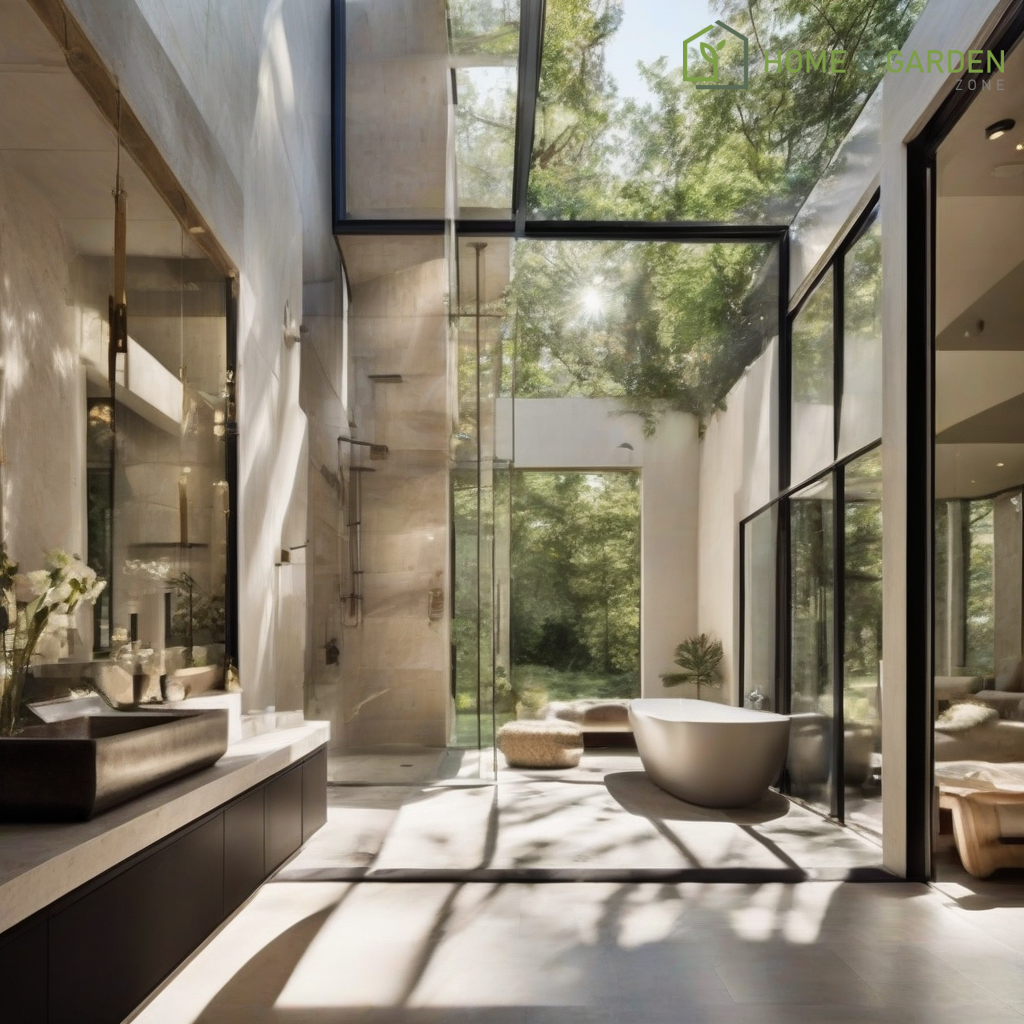
Reimagining Domestic Space: When the Bathroom Takes Center Stage
For centuries, the bathroom has been relegated to the periphery of the home, a strictly utilitarian space, often tucked away, its functions considered too private for prominent display. However, a growing movement in contemporary architecture is challenging this deeply ingrained convention. Leading this charge is SIGLA Studio, whose innovative 'The Room' project in Barcelona boldly places the bathroom at the very heart of a compact urban apartment, fundamentally reshaping our understanding of domesticity, privacy, and spatial organization.
The Barcelona Experiment: SIGLA Studio's Radical Redefinition
In their Barcelona apartment design, architects Silvia Galindo and David Esteban of SIGLA Studio conceived a central, opaque volume that encapsulates the essential functions of the bathroom: a toilet, shower, and sink. This isn't merely an unconventional placement; it's a deliberate architectural statement. Rather than being a hidden annex, this central block becomes the apartment's fulcrum, a sculptural entity around which all other living areas revolve. The kitchen, living room, and bedroom spaces are fluidly arranged around this core, fostering a sense of connectivity and dynamism rarely found in traditional layouts.
The design leverages the opaque nature of the central volume to maintain the necessary privacy for its functions while simultaneously allowing it to act as a structural and organizational anchor. Material choices for this central block often contribute to its visual prominence, transforming it from a mere service area into a sophisticated piece of interior architecture that defines the entire spatial narrative.
Challenging Long-Held Assumptions on Privacy and Living
The implications of this central bathroom concept extend far beyond mere aesthetics. It directly confronts deeply held assumptions about privacy within the home. Instead of traditional segregated rooms offering absolute visual and auditory isolation, the SIGLA Studio model proposes a more nuanced approach. Privacy becomes a matter of proximity and visual barriers rather than complete enclosure. The central opaque block provides functional privacy where it is most needed, while its position promotes a more communal and integrated living experience in the surrounding areas.
This design philosophy resonates particularly strongly in compact urban environments where every square meter counts. By consolidating plumbing and creating a central organizational element, designers can achieve greater spatial efficiency and flexibility. It encourages residents to rethink how they interact with their living spaces, blurring the lines between traditionally distinct zones and fostering a more adaptable and multifunctional environment.
Architectural and Societal Implications
The movement to bring the bathroom into the core of the home represents a broader shift in architectural thought. It speaks to a desire for more intelligent spatial planning, an openness to challenge historical precedents, and an understanding of contemporary urban lifestyles that often prioritize flexibility and connection over rigid compartmentalization. While not without its detractors or design challenges—such as ventilation, soundproofing, and the psychological comfort of occupants—this approach offers a compelling vision for future residential design.
It prompts us to consider: What other 'fixed' elements of our homes could be re-evaluated? How much of our domestic design is driven by convention rather than genuine functional or emotional need? As urban populations continue to grow and living spaces shrink, innovative solutions like SIGLA Studio's central bathroom concept may become increasingly relevant, pushing the boundaries of how we define and inhabit our most intimate environments.
Summary
SIGLA Studio's 'The Room' project in Barcelona serves as a powerful example of architectural innovation that challenges long-held conventions. By placing the bathroom at the core of a compact apartment, the design redefines spatial organization, re-evaluates traditional notions of privacy, and promotes a more fluid and integrated approach to modern living. This unconventional layout offers a thought-provoking glimpse into the future of urban residential design, where efficiency, flexibility, and a bold reinterpretation of domestic space take precedence.
Resources
- ArchDaily
- Dezeen
- Designboom
Details
Author

Latest articles


 }})
You can now watch HBO Max for $10
Reimagining Domestic Space: When the Bathroom Takes Center Stage
For centuries, the bathroom has been relegated to the periphery of the home, a strictly utilitarian space, often tucked away, its functions considered too private for prominent display. However, a growing movement in contemporary architecture is challenging this deeply ingrained convention. Leading this charge is SIGLA Studio, whose innovative 'The Room' project in Barcelona boldly places the bathroom at the very heart of a compact urban apartment, fundamentally reshaping our understanding of domesticity, privacy, and spatial organization.
The Barcelona Experiment: SIGLA Studio's Radical Redefinition
In their Barcelona apartment design, architects Silvia Galindo and David Esteban of SIGLA Studio conceived a central, opaque volume that encapsulates the essential functions of the bathroom: a toilet, shower, and sink. This isn't merely an unconventional placement; it's a deliberate architectural statement. Rather than being a hidden annex, this central block becomes the apartment's fulcrum, a sculptural entity around which all other living areas revolve. The kitchen, living room, and bedroom spaces are fluidly arranged around this core, fostering a sense of connectivity and dynamism rarely found in traditional layouts.
The design leverages the opaque nature of the central volume to maintain the necessary privacy for its functions while simultaneously allowing it to act as a structural and organizational anchor. Material choices for this central block often contribute to its visual prominence, transforming it from a mere service area into a sophisticated piece of interior architecture that defines the entire spatial narrative.
Challenging Long-Held Assumptions on Privacy and Living
The implications of this central bathroom concept extend far beyond mere aesthetics. It directly confronts deeply held assumptions about privacy within the home. Instead of traditional segregated rooms offering absolute visual and auditory isolation, the SIGLA Studio model proposes a more nuanced approach. Privacy becomes a matter of proximity and visual barriers rather than complete enclosure. The central opaque block provides functional privacy where it is most needed, while its position promotes a more communal and integrated living experience in the surrounding areas.
This design philosophy resonates particularly strongly in compact urban environments where every square meter counts. By consolidating plumbing and creating a central organizational element, designers can achieve greater spatial efficiency and flexibility. It encourages residents to rethink how they interact with their living spaces, blurring the lines between traditionally distinct zones and fostering a more adaptable and multifunctional environment.
Architectural and Societal Implications
The movement to bring the bathroom into the core of the home represents a broader shift in architectural thought. It speaks to a desire for more intelligent spatial planning, an openness to challenge historical precedents, and an understanding of contemporary urban lifestyles that often prioritize flexibility and connection over rigid compartmentalization. While not without its detractors or design challenges—such as ventilation, soundproofing, and the psychological comfort of occupants—this approach offers a compelling vision for future residential design.
It prompts us to consider: What other 'fixed' elements of our homes could be re-evaluated? How much of our domestic design is driven by convention rather than genuine functional or emotional need? As urban populations continue to grow and living spaces shrink, innovative solutions like SIGLA Studio's central bathroom concept may become increasingly relevant, pushing the boundaries of how we define and inhabit our most intimate environments.
Summary
SIGLA Studio's 'The Room' project in Barcelona serves as a powerful example of architectural innovation that challenges long-held conventions. By placing the bathroom at the core of a compact apartment, the design redefines spatial organization, re-evaluates traditional notions of privacy, and promotes a more fluid and integrated approach to modern living. This unconventional layout offers a thought-provoking glimpse into the future of urban residential design, where efficiency, flexibility, and a bold reinterpretation of domestic space take precedence.
Resources
- ArchDaily
- Dezeen
- Designboom
Latest articles
You can now watch HBO Max for $10
Similar posts

This is a page that only logged-in people can visit. Don't you feel special? Try clicking on a button below to do some things you can't do when you're logged out.
Example modal
At your leisure, please peruse this excerpt from a whale of a tale.
Chapter 1: Loomings.
Call me Ishmael. Some years ago—never mind how long precisely—having little or no money in my purse, and nothing particular to interest me on shore, I thought I would sail about a little and see the watery part of the world. It is a way I have of driving off the spleen and regulating the circulation. Whenever I find myself growing grim about the mouth; whenever it is a damp, drizzly November in my soul; whenever I find myself involuntarily pausing before coffin warehouses, and bringing up the rear of every funeral I meet; and especially whenever my hypos get such an upper hand of me, that it requires a strong moral principle to prevent me from deliberately stepping into the street, and methodically knocking people's hats off—then, I account it high time to get to sea as soon as I can. This is my substitute for pistol and ball. With a philosophical flourish Cato throws himself upon his sword; I quietly take to the ship. There is nothing surprising in this. If they but knew it, almost all men in their degree, some time or other, cherish very nearly the same feelings towards the ocean with me.
Comment