Ei Arakawa-Nash Transforms Japan Pavilion with 208 Baby Dolls in a Tender Exploration of Collaborative Care and Shared Humanity
A Symphony of Shared Vulnerability and Joy at the Japan Pavilion
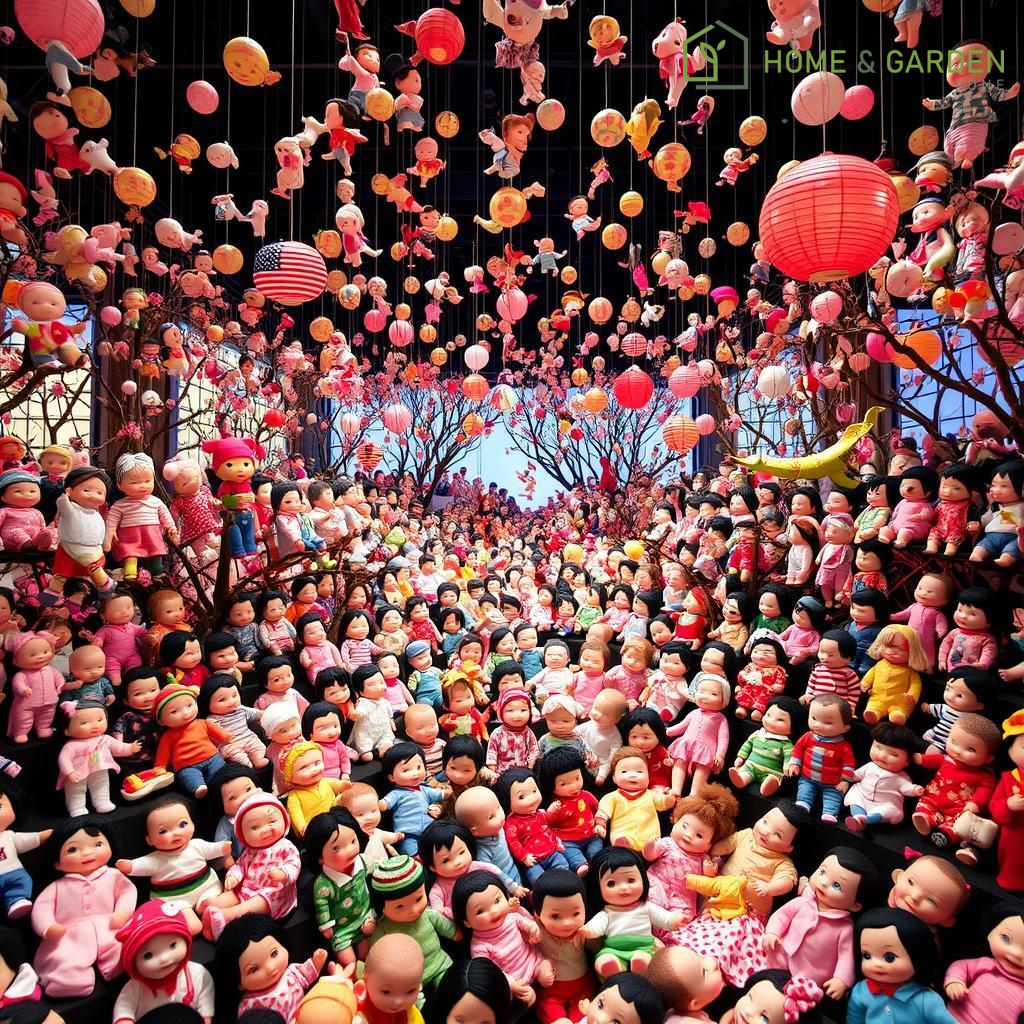
In a profound and playfully provocative installation, artist Ei Arakawa-Nash has animated the Japan Pavilion with 208 baby dolls, inviting visitors into a unique participatory experience that redefines the essence of caregiving. This exhibition transcends conventional art display, transforming the act of nurturing into a shared performance of joy, vulnerability, and collective humanity.
The Concept: Reframing Care as Performance
At the heart of Arakawa-Nash's vision is an exploration of caregiving not merely as a private burden but as a public, communal act. Each of the 208 baby dolls serves as a tactile prompt, encouraging attendees to cradle, carry, and interact with them as they navigate the pavilion's meticulously designed gardens and intimate interior spaces. This direct engagement fosters an immediate connection, prompting introspection on societal responsibilities towards the vulnerable.
The artist's choice of baby dolls, universally recognized symbols of innocence and dependence, immediately evokes an instinctual response. Visitors become temporary guardians, experiencing firsthand the subtle yet profound demands of nurturing. This interaction subtly blurs the lines between spectator and participant, artist and audience, transforming the exhibition into a living, evolving tapestry of human connection.
Designboom's Perspective and Critical Acclaim
The exhibition, notably highlighted by designboom, has garnered attention for its innovative approach to contemporary art. Critics and visitors alike have praised its ability to evoke genuine emotional responses, sparking dialogues about empathy, community support, and the often-unacknowledged labor of care. The tactile nature of the installation encourages a slower, more deliberate pace, allowing for deeper engagement with the themes presented.
Arakawa-Nash's work often challenges traditional art forms, integrating performance, participation, and social commentary. In this instance, the mass of identical, yet individually handled, dolls underscores both the universality of care needs and the personal, intimate nature of each act of nurturing. It proposes that vulnerability, far from being a weakness, is a foundational element of shared human experience and a catalyst for connection.
Summary
Ei Arakawa-Nash's exhibition at the Japan Pavilion with 208 baby dolls is a compelling and interactive exploration of caregiving. By inviting visitors to engage directly with the dolls, the artist transforms the pavilion into a stage for a collaborative performance that highlights the joy, vulnerability, and shared responsibility inherent in nurturing. It is a powerful statement on the importance of empathy and community in an increasingly individualistic world, prompting a re-evaluation of what it means to care.
Resources
- Designboom | Architecture & Design Magazine
- Various contemporary art reviews and exhibition listings related to Ei Arakawa-Nash
- Biennale Arte 2024 (If applicable for the exhibition's context)
Details
Author


Latest articles



 }})
You can now watch HBO Max for $10
A Symphony of Shared Vulnerability and Joy at the Japan Pavilion
In a profound and playfully provocative installation, artist Ei Arakawa-Nash has animated the Japan Pavilion with 208 baby dolls, inviting visitors into a unique participatory experience that redefines the essence of caregiving. This exhibition transcends conventional art display, transforming the act of nurturing into a shared performance of joy, vulnerability, and collective humanity.
The Concept: Reframing Care as Performance
At the heart of Arakawa-Nash's vision is an exploration of caregiving not merely as a private burden but as a public, communal act. Each of the 208 baby dolls serves as a tactile prompt, encouraging attendees to cradle, carry, and interact with them as they navigate the pavilion's meticulously designed gardens and intimate interior spaces. This direct engagement fosters an immediate connection, prompting introspection on societal responsibilities towards the vulnerable.
The artist's choice of baby dolls, universally recognized symbols of innocence and dependence, immediately evokes an instinctual response. Visitors become temporary guardians, experiencing firsthand the subtle yet profound demands of nurturing. This interaction subtly blurs the lines between spectator and participant, artist and audience, transforming the exhibition into a living, evolving tapestry of human connection.
Designboom's Perspective and Critical Acclaim
The exhibition, notably highlighted by designboom, has garnered attention for its innovative approach to contemporary art. Critics and visitors alike have praised its ability to evoke genuine emotional responses, sparking dialogues about empathy, community support, and the often-unacknowledged labor of care. The tactile nature of the installation encourages a slower, more deliberate pace, allowing for deeper engagement with the themes presented.
Arakawa-Nash's work often challenges traditional art forms, integrating performance, participation, and social commentary. In this instance, the mass of identical, yet individually handled, dolls underscores both the universality of care needs and the personal, intimate nature of each act of nurturing. It proposes that vulnerability, far from being a weakness, is a foundational element of shared human experience and a catalyst for connection.
Summary
Ei Arakawa-Nash's exhibition at the Japan Pavilion with 208 baby dolls is a compelling and interactive exploration of caregiving. By inviting visitors to engage directly with the dolls, the artist transforms the pavilion into a stage for a collaborative performance that highlights the joy, vulnerability, and shared responsibility inherent in nurturing. It is a powerful statement on the importance of empathy and community in an increasingly individualistic world, prompting a re-evaluation of what it means to care.
Resources
- Designboom | Architecture & Design Magazine
- Various contemporary art reviews and exhibition listings related to Ei Arakawa-Nash
- Biennale Arte 2024 (If applicable for the exhibition's context)
Latest articles
You can now watch HBO Max for $10
Similar posts

This is a page that only logged-in people can visit. Don't you feel special? Try clicking on a button below to do some things you can't do when you're logged out.
Example modal
At your leisure, please peruse this excerpt from a whale of a tale.
Chapter 1: Loomings.
Call me Ishmael. Some years ago—never mind how long precisely—having little or no money in my purse, and nothing particular to interest me on shore, I thought I would sail about a little and see the watery part of the world. It is a way I have of driving off the spleen and regulating the circulation. Whenever I find myself growing grim about the mouth; whenever it is a damp, drizzly November in my soul; whenever I find myself involuntarily pausing before coffin warehouses, and bringing up the rear of every funeral I meet; and especially whenever my hypos get such an upper hand of me, that it requires a strong moral principle to prevent me from deliberately stepping into the street, and methodically knocking people's hats off—then, I account it high time to get to sea as soon as I can. This is my substitute for pistol and ball. With a philosophical flourish Cato throws himself upon his sword; I quietly take to the ship. There is nothing surprising in this. If they but knew it, almost all men in their degree, some time or other, cherish very nearly the same feelings towards the ocean with me.
Comment