The Audacious Pursuit of Jet-Powered Skis: From Concept to Cold Reality

The Enduring Allure of Jet-Powered Skis
The concept of propelling oneself across snow-laden slopes with the raw force of a jet engine is a notion that has captivated the imaginations of inventors and thrill-seekers for decades. While seemingly a fantasy born from science fiction, the idea of strap-on jet propulsion for skis has transcended mere thought experiments, leading to various attempts to bring this high-octane vision to a tangible, albeit challenging, reality.
The genesis of such an idea often stems from a pure, unadulterated curiosity: "Can it be done?" This fundamental question drives innovation, pushing the boundaries of what is considered feasible in personal mobility and extreme sports. However, the journey from a compelling mental image to a functional, safe, and practical device is fraught with formidable engineering and safety hurdles.
Engineering Challenges and Real-World Applications
Developing a jet-powered ski system involves a complex interplay of physics, material science, and control systems. The primary challenge lies in generating sufficient thrust to overcome drag and propel a skier at speed, all while maintaining balance and maneuverability. Early experiments and prototypes often grappled with several critical issues:
- Weight Distribution: Attaching propulsion units to skis or a skier's back drastically alters the center of gravity, making traditional skiing techniques incredibly difficult or impossible.
- Thrust Control: Fine-tuning jet engines for precise, responsive thrust required for dynamic skiing movements is a significant undertaking. The sudden application or reduction of power can lead to instability or loss of control.
- Safety Concerns: Operating miniature jet engines, even those designed for hobbyist or drone applications, presents inherent dangers. High temperatures, rotating components, and the potential for fuel leaks in close proximity to a person are serious safety considerations.
- Fuel Capacity and Endurance: Jet engines are notoriously fuel-hungry. Achieving a reasonable operational time without an excessively large and heavy fuel tank remains a key impediment to widespread adoption.
- Environmental Impact: Noise pollution and emissions from multiple small jet engines could pose environmental concerns in sensitive natural environments.
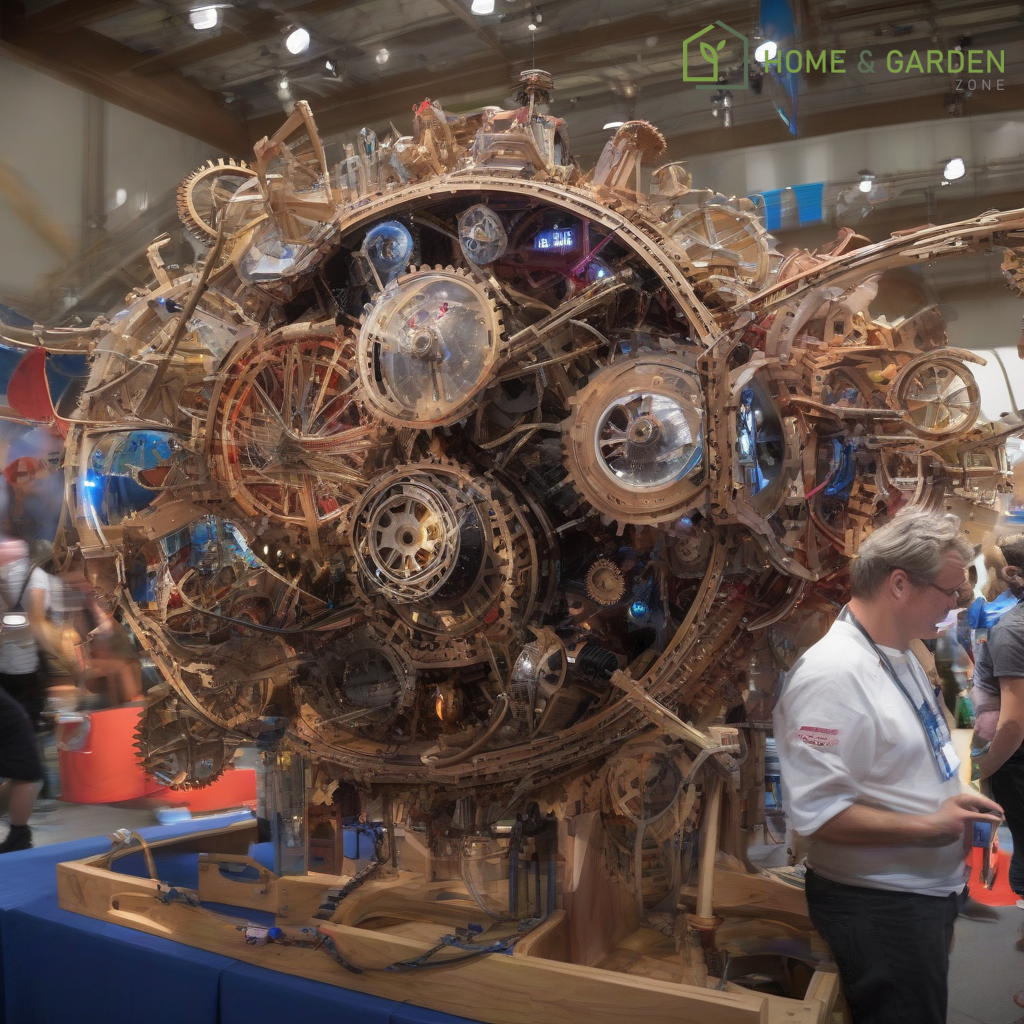
Despite these challenges, the dream persists. Enthusiastic makers and engineers have experimented with various configurations, from small turbine engines mounted directly to ski boots or a backpack frame, to more integrated designs. These projects, often showcased at events like Maker Faire, highlight the ingenuity and determination within the DIY community to explore unconventional solutions.
Notable Attempts and Their Legacy
While a commercially viable and widely adopted jet-powered ski remains elusive, the history of this concept is dotted with intriguing prototypes and proofs-of-concept. One particularly notable example involves enthusiasts adapting model aircraft turbine engines for personal propulsion experiments. These endeavors, though largely experimental, provide invaluable insights into the practicalities and limitations of such systems.
The primary takeaway from these ventures is that while the raw power can indeed be harnessed to achieve impressive speeds, integrating this power into a user-friendly and safe skiing experience is a monumental task. The balance between power, control, safety, and practicality continues to define the frontier of personal jet propulsion in winter sports.
Summary
The concept of jet-powered skis represents an enduring testament to human inventiveness and the desire to push the boundaries of personal transport and extreme sports. While the initial impulse "I just needed to know if it could be done" has been met with affirmative, if limited, success in prototype form, the path to a practical and safe consumer product is still fraught with significant engineering, safety, and economic hurdles. The dream lives on in the minds of makers, demonstrating that some ideas, no matter how impractical, continue to fuel innovation and inspire a fascinating blend of engineering challenge and audacious ambition.
Resources
Details
Author




Latest articles




 }})
You can now watch HBO Max for $10
The Enduring Allure of Jet-Powered Skis
The concept of propelling oneself across snow-laden slopes with the raw force of a jet engine is a notion that has captivated the imaginations of inventors and thrill-seekers for decades. While seemingly a fantasy born from science fiction, the idea of strap-on jet propulsion for skis has transcended mere thought experiments, leading to various attempts to bring this high-octane vision to a tangible, albeit challenging, reality.
The genesis of such an idea often stems from a pure, unadulterated curiosity: "Can it be done?" This fundamental question drives innovation, pushing the boundaries of what is considered feasible in personal mobility and extreme sports. However, the journey from a compelling mental image to a functional, safe, and practical device is fraught with formidable engineering and safety hurdles.
Engineering Challenges and Real-World Applications
Developing a jet-powered ski system involves a complex interplay of physics, material science, and control systems. The primary challenge lies in generating sufficient thrust to overcome drag and propel a skier at speed, all while maintaining balance and maneuverability. Early experiments and prototypes often grappled with several critical issues:
- Weight Distribution: Attaching propulsion units to skis or a skier's back drastically alters the center of gravity, making traditional skiing techniques incredibly difficult or impossible.
- Thrust Control: Fine-tuning jet engines for precise, responsive thrust required for dynamic skiing movements is a significant undertaking. The sudden application or reduction of power can lead to instability or loss of control.
- Safety Concerns: Operating miniature jet engines, even those designed for hobbyist or drone applications, presents inherent dangers. High temperatures, rotating components, and the potential for fuel leaks in close proximity to a person are serious safety considerations.
- Fuel Capacity and Endurance: Jet engines are notoriously fuel-hungry. Achieving a reasonable operational time without an excessively large and heavy fuel tank remains a key impediment to widespread adoption.
- Environmental Impact: Noise pollution and emissions from multiple small jet engines could pose environmental concerns in sensitive natural environments.
Despite these challenges, the dream persists. Enthusiastic makers and engineers have experimented with various configurations, from small turbine engines mounted directly to ski boots or a backpack frame, to more integrated designs. These projects, often showcased at events like Maker Faire, highlight the ingenuity and determination within the DIY community to explore unconventional solutions.
Notable Attempts and Their Legacy
While a commercially viable and widely adopted jet-powered ski remains elusive, the history of this concept is dotted with intriguing prototypes and proofs-of-concept. One particularly notable example involves enthusiasts adapting model aircraft turbine engines for personal propulsion experiments. These endeavors, though largely experimental, provide invaluable insights into the practicalities and limitations of such systems.
The primary takeaway from these ventures is that while the raw power can indeed be harnessed to achieve impressive speeds, integrating this power into a user-friendly and safe skiing experience is a monumental task. The balance between power, control, safety, and practicality continues to define the frontier of personal jet propulsion in winter sports.
Summary
The concept of jet-powered skis represents an enduring testament to human inventiveness and the desire to push the boundaries of personal transport and extreme sports. While the initial impulse "I just needed to know if it could be done" has been met with affirmative, if limited, success in prototype form, the path to a practical and safe consumer product is still fraught with significant engineering, safety, and economic hurdles. The dream lives on in the minds of makers, demonstrating that some ideas, no matter how impractical, continue to fuel innovation and inspire a fascinating blend of engineering challenge and audacious ambition.
Resources
Latest articles
You can now watch HBO Max for $10
Similar posts




This is a page that only logged-in people can visit. Don't you feel special? Try clicking on a button below to do some things you can't do when you're logged out.
Example modal
At your leisure, please peruse this excerpt from a whale of a tale.
Chapter 1: Loomings.
Call me Ishmael. Some years ago—never mind how long precisely—having little or no money in my purse, and nothing particular to interest me on shore, I thought I would sail about a little and see the watery part of the world. It is a way I have of driving off the spleen and regulating the circulation. Whenever I find myself growing grim about the mouth; whenever it is a damp, drizzly November in my soul; whenever I find myself involuntarily pausing before coffin warehouses, and bringing up the rear of every funeral I meet; and especially whenever my hypos get such an upper hand of me, that it requires a strong moral principle to prevent me from deliberately stepping into the street, and methodically knocking people's hats off—then, I account it high time to get to sea as soon as I can. This is my substitute for pistol and ball. With a philosophical flourish Cato throws himself upon his sword; I quietly take to the ship. There is nothing surprising in this. If they but knew it, almost all men in their degree, some time or other, cherish very nearly the same feelings towards the ocean with me.
Comment