Hestus Autocomplete: Revolutionizing Symmetrical Sketching in Fusion 360 for Enhanced Design Efficiency
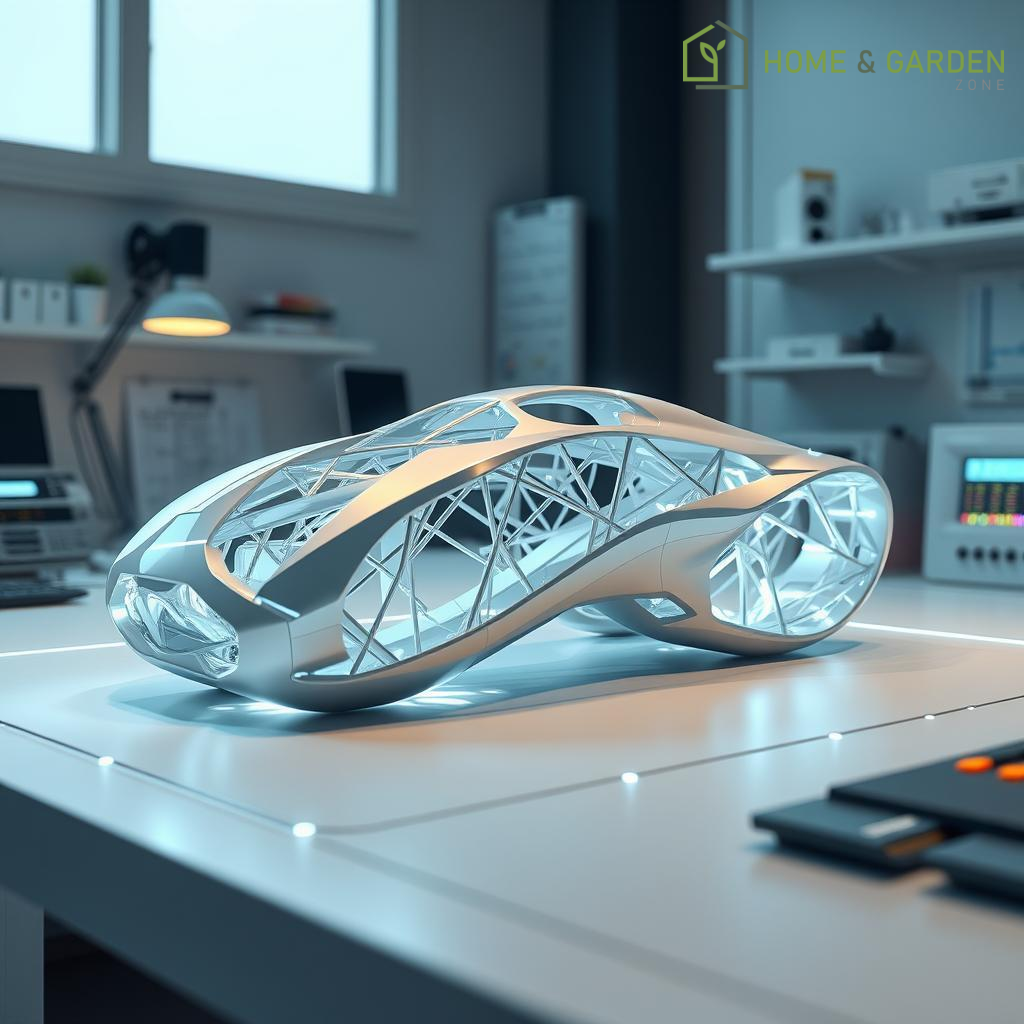
In the realm of computer-aided design (CAD), efficiency and precision are paramount. Designers and engineers frequently grapple with the meticulous task of creating symmetrical geometries, a process often laden with repetitive actions and the potential for minor inconsistencies. Enter Hestus Autocomplete, an innovative plugin for Autodesk Fusion 360, conceived by a dedicated team at the Hasso Plattner Institute (HPI). This tool is engineered to fundamentally transform the sketching workflow by intelligently anticipating and completing symmetrical design elements, thereby liberating users from highly tedious tasks.
The Challenge of Repetitive CAD
Traditional CAD sketching, while powerful, demands an exacting approach, particularly when constructing symmetrical parts. Each line, arc, and constraint must be carefully placed and mirrored, consuming valuable time and mental bandwidth. Errors in symmetry can propagate through a design, necessitating arduous corrections. This conventional methodology, while foundational, often impedes the fluidity of the creative process, forcing designers into a more mechanical mode of operation rather than an explorative one.
Hestus: An Intelligent Solution
Hestus directly addresses these inefficiencies by introducing an intuitive, AI-driven autocomplete functionality. As a user begins sketching within Fusion 360, Hestus actively monitors the evolving geometry, identifying potential symmetrical patterns. It then offers real-time suggestions, allowing designers to accept complex symmetrical features with a single click. This predictive capability extends beyond simple mirroring, understanding and proposing complete symmetrical components based on partial input. The system effectively learns the designer's intent, accelerating the ideation-to-execution pipeline significantly.
Hands-On Impact in Fusion 360
Integrating seamlessly into the Fusion 360 environment, Hestus acts as a co-designer, proactively assisting rather than merely automating. Users experience a tangible reduction in the number of clicks and manual inputs required for symmetrical operations. This translates directly into substantial time savings, especially on projects with numerous symmetrical elements. The precision offered by Hestus's algorithmic suggestions also minimizes human error, ensuring a higher degree of accuracy in the initial sketch phase. For those working on intricate mechanical parts, product designs, or architectural components, the ability to generate flawless symmetry with such ease is a transformative enhancement.
Beyond Symmetry: Future Implications
The innovation demonstrated by Hestus points towards a broader trend in CAD: the intelligent augmentation of human creativity through advanced computational tools. While Hestus currently excels in symmetrical sketching, its underlying principles – predictive modeling and real-time suggestion – hold immense potential for other facets of design, including pattern recognition, generative design, and advanced constraint solving. Such tools promise to shift the focus from manual execution to higher-level design thinking, empowering engineers and makers to achieve more complex and refined outcomes with unprecedented speed.
Summary
Hestus Autocomplete for Fusion 360 represents a significant leap forward in CAD workflow optimization. By intelligently streamlining the creation of symmetrical sketches, it alleviates the burden of repetitive tasks, enhances precision, and accelerates the design process. Its integration offers a glimpse into a future where design software is not just a tool, but an intuitive partner in the creative journey.
Resources
- Make: DIY Projects and Ideas for Makers
- Hasso Plattner Institute (HPI)
- Autodesk (Fusion 360 Developer)
Details
Author




Latest articles


 }})
You can now watch HBO Max for $10
In the realm of computer-aided design (CAD), efficiency and precision are paramount. Designers and engineers frequently grapple with the meticulous task of creating symmetrical geometries, a process often laden with repetitive actions and the potential for minor inconsistencies. Enter Hestus Autocomplete, an innovative plugin for Autodesk Fusion 360, conceived by a dedicated team at the Hasso Plattner Institute (HPI). This tool is engineered to fundamentally transform the sketching workflow by intelligently anticipating and completing symmetrical design elements, thereby liberating users from highly tedious tasks.
The Challenge of Repetitive CAD
Traditional CAD sketching, while powerful, demands an exacting approach, particularly when constructing symmetrical parts. Each line, arc, and constraint must be carefully placed and mirrored, consuming valuable time and mental bandwidth. Errors in symmetry can propagate through a design, necessitating arduous corrections. This conventional methodology, while foundational, often impedes the fluidity of the creative process, forcing designers into a more mechanical mode of operation rather than an explorative one.
Hestus: An Intelligent Solution
Hestus directly addresses these inefficiencies by introducing an intuitive, AI-driven autocomplete functionality. As a user begins sketching within Fusion 360, Hestus actively monitors the evolving geometry, identifying potential symmetrical patterns. It then offers real-time suggestions, allowing designers to accept complex symmetrical features with a single click. This predictive capability extends beyond simple mirroring, understanding and proposing complete symmetrical components based on partial input. The system effectively learns the designer's intent, accelerating the ideation-to-execution pipeline significantly.
Hands-On Impact in Fusion 360
Integrating seamlessly into the Fusion 360 environment, Hestus acts as a co-designer, proactively assisting rather than merely automating. Users experience a tangible reduction in the number of clicks and manual inputs required for symmetrical operations. This translates directly into substantial time savings, especially on projects with numerous symmetrical elements. The precision offered by Hestus's algorithmic suggestions also minimizes human error, ensuring a higher degree of accuracy in the initial sketch phase. For those working on intricate mechanical parts, product designs, or architectural components, the ability to generate flawless symmetry with such ease is a transformative enhancement.
Beyond Symmetry: Future Implications
The innovation demonstrated by Hestus points towards a broader trend in CAD: the intelligent augmentation of human creativity through advanced computational tools. While Hestus currently excels in symmetrical sketching, its underlying principles – predictive modeling and real-time suggestion – hold immense potential for other facets of design, including pattern recognition, generative design, and advanced constraint solving. Such tools promise to shift the focus from manual execution to higher-level design thinking, empowering engineers and makers to achieve more complex and refined outcomes with unprecedented speed.
Summary
Hestus Autocomplete for Fusion 360 represents a significant leap forward in CAD workflow optimization. By intelligently streamlining the creation of symmetrical sketches, it alleviates the burden of repetitive tasks, enhances precision, and accelerates the design process. Its integration offers a glimpse into a future where design software is not just a tool, but an intuitive partner in the creative journey.
Resources
- Make: DIY Projects and Ideas for Makers
- Hasso Plattner Institute (HPI)
- Autodesk (Fusion 360 Developer)
Latest articles
You can now watch HBO Max for $10
Similar posts


This is a page that only logged-in people can visit. Don't you feel special? Try clicking on a button below to do some things you can't do when you're logged out.
Example modal
At your leisure, please peruse this excerpt from a whale of a tale.
Chapter 1: Loomings.
Call me Ishmael. Some years ago—never mind how long precisely—having little or no money in my purse, and nothing particular to interest me on shore, I thought I would sail about a little and see the watery part of the world. It is a way I have of driving off the spleen and regulating the circulation. Whenever I find myself growing grim about the mouth; whenever it is a damp, drizzly November in my soul; whenever I find myself involuntarily pausing before coffin warehouses, and bringing up the rear of every funeral I meet; and especially whenever my hypos get such an upper hand of me, that it requires a strong moral principle to prevent me from deliberately stepping into the street, and methodically knocking people's hats off—then, I account it high time to get to sea as soon as I can. This is my substitute for pistol and ball. With a philosophical flourish Cato throws himself upon his sword; I quietly take to the ship. There is nothing surprising in this. If they but knew it, almost all men in their degree, some time or other, cherish very nearly the same feelings towards the ocean with me.
Comment