Manufactura's Bio-Composite Revolution: 3D Printed Structures with 70% Less Carbon Footprint

A New Paradigm in Sustainable Construction: Manufactura's Bio-Composite Breakthrough
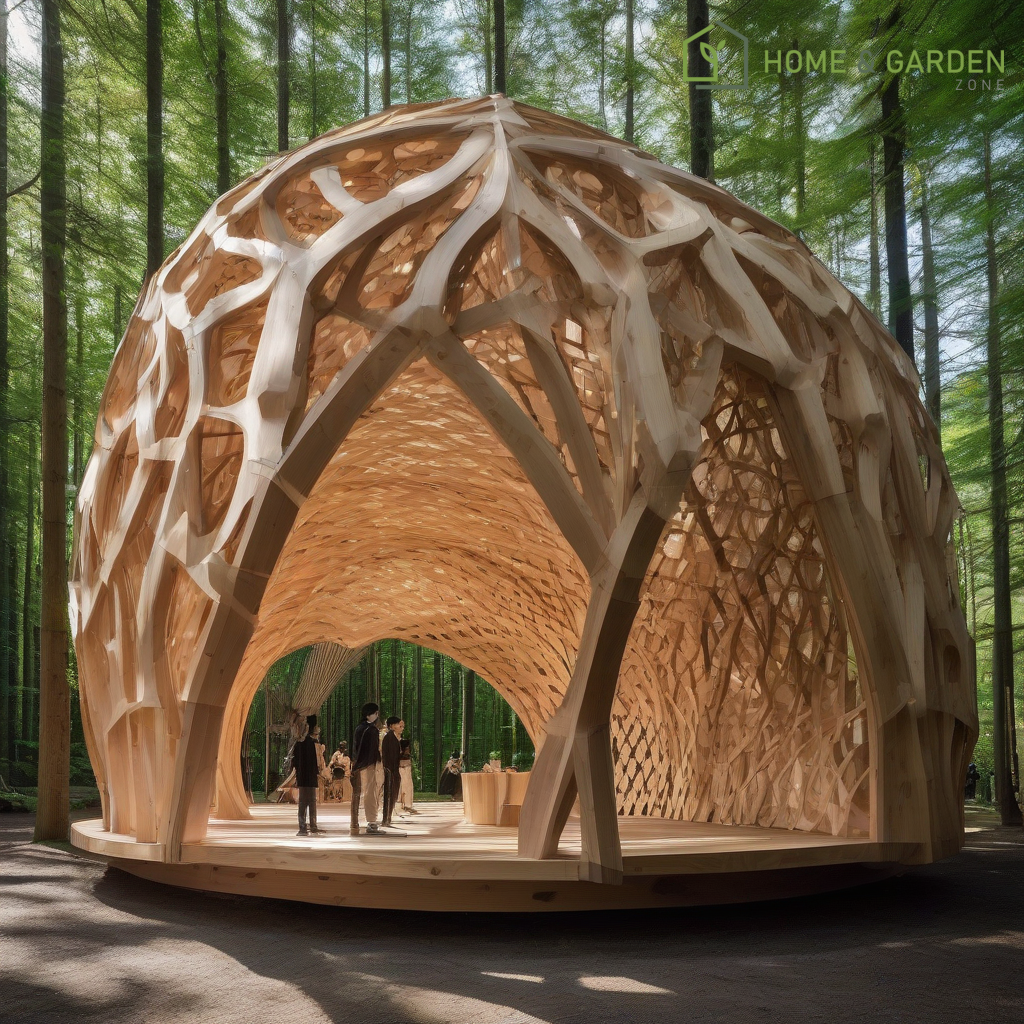
The global construction industry faces immense pressure to decarbonize. Addressing this imperative, Manufactura has unveiled a groundbreaking approach to building: robotic 3D printing utilizing a novel bio-based composite. This innovation, blending corn and lime, promises to significantly mitigate the environmental impact of construction, boasting a potential reduction in carbon emissions by up to 70 percent when compared to conventional concrete.
The Innovation: Corn and Lime Composites
At the core of Manufactura's sustainable vision is their proprietary composite material, derived from agricultural waste and natural minerals. By ingeniously combining cornstarch byproducts with lime, the developers have formulated a binder that eschews the energy-intensive production processes associated with Portland cement. This bio-composite offers a viable alternative, leveraging renewable resources and inherently possessing a lower embodied energy. The careful balance between organic and inorganic components results in a material that is both structurally sound and environmentally benign, setting a new benchmark for ecological material science in architecture.
Robotic 3D Printing: Precision and Efficiency
Manufactura's material is specifically engineered for robotic additive manufacturing. This advanced fabrication method allows for unprecedented precision in construction, enabling the creation of complex geometries and reducing material waste significantly. The controlled environment of robotic 3D printing ensures optimal material placement, enhancing structural integrity while accelerating build times. This synergistic combination of a low-carbon material and efficient digital fabrication represents a pivotal shift away from traditional, resource-intensive construction practices towards a more sustainable and technologically advanced future.
Environmental Impact: A Significant Leap Forward
The most compelling aspect of Manufactura's innovation lies in its substantial environmental benefits. Conventional concrete production is a major contributor to global carbon emissions, primarily due to the calcination of limestone required for cement. By substituting a significant portion of these high-impact components with bio-derived materials and naturally occurring lime, Manufactura's composite achieves a remarkable reduction in its carbon footprint. The reported up to 70 percent decrease in emissions is a critical step towards achieving net-zero goals within the built environment, offering a scalable solution for sustainable infrastructure development.
Summary
Manufactura's development of corn and lime composites for robotic 3D printed construction marks a pivotal moment in the quest for sustainable building practices. By drastically cutting carbon emissions and promoting the use of bio-based materials, this technology offers a compelling blueprint for the future of construction. Its potential to transform how structures are designed, fabricated, and impact the planet is immense, paving the way for a greener, more resilient built world.
Resources
Details
Author




Latest articles




 }})
You can now watch HBO Max for $10
A New Paradigm in Sustainable Construction: Manufactura's Bio-Composite Breakthrough
The global construction industry faces immense pressure to decarbonize. Addressing this imperative, Manufactura has unveiled a groundbreaking approach to building: robotic 3D printing utilizing a novel bio-based composite. This innovation, blending corn and lime, promises to significantly mitigate the environmental impact of construction, boasting a potential reduction in carbon emissions by up to 70 percent when compared to conventional concrete.
The Innovation: Corn and Lime Composites
At the core of Manufactura's sustainable vision is their proprietary composite material, derived from agricultural waste and natural minerals. By ingeniously combining cornstarch byproducts with lime, the developers have formulated a binder that eschews the energy-intensive production processes associated with Portland cement. This bio-composite offers a viable alternative, leveraging renewable resources and inherently possessing a lower embodied energy. The careful balance between organic and inorganic components results in a material that is both structurally sound and environmentally benign, setting a new benchmark for ecological material science in architecture.
Robotic 3D Printing: Precision and Efficiency
Manufactura's material is specifically engineered for robotic additive manufacturing. This advanced fabrication method allows for unprecedented precision in construction, enabling the creation of complex geometries and reducing material waste significantly. The controlled environment of robotic 3D printing ensures optimal material placement, enhancing structural integrity while accelerating build times. This synergistic combination of a low-carbon material and efficient digital fabrication represents a pivotal shift away from traditional, resource-intensive construction practices towards a more sustainable and technologically advanced future.
Environmental Impact: A Significant Leap Forward
The most compelling aspect of Manufactura's innovation lies in its substantial environmental benefits. Conventional concrete production is a major contributor to global carbon emissions, primarily due to the calcination of limestone required for cement. By substituting a significant portion of these high-impact components with bio-derived materials and naturally occurring lime, Manufactura's composite achieves a remarkable reduction in its carbon footprint. The reported up to 70 percent decrease in emissions is a critical step towards achieving net-zero goals within the built environment, offering a scalable solution for sustainable infrastructure development.
Summary
Manufactura's development of corn and lime composites for robotic 3D printed construction marks a pivotal moment in the quest for sustainable building practices. By drastically cutting carbon emissions and promoting the use of bio-based materials, this technology offers a compelling blueprint for the future of construction. Its potential to transform how structures are designed, fabricated, and impact the planet is immense, paving the way for a greener, more resilient built world.
Resources
Latest articles
You can now watch HBO Max for $10
Similar posts




This is a page that only logged-in people can visit. Don't you feel special? Try clicking on a button below to do some things you can't do when you're logged out.
Example modal
At your leisure, please peruse this excerpt from a whale of a tale.
Chapter 1: Loomings.
Call me Ishmael. Some years ago—never mind how long precisely—having little or no money in my purse, and nothing particular to interest me on shore, I thought I would sail about a little and see the watery part of the world. It is a way I have of driving off the spleen and regulating the circulation. Whenever I find myself growing grim about the mouth; whenever it is a damp, drizzly November in my soul; whenever I find myself involuntarily pausing before coffin warehouses, and bringing up the rear of every funeral I meet; and especially whenever my hypos get such an upper hand of me, that it requires a strong moral principle to prevent me from deliberately stepping into the street, and methodically knocking people's hats off—then, I account it high time to get to sea as soon as I can. This is my substitute for pistol and ball. With a philosophical flourish Cato throws himself upon his sword; I quietly take to the ship. There is nothing surprising in this. If they but knew it, almost all men in their degree, some time or other, cherish very nearly the same feelings towards the ocean with me.
Comment