Unfolding Code: How a 3D-Printed Book Manifests Its Own G-Code as Tactile Text
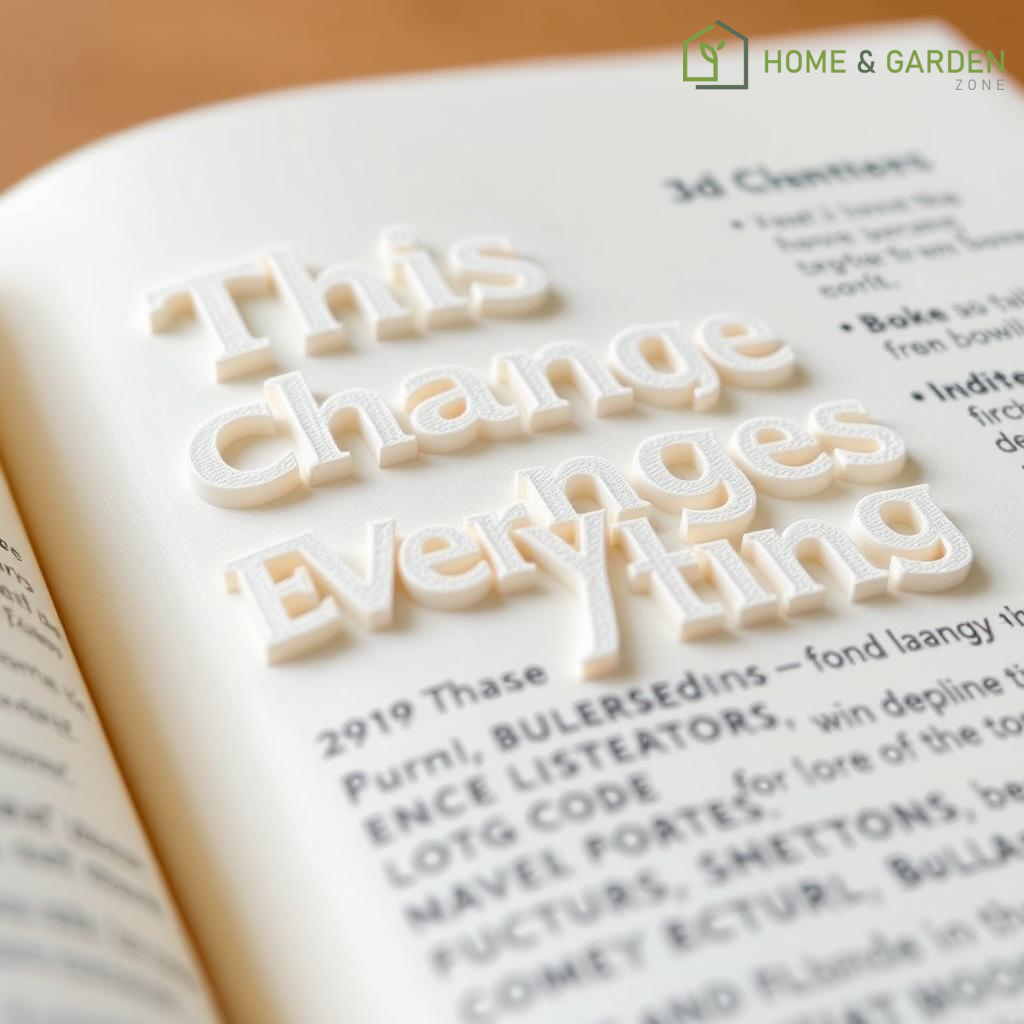
The Dawn of Tactile Algorithms: A Revolutionary 3D-Printed Book
In a groundbreaking fusion of digital fabrication and traditional bookbinding, the project 'manual' by Studio Darius Ou and Benson Chong redefines the essence of the printed word. This innovative 3D-printed book uniquely transforms its underlying machine code—G-code—into the very raised lettering that comprises its pages, offering an unprecedented look into the language of creation itself.
Traditionally, G-code is the silent instruction set that directs 3D printers, dictating every movement of the print head, every layer deposition, and every intricate detail that brings a digital model into physical form. It is the unseen script that governs the additive manufacturing process, typically discarded or ignored once the object materializes. However, 'manual' elevates this functional language to an artistic and literary medium.
G-Code as Narrative: Decoding the Physical Text
The core innovation of 'manual' lies in its ability to render the G-code directly onto the page surface as readable, tactile text. Instead of simply being the blueprint for the book's physical structure, the G-code becomes the content. Each line of code, which might ordinarily command a printer to move along an X or Y axis or extrude material, is carefully translated and extruded as a raised letterform. This creates a fascinating meta-narrative where the instruction set for the book's existence becomes its literal text.
This methodology not only highlights the intricate relationship between digital design and physical output but also invites readers to engage with the book on multiple sensory levels. The raised lettering provides a haptic experience, allowing readers to feel the language of the machine as they would traditional braille or embossed text. It forces a reconsideration of what constitutes a "text" and how information can be encoded and perceived.
The Architects of 'manual': Studio Darius Ou and Benson Chong
The collaborative genius behind 'manual' stems from Studio Darius Ou and Benson Chong. Their work often explores the intersections of technology, design, and conceptual art, pushing the boundaries of conventional mediums. With 'manual', they demonstrate a profound understanding of 3D printing's capabilities beyond mere object replication, transforming it into a tool for self-referential creation and artistic expression. Their vision brings forth a new genre of publication, where the manufacturing process is not merely a means to an end but an integral part of the artwork and its message.
Summary
'manual' stands as a seminal work in the realm of digital fabrication and conceptual art. By literally printing its own G-code as raised lettering, the book offers a unique commentary on the relationship between digital instructions and physical form. It transforms the often-invisible language of machines into a tangible narrative, inviting readers to touch, see, and contemplate the very code that brought the object into being. This project not only showcases the artistic potential of 3D printing but also challenges traditional notions of authorship, textuality, and the book as an artifact.
Resources
- Designboom | architecture & design magazine
- It's Nice That
- Darius Ou Official Website
Details
Author



Latest articles



 }})
You can now watch HBO Max for $10
The Dawn of Tactile Algorithms: A Revolutionary 3D-Printed Book
In a groundbreaking fusion of digital fabrication and traditional bookbinding, the project 'manual' by Studio Darius Ou and Benson Chong redefines the essence of the printed word. This innovative 3D-printed book uniquely transforms its underlying machine code—G-code—into the very raised lettering that comprises its pages, offering an unprecedented look into the language of creation itself.
Traditionally, G-code is the silent instruction set that directs 3D printers, dictating every movement of the print head, every layer deposition, and every intricate detail that brings a digital model into physical form. It is the unseen script that governs the additive manufacturing process, typically discarded or ignored once the object materializes. However, 'manual' elevates this functional language to an artistic and literary medium.
G-Code as Narrative: Decoding the Physical Text
The core innovation of 'manual' lies in its ability to render the G-code directly onto the page surface as readable, tactile text. Instead of simply being the blueprint for the book's physical structure, the G-code becomes the content. Each line of code, which might ordinarily command a printer to move along an X or Y axis or extrude material, is carefully translated and extruded as a raised letterform. This creates a fascinating meta-narrative where the instruction set for the book's existence becomes its literal text.
This methodology not only highlights the intricate relationship between digital design and physical output but also invites readers to engage with the book on multiple sensory levels. The raised lettering provides a haptic experience, allowing readers to feel the language of the machine as they would traditional braille or embossed text. It forces a reconsideration of what constitutes a "text" and how information can be encoded and perceived.
The Architects of 'manual': Studio Darius Ou and Benson Chong
The collaborative genius behind 'manual' stems from Studio Darius Ou and Benson Chong. Their work often explores the intersections of technology, design, and conceptual art, pushing the boundaries of conventional mediums. With 'manual', they demonstrate a profound understanding of 3D printing's capabilities beyond mere object replication, transforming it into a tool for self-referential creation and artistic expression. Their vision brings forth a new genre of publication, where the manufacturing process is not merely a means to an end but an integral part of the artwork and its message.
Summary
'manual' stands as a seminal work in the realm of digital fabrication and conceptual art. By literally printing its own G-code as raised lettering, the book offers a unique commentary on the relationship between digital instructions and physical form. It transforms the often-invisible language of machines into a tangible narrative, inviting readers to touch, see, and contemplate the very code that brought the object into being. This project not only showcases the artistic potential of 3D printing but also challenges traditional notions of authorship, textuality, and the book as an artifact.
Resources
- Designboom | architecture & design magazine
- It's Nice That
- Darius Ou Official Website
Latest articles
You can now watch HBO Max for $10
Similar posts



This is a page that only logged-in people can visit. Don't you feel special? Try clicking on a button below to do some things you can't do when you're logged out.
Example modal
At your leisure, please peruse this excerpt from a whale of a tale.
Chapter 1: Loomings.
Call me Ishmael. Some years ago—never mind how long precisely—having little or no money in my purse, and nothing particular to interest me on shore, I thought I would sail about a little and see the watery part of the world. It is a way I have of driving off the spleen and regulating the circulation. Whenever I find myself growing grim about the mouth; whenever it is a damp, drizzly November in my soul; whenever I find myself involuntarily pausing before coffin warehouses, and bringing up the rear of every funeral I meet; and especially whenever my hypos get such an upper hand of me, that it requires a strong moral principle to prevent me from deliberately stepping into the street, and methodically knocking people's hats off—then, I account it high time to get to sea as soon as I can. This is my substitute for pistol and ball. With a philosophical flourish Cato throws himself upon his sword; I quietly take to the ship. There is nothing surprising in this. If they but knew it, almost all men in their degree, some time or other, cherish very nearly the same feelings towards the ocean with me.
Comment