Cyrus Ardalan's 1966 Paris Apartment Renovation: The Unifying Brilliance of Glass Paste
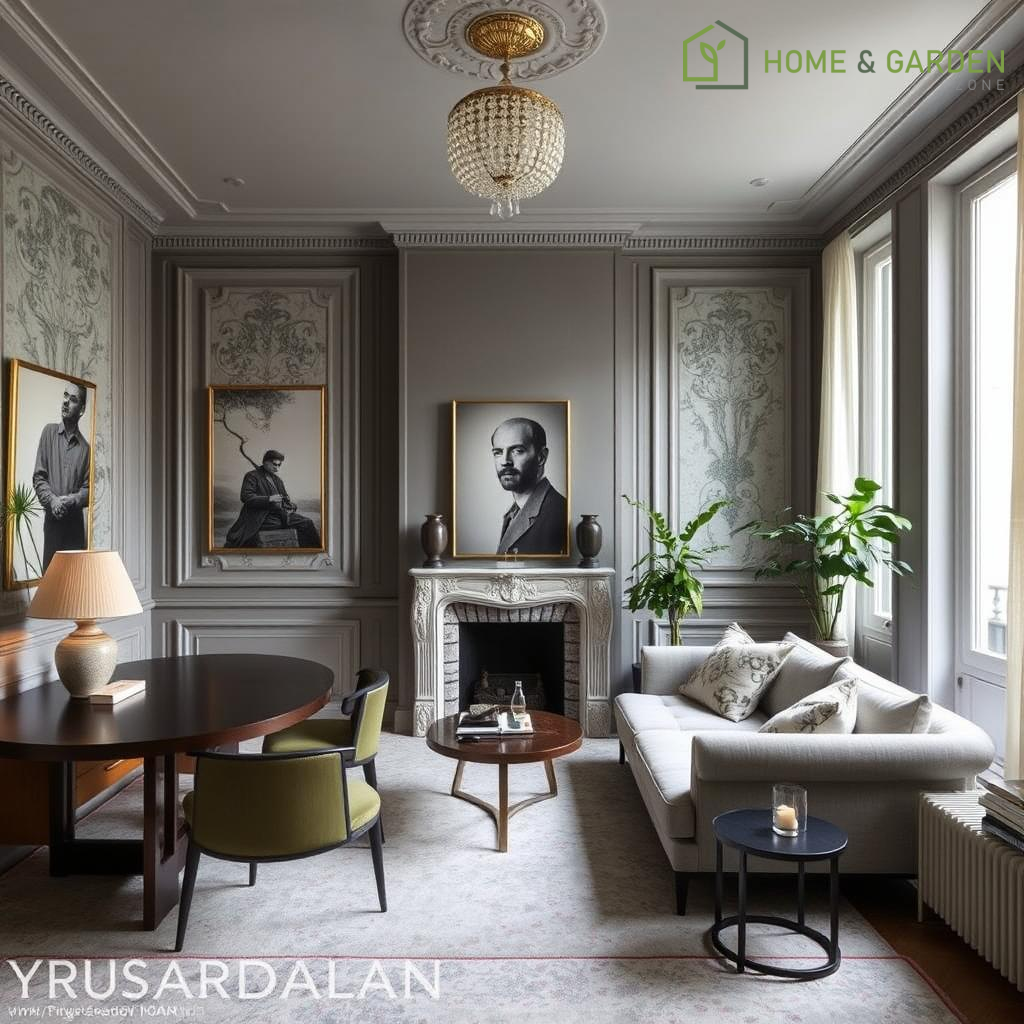
An Enduring Vision: Glass Paste in Ardalan's 1966 Paris Apartment
In the annals of mid-20th-century Parisian interior design, the 1966 apartment renovation by architect Cyrus Ardalan stands as a singular example of material innovation and aesthetic cohesion. Ardalan's visionary application of glass paste was not merely decorative; it was a deliberate strategy to articulate surfaces, define edges, and weave a unifying thread through the entire living space, creating an environment that remains both striking and timeless.
The Strategic Application of Luminous Paste
Ardalan masterfully employed glass paste across critical zones of the apartment, each instance demonstrating a thoughtful consideration of form and function. This unique material, with its inherent luminescence and subtle texture, was integral to shaping the spatial experience.
Kitchen Island: A Central Luminary
At the heart of the culinary area, the kitchen island was transformed into a focal point through the extensive use of glass paste. Rather than merely cladding a utilitarian block, Ardalan created a surface that caught and diffused light, imbuing the space with an understated brilliance. The textured paste softened the island's imposing presence, inviting interaction and establishing a refined aesthetic that transcended its functional purpose.
Dining Table: Edges Defined by Light
Extending this material narrative, the dining table also featured meticulously applied glass paste details. Here, the paste served to subtly articulate the table's edges, lending them a distinct definition and a luminous quality that engaged with the ambient light. This choice ensured a visual continuity with the kitchen area, solidifying Ardalan's intention for a cohesive and flowing interior landscape where different functional zones were subtly interlinked by a shared material language.
Shower Enclosure: A Sensory Experience
Perhaps most innovative was the application of glass paste within the shower enclosure. Beyond its practical qualities of durability and water resistance, the material contributed significantly to the sensory experience of the space. It allowed for a diffused transmission of light, creating a bright yet intimate atmosphere, while the interaction of water with its textured surface would have produced captivating visual effects, elevating a functional area to a moment of contemplative design.
Ardalan's Philosophy of Materiality
Ardalan's preference for glass paste underscores a broader design philosophy that championed the intrinsic qualities of materials to shape human experience. He understood that carefully selected materials could transcend their basic utility to become integral components of a holistic architectural vision. The glass paste, in his expert hands, became an eloquent medium for softening architectural lines, introducing a nuanced play of light, and injecting a quiet yet undeniable sense of luxury that profoundly defined the apartment's character.
Summary
The 1966 Paris apartment renovation by Cyrus Ardalan remains a seminal work, distinguished by its innovative and pervasive use of glass paste. From the shimmering surfaces of the kitchen island to the luminous edges of the dining table and the sensory enclosure of the shower, this material served as a unifying design element. Ardalan's meticulous application demonstrated how a single material could articulate distinct architectural features while simultaneously weaving them into a harmonious and elegant whole, leaving an indelible mark on interior design history.
Resources
- Designboom | architecture & design magazine: Cyrus Ardalan's 1966 Paris Apartment Renovation Features Glass Paste Details
- Dezeen: A leading online architecture and design magazine, often featuring historical and contemporary interior innovations.
- Architectural Review: A globally respected architectural journal known for its in-depth critiques and historical analyses.
Details
Author

Latest articles


 }})
You can now watch HBO Max for $10
An Enduring Vision: Glass Paste in Ardalan's 1966 Paris Apartment
In the annals of mid-20th-century Parisian interior design, the 1966 apartment renovation by architect Cyrus Ardalan stands as a singular example of material innovation and aesthetic cohesion. Ardalan's visionary application of glass paste was not merely decorative; it was a deliberate strategy to articulate surfaces, define edges, and weave a unifying thread through the entire living space, creating an environment that remains both striking and timeless.
The Strategic Application of Luminous Paste
Ardalan masterfully employed glass paste across critical zones of the apartment, each instance demonstrating a thoughtful consideration of form and function. This unique material, with its inherent luminescence and subtle texture, was integral to shaping the spatial experience.
Kitchen Island: A Central Luminary
At the heart of the culinary area, the kitchen island was transformed into a focal point through the extensive use of glass paste. Rather than merely cladding a utilitarian block, Ardalan created a surface that caught and diffused light, imbuing the space with an understated brilliance. The textured paste softened the island's imposing presence, inviting interaction and establishing a refined aesthetic that transcended its functional purpose.
Dining Table: Edges Defined by Light
Extending this material narrative, the dining table also featured meticulously applied glass paste details. Here, the paste served to subtly articulate the table's edges, lending them a distinct definition and a luminous quality that engaged with the ambient light. This choice ensured a visual continuity with the kitchen area, solidifying Ardalan's intention for a cohesive and flowing interior landscape where different functional zones were subtly interlinked by a shared material language.
Shower Enclosure: A Sensory Experience
Perhaps most innovative was the application of glass paste within the shower enclosure. Beyond its practical qualities of durability and water resistance, the material contributed significantly to the sensory experience of the space. It allowed for a diffused transmission of light, creating a bright yet intimate atmosphere, while the interaction of water with its textured surface would have produced captivating visual effects, elevating a functional area to a moment of contemplative design.
Ardalan's Philosophy of Materiality
Ardalan's preference for glass paste underscores a broader design philosophy that championed the intrinsic qualities of materials to shape human experience. He understood that carefully selected materials could transcend their basic utility to become integral components of a holistic architectural vision. The glass paste, in his expert hands, became an eloquent medium for softening architectural lines, introducing a nuanced play of light, and injecting a quiet yet undeniable sense of luxury that profoundly defined the apartment's character.
Summary
The 1966 Paris apartment renovation by Cyrus Ardalan remains a seminal work, distinguished by its innovative and pervasive use of glass paste. From the shimmering surfaces of the kitchen island to the luminous edges of the dining table and the sensory enclosure of the shower, this material served as a unifying design element. Ardalan's meticulous application demonstrated how a single material could articulate distinct architectural features while simultaneously weaving them into a harmonious and elegant whole, leaving an indelible mark on interior design history.
Resources
- Designboom | architecture & design magazine: Cyrus Ardalan's 1966 Paris Apartment Renovation Features Glass Paste Details
- Dezeen: A leading online architecture and design magazine, often featuring historical and contemporary interior innovations.
- Architectural Review: A globally respected architectural journal known for its in-depth critiques and historical analyses.
Latest articles
You can now watch HBO Max for $10
Similar posts
This is a page that only logged-in people can visit. Don't you feel special? Try clicking on a button below to do some things you can't do when you're logged out.
Example modal
At your leisure, please peruse this excerpt from a whale of a tale.
Chapter 1: Loomings.
Call me Ishmael. Some years ago—never mind how long precisely—having little or no money in my purse, and nothing particular to interest me on shore, I thought I would sail about a little and see the watery part of the world. It is a way I have of driving off the spleen and regulating the circulation. Whenever I find myself growing grim about the mouth; whenever it is a damp, drizzly November in my soul; whenever I find myself involuntarily pausing before coffin warehouses, and bringing up the rear of every funeral I meet; and especially whenever my hypos get such an upper hand of me, that it requires a strong moral principle to prevent me from deliberately stepping into the street, and methodically knocking people's hats off—then, I account it high time to get to sea as soon as I can. This is my substitute for pistol and ball. With a philosophical flourish Cato throws himself upon his sword; I quietly take to the ship. There is nothing surprising in this. If they but knew it, almost all men in their degree, some time or other, cherish very nearly the same feelings towards the ocean with me.
Comment