T10A Pavilion: A Testament to Sustainable Design and Hanoi's Craft Legacy Through Recycled Materials
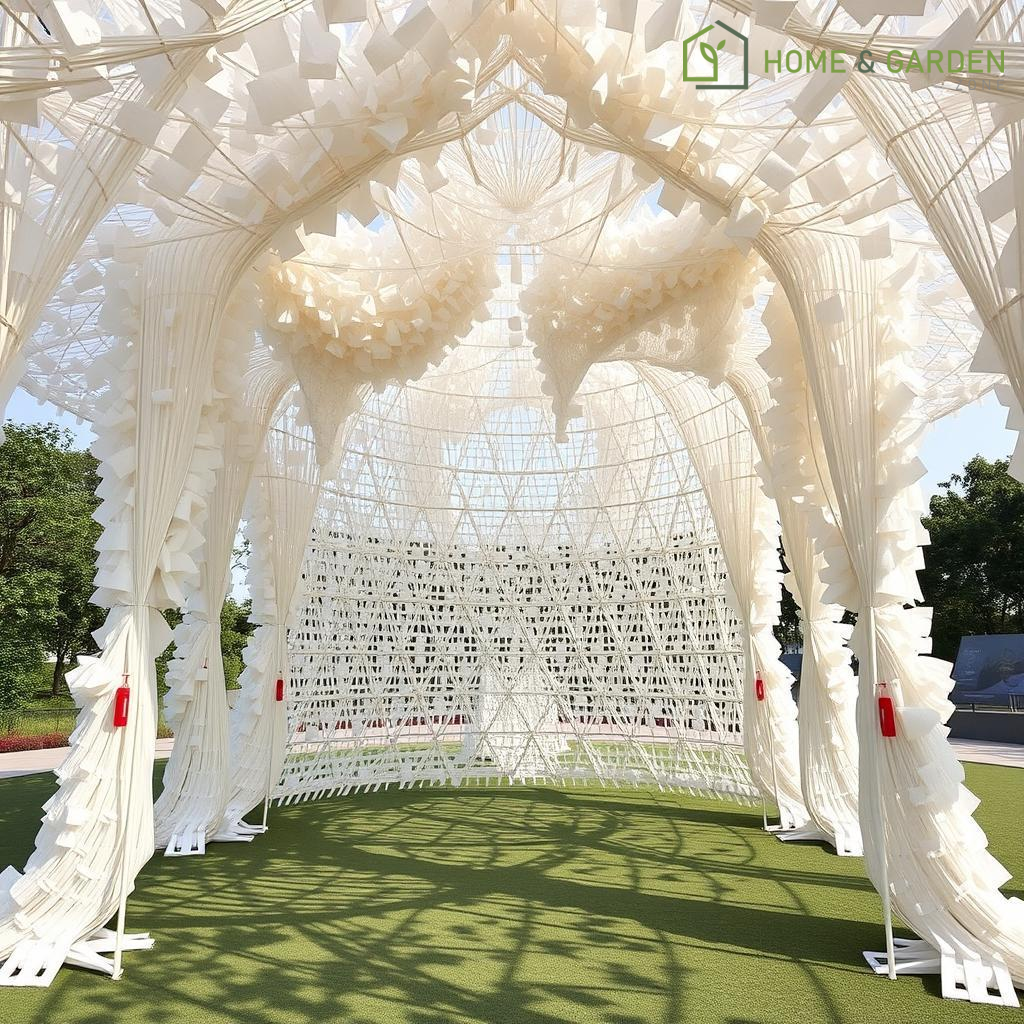
Innovative Design: T10A Pavilion Unveiled
In a compelling fusion of environmental consciousness and cultural homage, the T10A public art pavilion in Vietnam stands as a temporary exhibition space for burgeoning Vietnamese architectural projects. This structure, remarkable for its primary construction materials—recycled plastic bags and handmade paper—exemplifies an innovative approach to sustainable design within contemporary architecture.
Developed by a visionary design team, the T10A pavilion draws profound inspiration from Hanoi's rich craft heritage. This influence is not merely aesthetic but deeply embedded in the material selection and construction methodology, reflecting a commitment to local resources and traditional artisanal skills. The utilization of discarded plastic bags, transformed into a new building component, addresses a pressing environmental concern while simultaneously demonstrating the potential for waste material to achieve architectural elegance and structural integrity.
Material Ingenuity and Cultural Roots
The choice of recycled plastic bags and handmade paper for the T10A pavilion is a deliberate design statement. Plastic waste, a pervasive issue globally, is given a second life, contributing to a circular economy model. The bags are likely processed to create durable, translucent sheets or modules, offering a unique play of light and shadow within the pavilion's interior. Concurrently, handmade paper, a material deeply rooted in Vietnamese craft traditions, lends a tactile warmth and cultural authenticity to the structure. This combination creates a striking contrast between the modern problem of plastic waste and the timeless artistry of handcraft, bridging past and present in its physical form.
The pavilion's temporary nature underscores its role as an experimental platform, allowing for exploration of unconventional materials and construction techniques that could inform future permanent structures. It serves not only as an exhibition space but also as an exhibit itself, a tangible representation of sustainable innovation and respect for heritage.
Hanoi's Craft Heritage: A Guiding Principle
Hanoi's craft heritage, renowned for its intricate paper-making, silk weaving, and ceramics, provided a fertile ground for the design team's creative process. By integrating elements reminiscent of these traditions—perhaps through the texture of the paper, the weaving patterns of the plastic, or the overall structural aesthetic—the pavilion becomes a contemporary extension of this legacy. It celebrates the ingenuity of local artisans and highlights how traditional craftsmanship can inspire modern architectural solutions, particularly in the realm of sustainable building.
Summary
The T10A public art pavilion in Vietnam represents a significant achievement in sustainable architecture and culturally sensitive design. By ingeniously repurposing recycled plastic bags and integrating handmade paper, the project not only tackles environmental challenges but also pays homage to Hanoi's profound craft heritage. As a temporary exhibition space, it showcases the potential for innovative material use and serves as a powerful symbol of how design can blend ecological responsibility with deep cultural roots, inspiring a new generation of sustainable architectural practices.
Resources
- Designboom | Architecture & Design Magazine
- Architect Magazine
- ArchDaily
Details
Author

Latest articles


 }})
You can now watch HBO Max for $10
Innovative Design: T10A Pavilion Unveiled
In a compelling fusion of environmental consciousness and cultural homage, the T10A public art pavilion in Vietnam stands as a temporary exhibition space for burgeoning Vietnamese architectural projects. This structure, remarkable for its primary construction materials—recycled plastic bags and handmade paper—exemplifies an innovative approach to sustainable design within contemporary architecture.
Developed by a visionary design team, the T10A pavilion draws profound inspiration from Hanoi's rich craft heritage. This influence is not merely aesthetic but deeply embedded in the material selection and construction methodology, reflecting a commitment to local resources and traditional artisanal skills. The utilization of discarded plastic bags, transformed into a new building component, addresses a pressing environmental concern while simultaneously demonstrating the potential for waste material to achieve architectural elegance and structural integrity.
Material Ingenuity and Cultural Roots
The choice of recycled plastic bags and handmade paper for the T10A pavilion is a deliberate design statement. Plastic waste, a pervasive issue globally, is given a second life, contributing to a circular economy model. The bags are likely processed to create durable, translucent sheets or modules, offering a unique play of light and shadow within the pavilion's interior. Concurrently, handmade paper, a material deeply rooted in Vietnamese craft traditions, lends a tactile warmth and cultural authenticity to the structure. This combination creates a striking contrast between the modern problem of plastic waste and the timeless artistry of handcraft, bridging past and present in its physical form.
The pavilion's temporary nature underscores its role as an experimental platform, allowing for exploration of unconventional materials and construction techniques that could inform future permanent structures. It serves not only as an exhibition space but also as an exhibit itself, a tangible representation of sustainable innovation and respect for heritage.
Hanoi's Craft Heritage: A Guiding Principle
Hanoi's craft heritage, renowned for its intricate paper-making, silk weaving, and ceramics, provided a fertile ground for the design team's creative process. By integrating elements reminiscent of these traditions—perhaps through the texture of the paper, the weaving patterns of the plastic, or the overall structural aesthetic—the pavilion becomes a contemporary extension of this legacy. It celebrates the ingenuity of local artisans and highlights how traditional craftsmanship can inspire modern architectural solutions, particularly in the realm of sustainable building.
Summary
The T10A public art pavilion in Vietnam represents a significant achievement in sustainable architecture and culturally sensitive design. By ingeniously repurposing recycled plastic bags and integrating handmade paper, the project not only tackles environmental challenges but also pays homage to Hanoi's profound craft heritage. As a temporary exhibition space, it showcases the potential for innovative material use and serves as a powerful symbol of how design can blend ecological responsibility with deep cultural roots, inspiring a new generation of sustainable architectural practices.
Resources
- Designboom | Architecture & Design Magazine
- Architect Magazine
- ArchDaily
Latest articles
You can now watch HBO Max for $10
Similar posts
This is a page that only logged-in people can visit. Don't you feel special? Try clicking on a button below to do some things you can't do when you're logged out.
Example modal
At your leisure, please peruse this excerpt from a whale of a tale.
Chapter 1: Loomings.
Call me Ishmael. Some years ago—never mind how long precisely—having little or no money in my purse, and nothing particular to interest me on shore, I thought I would sail about a little and see the watery part of the world. It is a way I have of driving off the spleen and regulating the circulation. Whenever I find myself growing grim about the mouth; whenever it is a damp, drizzly November in my soul; whenever I find myself involuntarily pausing before coffin warehouses, and bringing up the rear of every funeral I meet; and especially whenever my hypos get such an upper hand of me, that it requires a strong moral principle to prevent me from deliberately stepping into the street, and methodically knocking people's hats off—then, I account it high time to get to sea as soon as I can. This is my substitute for pistol and ball. With a philosophical flourish Cato throws himself upon his sword; I quietly take to the ship. There is nothing surprising in this. If they but knew it, almost all men in their degree, some time or other, cherish very nearly the same feelings towards the ocean with me.
Comment