Enrico Sassi Revitalizes a 1970s Ticino Residence with Le Corbusier's Iconic Colour Palette
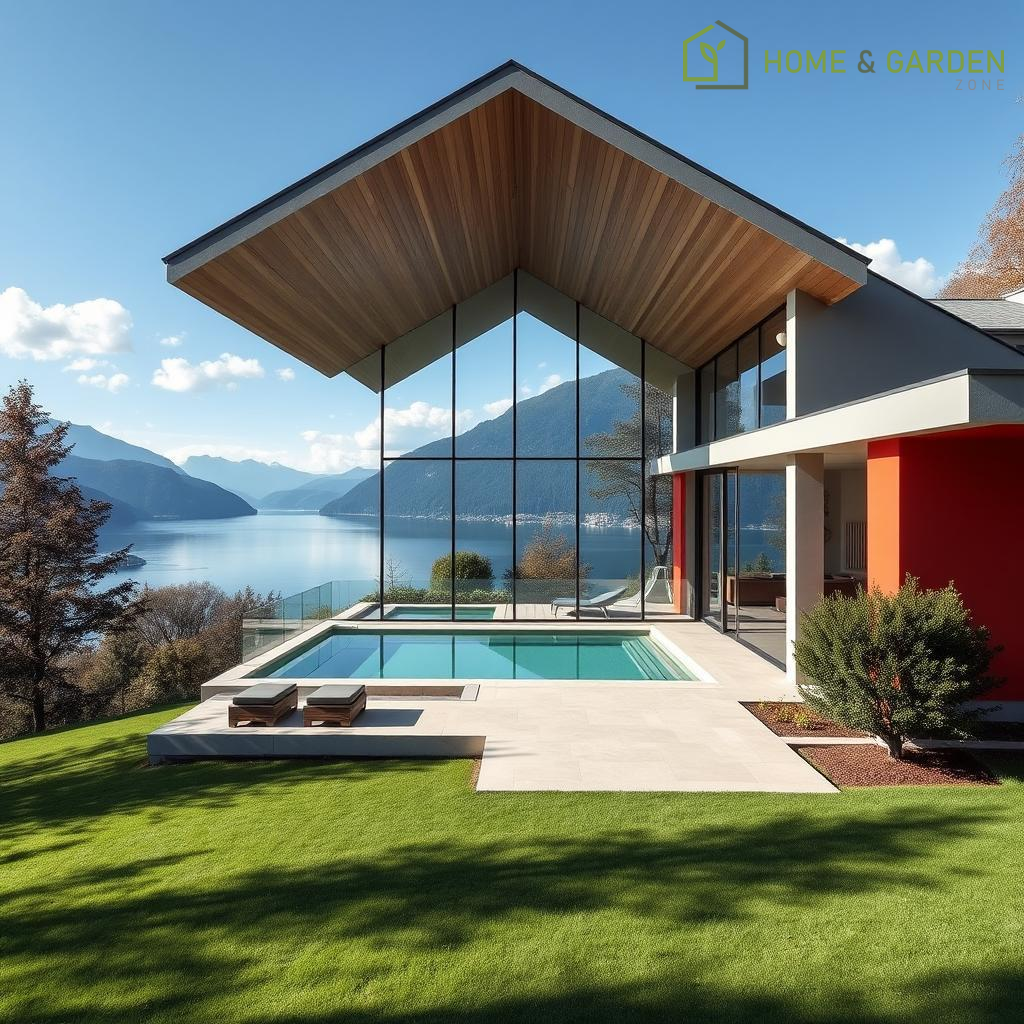
A Chromatic Dialogue: Enrico Sassi's Renovation Overlooking Lake Lugano
In the picturesque landscape of Vernate, Ticino, Switzerland, overlooking the serene expanse of Lake Lugano, a 1972 residence originally conceived by the German studio Unterlöhner + Waibel has undergone a profound transformation. Lugano-based architect Enrico Sassi has orchestrated a complete renovation, breathing new life into the mid-century structure by integrating modern amenities and, most notably, a meticulously applied colour palette inspired by the visionary architect Le Corbusier.
The Fusion of Eras and Aesthetics
Sassi's intervention goes beyond mere surface-level updates. The project introduces contemporary elements while honouring the dwelling's original spirit. Key to this revitalization are the new, expansive windows that frame the breathtaking natural surroundings, enhancing the connection between the interior and the spectacular lakeside vista. The kitchen, a focal point of modern living, has been reimagined with sleek stainless-steel finishes, a testament to minimalist functionality and durability.
However, the defining characteristic of this renovation is the deliberate adoption of Le Corbusier's Architectural Polychromy. Le Corbusier's system, developed across two key collections in 1931 and 1959, is renowned for its scientifically ordered colours, each chosen for its intrinsic architectural properties—capable of modifying spatial perception, creating atmosphere, and affecting human emotion. Sassi's application of these hues introduces a sophisticated layer of depth and narrative to the 1970s framework, demonstrating how historical architectural theory can dynamically inform contemporary design.
Preserving Heritage, Embracing Modernity
The original structure, a product of its time, presented both challenges and opportunities. Sassi's approach was not to erase the past but to elevate it. By selectively applying colours from Le Corbusier's palettes, he has redefined volumes, highlighted architectural features, and created a harmonious flow throughout the residence. This strategic use of colour aids in articulating spaces, making them feel both expansive and intimately connected.
The project serves as a compelling case study in adaptive reuse, illustrating how a thoughtful renovation can extend the life and relevance of existing architectural assets. It underscores a philosophy where modern interventions complement rather than compete with historical design, resulting in a cohesive and timeless aesthetic.
Summary
Enrico Sassi's renovation of the 1972 Vernate house is a masterclass in blending eras through intelligent design choices. By incorporating new windows, a contemporary stainless-steel kitchen, and especially Le Corbusier's precise colour schemes, Sassi has successfully recontextualized a mid-century home for the 21st century. The project is a vibrant dialogue between past and present, functionality and artistic vision, ultimately creating a residence that is both respectful of its origins and boldly forward-looking.
Resources
Details
Author

Latest articles


 }})
You can now watch HBO Max for $10
A Chromatic Dialogue: Enrico Sassi's Renovation Overlooking Lake Lugano
In the picturesque landscape of Vernate, Ticino, Switzerland, overlooking the serene expanse of Lake Lugano, a 1972 residence originally conceived by the German studio Unterlöhner + Waibel has undergone a profound transformation. Lugano-based architect Enrico Sassi has orchestrated a complete renovation, breathing new life into the mid-century structure by integrating modern amenities and, most notably, a meticulously applied colour palette inspired by the visionary architect Le Corbusier.
The Fusion of Eras and Aesthetics
Sassi's intervention goes beyond mere surface-level updates. The project introduces contemporary elements while honouring the dwelling's original spirit. Key to this revitalization are the new, expansive windows that frame the breathtaking natural surroundings, enhancing the connection between the interior and the spectacular lakeside vista. The kitchen, a focal point of modern living, has been reimagined with sleek stainless-steel finishes, a testament to minimalist functionality and durability.
However, the defining characteristic of this renovation is the deliberate adoption of Le Corbusier's Architectural Polychromy. Le Corbusier's system, developed across two key collections in 1931 and 1959, is renowned for its scientifically ordered colours, each chosen for its intrinsic architectural properties—capable of modifying spatial perception, creating atmosphere, and affecting human emotion. Sassi's application of these hues introduces a sophisticated layer of depth and narrative to the 1970s framework, demonstrating how historical architectural theory can dynamically inform contemporary design.
Preserving Heritage, Embracing Modernity
The original structure, a product of its time, presented both challenges and opportunities. Sassi's approach was not to erase the past but to elevate it. By selectively applying colours from Le Corbusier's palettes, he has redefined volumes, highlighted architectural features, and created a harmonious flow throughout the residence. This strategic use of colour aids in articulating spaces, making them feel both expansive and intimately connected.
The project serves as a compelling case study in adaptive reuse, illustrating how a thoughtful renovation can extend the life and relevance of existing architectural assets. It underscores a philosophy where modern interventions complement rather than compete with historical design, resulting in a cohesive and timeless aesthetic.
Summary
Enrico Sassi's renovation of the 1972 Vernate house is a masterclass in blending eras through intelligent design choices. By incorporating new windows, a contemporary stainless-steel kitchen, and especially Le Corbusier's precise colour schemes, Sassi has successfully recontextualized a mid-century home for the 21st century. The project is a vibrant dialogue between past and present, functionality and artistic vision, ultimately creating a residence that is both respectful of its origins and boldly forward-looking.
Resources
Latest articles
You can now watch HBO Max for $10
Similar posts
This is a page that only logged-in people can visit. Don't you feel special? Try clicking on a button below to do some things you can't do when you're logged out.
Example modal
At your leisure, please peruse this excerpt from a whale of a tale.
Chapter 1: Loomings.
Call me Ishmael. Some years ago—never mind how long precisely—having little or no money in my purse, and nothing particular to interest me on shore, I thought I would sail about a little and see the watery part of the world. It is a way I have of driving off the spleen and regulating the circulation. Whenever I find myself growing grim about the mouth; whenever it is a damp, drizzly November in my soul; whenever I find myself involuntarily pausing before coffin warehouses, and bringing up the rear of every funeral I meet; and especially whenever my hypos get such an upper hand of me, that it requires a strong moral principle to prevent me from deliberately stepping into the street, and methodically knocking people's hats off—then, I account it high time to get to sea as soon as I can. This is my substitute for pistol and ball. With a philosophical flourish Cato throws himself upon his sword; I quietly take to the ship. There is nothing surprising in this. If they but knew it, almost all men in their degree, some time or other, cherish very nearly the same feelings towards the ocean with me.
Comment