Luca Boscardin: Unlocking Imagination Through Playful Design in Toys, Cities, and Everyday Life

The Intrinsic Function of Play in Design
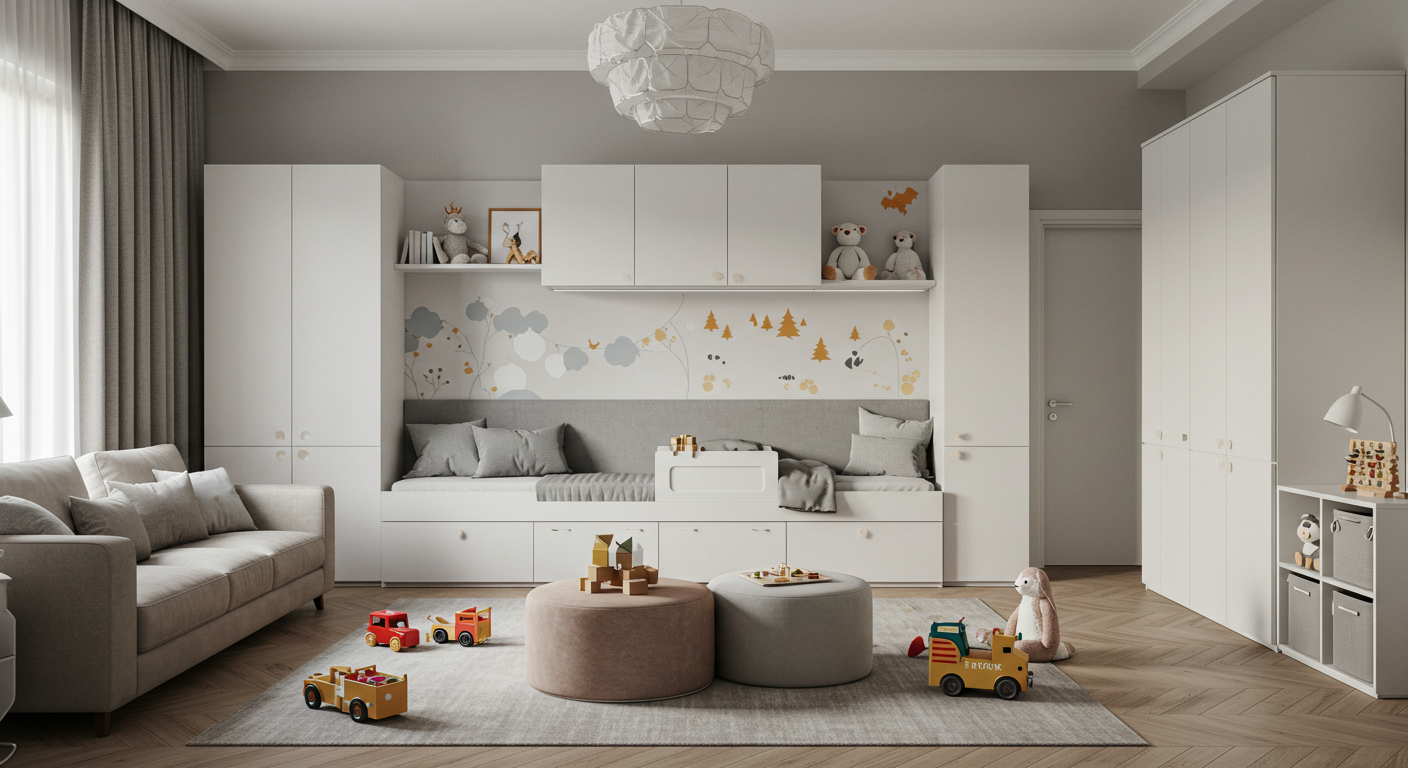
Luca Boscardin, a designer celebrated for his thoughtful approach to objects and environments, articulates a profound philosophy: "play is itself a function." This perspective challenges conventional notions of utility, positing that the intrinsic value of play extends beyond mere recreation, serving as a foundational element in fostering creativity, critical thinking, and engagement with the world. Boscardin's work, spanning from toy design to urban planning concepts, consistently underscores the imperative of injecting openness and imaginative potential into our surroundings.
Designing for Open-Ended Exploration
At the core of Boscardin's design ethos is the concept of open-ended objects. Unlike products with singular, predefined uses, open-ended designs invite interpretation and adaptation, encouraging users to discover their own interactions and narratives. This principle is particularly evident in his approach to toy design, where the goal is not to dictate play but to provide catalysts for children's innate curiosity and inventiveness. Such objects become tools for exploration rather than mere entertainment, fostering cognitive development and problem-solving skills through unstructured engagement.
Boscardin argues that this philosophy should not be confined to children's playthings but should permeate all scales of design. Imagine cities where public spaces are not just thoroughfares but dynamic arenas for spontaneous interaction and discovery. Consider schools that are designed to stimulate curiosity and hands-on exploration rather than rigid instruction. This vision suggests a paradigm shift from designs that simply fulfill a need to those that actively nurture imagination and critical inquiry.
Curiosity as an Urban Planning Imperative
Extending his "play as a function" maxim to the urban fabric, Boscardin advocates for cities that inherently spark curiosity. This involves moving beyond purely functional infrastructure to create environments rich in sensory experiences, unexpected juxtapositions, and opportunities for spontaneous interaction. Green spaces, public art installations, and adaptable urban furniture can all contribute to a cityscape that encourages citizens to engage with their surroundings more deeply, fostering a sense of ownership and community.
For Boscardin, the design of cities, much like the design of toys, should provide frameworks that are robust yet flexible enough to accommodate diverse human activities and interpretations. This means prioritizing human scale, promoting walkability, and integrating elements that invite exploration and discovery. The urban environment, when thoughtfully designed with play and curiosity in mind, transforms from a backdrop to an active participant in human development and social cohesion.
Summary
Luca Boscardin's powerful assertion that "play is itself a function" offers a vital lens through which to reconsider our designed world. By championing open-ended objects and environments, he challenges designers, educators, and urban planners to prioritize imagination and curiosity. His work illuminates a path towards creating spaces and products that not only serve practical purposes but also enrich the human experience by inviting ongoing interaction, discovery, and creative expression. This holistic approach promises to cultivate more engaging, adaptable, and ultimately more human-centered communities.
Resources
- Designboom: 'play is itself a function': luca boscardin on designing toys, cities, and spaces for imagination
- Domus: Various articles and interviews featuring Luca Boscardin's work and philosophy.
- Frame Magazine: Features on innovative design approaches and designers like Luca Boscardin.
Details
Author


Latest articles

 }})
You can now watch HBO Max for $10
The Intrinsic Function of Play in Design
Luca Boscardin, a designer celebrated for his thoughtful approach to objects and environments, articulates a profound philosophy: "play is itself a function." This perspective challenges conventional notions of utility, positing that the intrinsic value of play extends beyond mere recreation, serving as a foundational element in fostering creativity, critical thinking, and engagement with the world. Boscardin's work, spanning from toy design to urban planning concepts, consistently underscores the imperative of injecting openness and imaginative potential into our surroundings.
Designing for Open-Ended Exploration
At the core of Boscardin's design ethos is the concept of open-ended objects. Unlike products with singular, predefined uses, open-ended designs invite interpretation and adaptation, encouraging users to discover their own interactions and narratives. This principle is particularly evident in his approach to toy design, where the goal is not to dictate play but to provide catalysts for children's innate curiosity and inventiveness. Such objects become tools for exploration rather than mere entertainment, fostering cognitive development and problem-solving skills through unstructured engagement.
Boscardin argues that this philosophy should not be confined to children's playthings but should permeate all scales of design. Imagine cities where public spaces are not just thoroughfares but dynamic arenas for spontaneous interaction and discovery. Consider schools that are designed to stimulate curiosity and hands-on exploration rather than rigid instruction. This vision suggests a paradigm shift from designs that simply fulfill a need to those that actively nurture imagination and critical inquiry.
Curiosity as an Urban Planning Imperative
Extending his "play as a function" maxim to the urban fabric, Boscardin advocates for cities that inherently spark curiosity. This involves moving beyond purely functional infrastructure to create environments rich in sensory experiences, unexpected juxtapositions, and opportunities for spontaneous interaction. Green spaces, public art installations, and adaptable urban furniture can all contribute to a cityscape that encourages citizens to engage with their surroundings more deeply, fostering a sense of ownership and community.
For Boscardin, the design of cities, much like the design of toys, should provide frameworks that are robust yet flexible enough to accommodate diverse human activities and interpretations. This means prioritizing human scale, promoting walkability, and integrating elements that invite exploration and discovery. The urban environment, when thoughtfully designed with play and curiosity in mind, transforms from a backdrop to an active participant in human development and social cohesion.
Summary
Luca Boscardin's powerful assertion that "play is itself a function" offers a vital lens through which to reconsider our designed world. By championing open-ended objects and environments, he challenges designers, educators, and urban planners to prioritize imagination and curiosity. His work illuminates a path towards creating spaces and products that not only serve practical purposes but also enrich the human experience by inviting ongoing interaction, discovery, and creative expression. This holistic approach promises to cultivate more engaging, adaptable, and ultimately more human-centered communities.
Resources
- Designboom: 'play is itself a function': luca boscardin on designing toys, cities, and spaces for imagination
- Domus: Various articles and interviews featuring Luca Boscardin's work and philosophy.
- Frame Magazine: Features on innovative design approaches and designers like Luca Boscardin.
Latest articles
You can now watch HBO Max for $10
Similar posts

This is a page that only logged-in people can visit. Don't you feel special? Try clicking on a button below to do some things you can't do when you're logged out.
Example modal
At your leisure, please peruse this excerpt from a whale of a tale.
Chapter 1: Loomings.
Call me Ishmael. Some years ago—never mind how long precisely—having little or no money in my purse, and nothing particular to interest me on shore, I thought I would sail about a little and see the watery part of the world. It is a way I have of driving off the spleen and regulating the circulation. Whenever I find myself growing grim about the mouth; whenever it is a damp, drizzly November in my soul; whenever I find myself involuntarily pausing before coffin warehouses, and bringing up the rear of every funeral I meet; and especially whenever my hypos get such an upper hand of me, that it requires a strong moral principle to prevent me from deliberately stepping into the street, and methodically knocking people's hats off—then, I account it high time to get to sea as soon as I can. This is my substitute for pistol and ball. With a philosophical flourish Cato throws himself upon his sword; I quietly take to the ship. There is nothing surprising in this. If they but knew it, almost all men in their degree, some time or other, cherish very nearly the same feelings towards the ocean with me.
Comment