H&P Architects' "Farming House": A Verdant Screen Redefining Urban Dwellings in Vietnam
Introduction
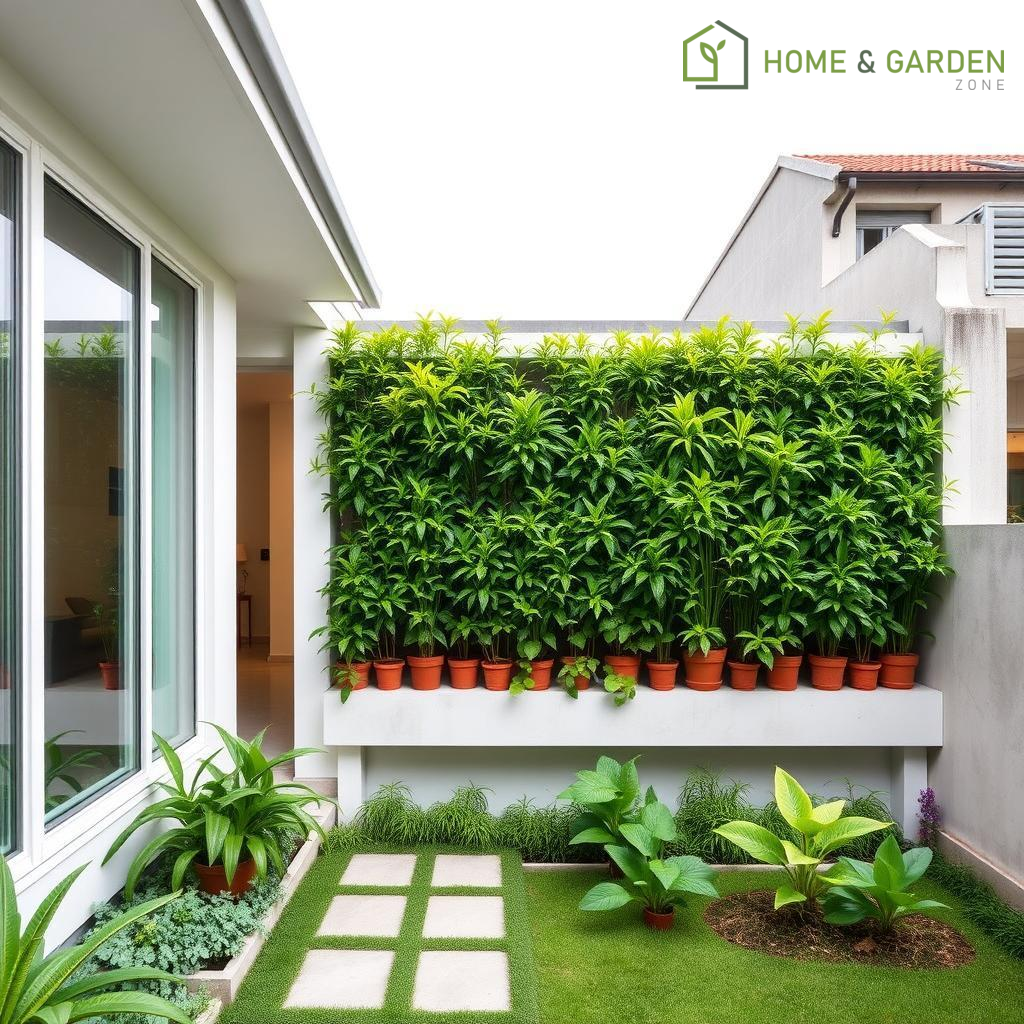
In the bustling urban landscape of Hanoi, Vietnam, H&P Architects has pioneered an innovative residential design that challenges conventional notions of urban living. Their "Farming House" project ingeniously incorporates a dynamic, green facade composed of potted plants, creating a "flying vegetation" system that serves multiple ecological and social functions. This architectural intervention transforms a typical dwelling into a vibrant, self-sustaining ecosystem, offering a powerful response to the environmental pressures of dense city environments.
Architectural Innovation: The "Flying Vegetation"
The core of the Farming House’s design lies in its meticulously engineered facade. Instead of traditional static walls, H&P Architects conceived a modular system where various edible plants and herbs are cultivated in recycled plastic pots. These pots are strategically arranged within a lightweight steel framework that screens the residence, forming a living, breathing skin. This "flying vegetation" system is more than just an aesthetic embellishment; it is a critical component of the building's environmental strategy. The dense greenery acts as a natural sun filter, significantly reducing solar heat gain and mitigating the urban heat island effect prevalent in Hanoi. Concurrently, it allows for the passage of cooling breezes, enhancing natural ventilation and reducing reliance on artificial air conditioning.
Beyond climate control, the facade embodies the principles of urban agriculture. Residents can cultivate their own produce directly on their doorstep, fostering a connection to food sources and promoting self-sufficiency. This integration of food production into the architectural fabric speaks to a broader vision of sustainable urbanism, where buildings contribute actively to ecological health and community well-being.
Sustainable Urban Living Redefined
The Farming House represents a thoughtful response to several pressing urban challenges. By embedding agriculture within the residential structure, it addresses the scarcity of green spaces in metropolitan areas and offers a tangible solution for improving local air quality through natural filtration. The use of recycled materials for the planters underscores a commitment to resource efficiency and circular economy principles. Furthermore, the design fosters a unique living experience, inviting residents to engage directly with their environment and participate in the cultivation process. This interaction cultivates a deeper appreciation for nature and the cycles of growth, enriching the daily lives of its inhabitants.
H&P Architects’ vision extends beyond a single dwelling, proposing a replicable model for future urban developments. The modular nature of the facade system suggests scalability, potentially transforming entire urban blocks into interconnected networks of green infrastructure.
Conclusion
The "Farming House" by H&P Architects stands as a compelling testament to the potential of integrated design. By merging architecture with urban agriculture and sustainable environmental strategies, the project offers a forward-thinking prototype for resilient and livable cities. Its lush, functional facade is not merely a screen but a statement: an invitation to reconsider how we build, how we live, and how we interact with the natural world within our increasingly urbanized planet.
Resources
Details
Author


Latest articles


 }})
You can now watch HBO Max for $10
Introduction
In the bustling urban landscape of Hanoi, Vietnam, H&P Architects has pioneered an innovative residential design that challenges conventional notions of urban living. Their "Farming House" project ingeniously incorporates a dynamic, green facade composed of potted plants, creating a "flying vegetation" system that serves multiple ecological and social functions. This architectural intervention transforms a typical dwelling into a vibrant, self-sustaining ecosystem, offering a powerful response to the environmental pressures of dense city environments.
Architectural Innovation: The "Flying Vegetation"
The core of the Farming House’s design lies in its meticulously engineered facade. Instead of traditional static walls, H&P Architects conceived a modular system where various edible plants and herbs are cultivated in recycled plastic pots. These pots are strategically arranged within a lightweight steel framework that screens the residence, forming a living, breathing skin. This "flying vegetation" system is more than just an aesthetic embellishment; it is a critical component of the building's environmental strategy. The dense greenery acts as a natural sun filter, significantly reducing solar heat gain and mitigating the urban heat island effect prevalent in Hanoi. Concurrently, it allows for the passage of cooling breezes, enhancing natural ventilation and reducing reliance on artificial air conditioning.
Beyond climate control, the facade embodies the principles of urban agriculture. Residents can cultivate their own produce directly on their doorstep, fostering a connection to food sources and promoting self-sufficiency. This integration of food production into the architectural fabric speaks to a broader vision of sustainable urbanism, where buildings contribute actively to ecological health and community well-being.
Sustainable Urban Living Redefined
The Farming House represents a thoughtful response to several pressing urban challenges. By embedding agriculture within the residential structure, it addresses the scarcity of green spaces in metropolitan areas and offers a tangible solution for improving local air quality through natural filtration. The use of recycled materials for the planters underscores a commitment to resource efficiency and circular economy principles. Furthermore, the design fosters a unique living experience, inviting residents to engage directly with their environment and participate in the cultivation process. This interaction cultivates a deeper appreciation for nature and the cycles of growth, enriching the daily lives of its inhabitants.
H&P Architects’ vision extends beyond a single dwelling, proposing a replicable model for future urban developments. The modular nature of the facade system suggests scalability, potentially transforming entire urban blocks into interconnected networks of green infrastructure.
Conclusion
The "Farming House" by H&P Architects stands as a compelling testament to the potential of integrated design. By merging architecture with urban agriculture and sustainable environmental strategies, the project offers a forward-thinking prototype for resilient and livable cities. Its lush, functional facade is not merely a screen but a statement: an invitation to reconsider how we build, how we live, and how we interact with the natural world within our increasingly urbanized planet.
Resources
Latest articles
You can now watch HBO Max for $10
Similar posts


This is a page that only logged-in people can visit. Don't you feel special? Try clicking on a button below to do some things you can't do when you're logged out.
Example modal
At your leisure, please peruse this excerpt from a whale of a tale.
Chapter 1: Loomings.
Call me Ishmael. Some years ago—never mind how long precisely—having little or no money in my purse, and nothing particular to interest me on shore, I thought I would sail about a little and see the watery part of the world. It is a way I have of driving off the spleen and regulating the circulation. Whenever I find myself growing grim about the mouth; whenever it is a damp, drizzly November in my soul; whenever I find myself involuntarily pausing before coffin warehouses, and bringing up the rear of every funeral I meet; and especially whenever my hypos get such an upper hand of me, that it requires a strong moral principle to prevent me from deliberately stepping into the street, and methodically knocking people's hats off—then, I account it high time to get to sea as soon as I can. This is my substitute for pistol and ball. With a philosophical flourish Cato throws himself upon his sword; I quietly take to the ship. There is nothing surprising in this. If they but knew it, almost all men in their degree, some time or other, cherish very nearly the same feelings towards the ocean with me.
Comment