Beyond the Arc: Mastering Nuanced Hues for Sophisticated LED Projects
Introduction
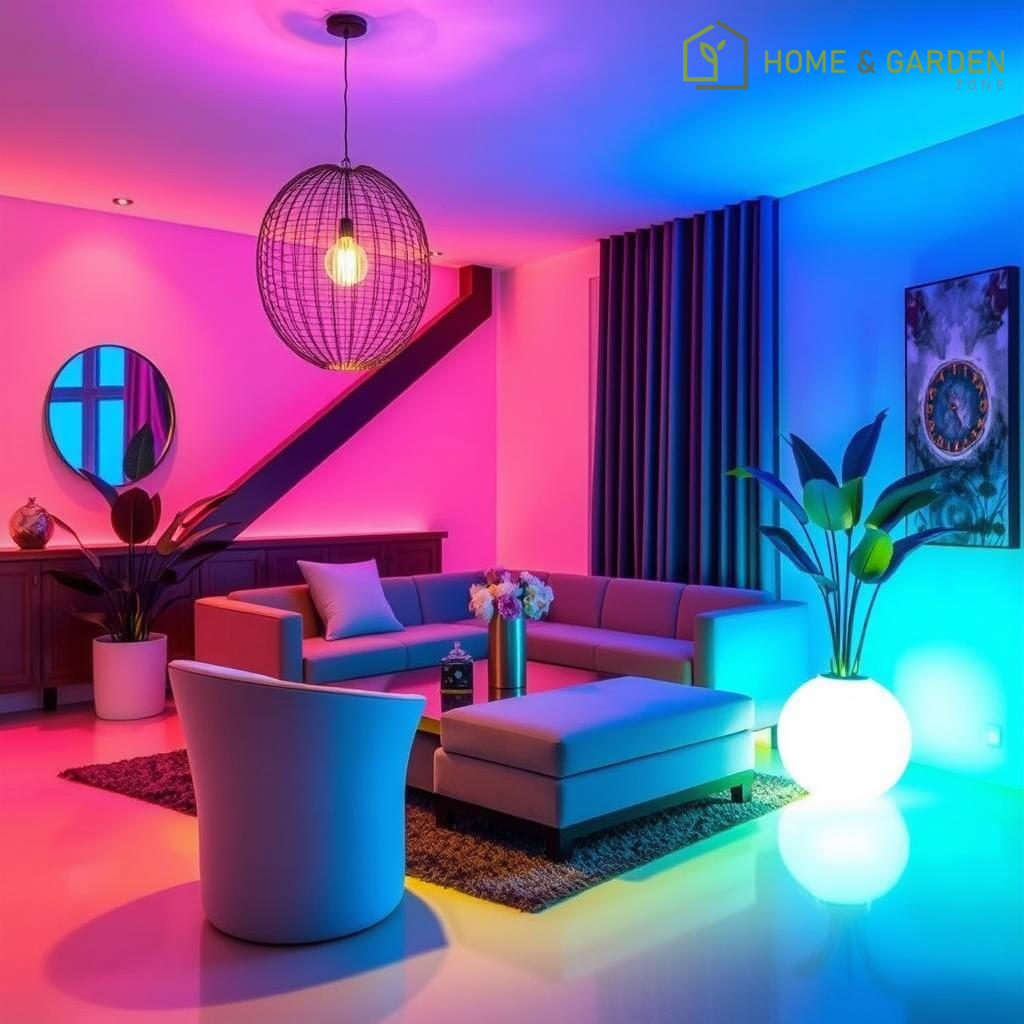
For many enthusiasts, the initial foray into RGB LED lighting often begins with the ubiquitous rainbow spectrum. While visually engaging, this basic effect merely scratches the surface of what these versatile light sources can achieve. To truly distinguish projects and craft environments imbued with specific moods and aesthetics, makers must transcend the simplistic arc of the rainbow and delve into advanced color theory, precise digital control, and sophisticated dynamic effects.
The Foundation: Understanding Color Theory
Effective LED lighting begins not with code, but with an understanding of color itself. The additive nature of RGB LEDs means mixing red, green, and blue light creates other colors, with all three at full intensity yielding white. Moving beyond primary and secondary colors demands a deeper grasp of color relationships.
Additive vs. Subtractive
Unlike pigment, which subtracts light, LEDs work by adding it. This fundamental difference dictates how colors blend. Understanding the color wheel for light (red, green, blue primaries; cyan, magenta, yellow secondaries) is crucial for predicting outcomes and intentionally designing harmonious or contrasting schemes.
The Power of Palettes
Instead of linearly transitioning through the entire spectrum, strategic use of color palettes unlocks vast creative potential. Curated palettes, drawing inspiration from nature, art, or design principles like analogous (colors next to each other on the wheel) or complementary (opposite colors) schemes, provide a refined foundation for lighting effects. These palettes allow for deliberate mood setting—from warm, inviting tones to cool, contemplative ambiances.
Precision Control: Unlocking Deeper Hues
Achieving nuanced colors requires more than simply specifying "red," "green," and "blue." It demands precise digital manipulation of each LED's intensity.
Beyond 8-bit: The Resolution Advantage
Many basic LED controllers operate with 8-bit resolution per color channel, offering 256 intensity levels (0-255). While this provides over 16 million possible colors, subtle shifts can still appear stepwise. Advanced control techniques, often involving custom software or specific libraries, can approximate higher resolutions, leading to smoother gradients and more organic transitions that avoid banding artifacts.
Microcontrollers: Your Creative Canvas
Platforms like Arduino, ESP32, or Raspberry Pi are indispensable for precision. Libraries such as FastLED or Adafruit NeoPixel provide robust frameworks for addressing individual LEDs or segments, managing color data, and implementing complex patterns. This granular control allows for the exact blending of primary colors to generate virtually any desired hue, moving beyond the limitations of pre-programmed effects.
Dynamic Lighting: Crafting Atmosphere and Emotion
Static colors, however beautiful, can only tell part of the story. Dynamic lighting introduces movement, change, and interactivity, significantly enhancing the impact of an LED project.
Subtle Shifts and Gradients
Instead of abrupt changes, consider gentle pulsations, slow fades, or rolling gradients that subtly shift between colors within a chosen palette. These evolving displays can evoke tranquility, energy, or a sense of natural flow, mimicking phenomena like a sunrise or a flickering fire, but with custom color schemes.
Reactive and Generative Effects
True sophistication emerges when LEDs respond to their environment or generate patterns algorithmically. Integrating sensors (sound, proximity, temperature) allows lighting to react dynamically. Furthermore, procedural generation techniques can create complex, non-repeating patterns that evolve over time, offering a constantly fresh visual experience far beyond simple loops.
Conclusion
The journey beyond the rainbow opens a world of sophisticated LED artistry. By grounding projects in sound color theory, employing precision digital control, and embracing dynamic, intelligent effects, makers can transform simple LED arrays into powerful tools for ambiance, expression, and functional illumination. The mastery of nuanced hues elevates projects from mere display to compelling experience.
Resources
- FastLED Library Documentation: A comprehensive resource for advanced LED control with Arduino.
- Adafruit Learning System: Offers numerous tutorials on electronics, microcontrollers, and LED projects.
- Color Matters - Basic Color Theory: An excellent primer on the principles of color and its application.
Details
Author


Latest articles


 }})
You can now watch HBO Max for $10
Introduction
For many enthusiasts, the initial foray into RGB LED lighting often begins with the ubiquitous rainbow spectrum. While visually engaging, this basic effect merely scratches the surface of what these versatile light sources can achieve. To truly distinguish projects and craft environments imbued with specific moods and aesthetics, makers must transcend the simplistic arc of the rainbow and delve into advanced color theory, precise digital control, and sophisticated dynamic effects.
The Foundation: Understanding Color Theory
Effective LED lighting begins not with code, but with an understanding of color itself. The additive nature of RGB LEDs means mixing red, green, and blue light creates other colors, with all three at full intensity yielding white. Moving beyond primary and secondary colors demands a deeper grasp of color relationships.
Additive vs. Subtractive
Unlike pigment, which subtracts light, LEDs work by adding it. This fundamental difference dictates how colors blend. Understanding the color wheel for light (red, green, blue primaries; cyan, magenta, yellow secondaries) is crucial for predicting outcomes and intentionally designing harmonious or contrasting schemes.
The Power of Palettes
Instead of linearly transitioning through the entire spectrum, strategic use of color palettes unlocks vast creative potential. Curated palettes, drawing inspiration from nature, art, or design principles like analogous (colors next to each other on the wheel) or complementary (opposite colors) schemes, provide a refined foundation for lighting effects. These palettes allow for deliberate mood setting—from warm, inviting tones to cool, contemplative ambiances.
Precision Control: Unlocking Deeper Hues
Achieving nuanced colors requires more than simply specifying "red," "green," and "blue." It demands precise digital manipulation of each LED's intensity.
Beyond 8-bit: The Resolution Advantage
Many basic LED controllers operate with 8-bit resolution per color channel, offering 256 intensity levels (0-255). While this provides over 16 million possible colors, subtle shifts can still appear stepwise. Advanced control techniques, often involving custom software or specific libraries, can approximate higher resolutions, leading to smoother gradients and more organic transitions that avoid banding artifacts.
Microcontrollers: Your Creative Canvas
Platforms like Arduino, ESP32, or Raspberry Pi are indispensable for precision. Libraries such as FastLED or Adafruit NeoPixel provide robust frameworks for addressing individual LEDs or segments, managing color data, and implementing complex patterns. This granular control allows for the exact blending of primary colors to generate virtually any desired hue, moving beyond the limitations of pre-programmed effects.
Dynamic Lighting: Crafting Atmosphere and Emotion
Static colors, however beautiful, can only tell part of the story. Dynamic lighting introduces movement, change, and interactivity, significantly enhancing the impact of an LED project.
Subtle Shifts and Gradients
Instead of abrupt changes, consider gentle pulsations, slow fades, or rolling gradients that subtly shift between colors within a chosen palette. These evolving displays can evoke tranquility, energy, or a sense of natural flow, mimicking phenomena like a sunrise or a flickering fire, but with custom color schemes.
Reactive and Generative Effects
True sophistication emerges when LEDs respond to their environment or generate patterns algorithmically. Integrating sensors (sound, proximity, temperature) allows lighting to react dynamically. Furthermore, procedural generation techniques can create complex, non-repeating patterns that evolve over time, offering a constantly fresh visual experience far beyond simple loops.
Conclusion
The journey beyond the rainbow opens a world of sophisticated LED artistry. By grounding projects in sound color theory, employing precision digital control, and embracing dynamic, intelligent effects, makers can transform simple LED arrays into powerful tools for ambiance, expression, and functional illumination. The mastery of nuanced hues elevates projects from mere display to compelling experience.
Resources
- FastLED Library Documentation: A comprehensive resource for advanced LED control with Arduino.
- Adafruit Learning System: Offers numerous tutorials on electronics, microcontrollers, and LED projects.
- Color Matters - Basic Color Theory: An excellent primer on the principles of color and its application.
Latest articles
You can now watch HBO Max for $10
Similar posts


This is a page that only logged-in people can visit. Don't you feel special? Try clicking on a button below to do some things you can't do when you're logged out.
Example modal
At your leisure, please peruse this excerpt from a whale of a tale.
Chapter 1: Loomings.
Call me Ishmael. Some years ago—never mind how long precisely—having little or no money in my purse, and nothing particular to interest me on shore, I thought I would sail about a little and see the watery part of the world. It is a way I have of driving off the spleen and regulating the circulation. Whenever I find myself growing grim about the mouth; whenever it is a damp, drizzly November in my soul; whenever I find myself involuntarily pausing before coffin warehouses, and bringing up the rear of every funeral I meet; and especially whenever my hypos get such an upper hand of me, that it requires a strong moral principle to prevent me from deliberately stepping into the street, and methodically knocking people's hats off—then, I account it high time to get to sea as soon as I can. This is my substitute for pistol and ball. With a philosophical flourish Cato throws himself upon his sword; I quietly take to the ship. There is nothing surprising in this. If they but knew it, almost all men in their degree, some time or other, cherish very nearly the same feelings towards the ocean with me.
Comment