TAKK's "Con-Vivere" Installation Transforms MAXXI Entrance into a Hub of Wild Wonder and Societal Reflection
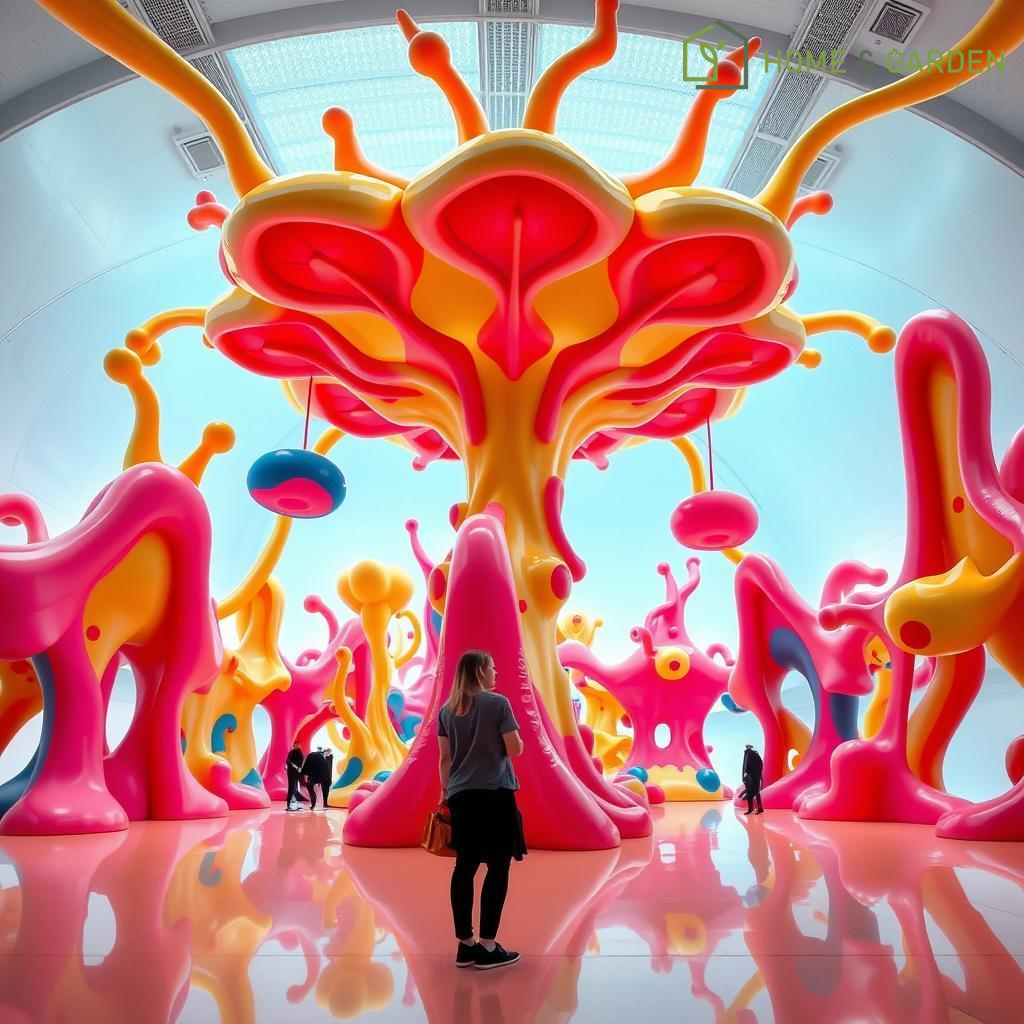
A Bold Overture at MAXXI: TAKK's Con-Vivere
In a striking reimagining of the museum entrance, the Spanish design studio TAKK has unveiled "Con-Vivere" at Rome's MAXXI National Museum of 21st Century Arts. More than merely a gateway, this installation transforms the initial visitor experience into an immersive exploration of themes deeply rooted in contemporary societal discourse, from shared human experience to the critical importance of food systems.
TAKK, known for its experimental and often provocative approach to architecture and design, consistently challenges conventional notions of space and interaction. With "Con-Vivere," the studio extends its philosophical inquiries directly into the public sphere of one of Italy's most prestigious cultural institutions. The installation is not just an aesthetic statement but a functional intervention designed to foster a sense of gathering and interaction, blurring the lines between art, architecture, and social commentary.
Embracing Conviviality and Food Sovereignty
At the heart of "Con-Vivere" lies TAKK’s passionate commitment to conviviality – the art of living together, sharing, and interacting harmoniously. The installation physically manifests this principle by creating inviting spaces that encourage pause, dialogue, and informal encounters among visitors. This architectural provocation serves as a reminder of the inherent human need for connection and collective experience, particularly in an increasingly digital and often isolating world.
Beyond human interaction, TAKK delves into the profound concept of food sovereignty. This often-overlooked aspect of design considers how spaces can reflect and support the autonomy of communities in defining their own food systems, from cultivation to consumption. While not explicitly a garden, "Con-Vivere" subtly integrates elements that evoke natural growth and sustainable practices, prompting contemplation on our relationship with the environment and the origins of our sustenance. It suggests a future where urban and public spaces might play a more active role in ecological and food-related dialogues.
The Wild and Wonderful Experience
The aesthetic of "Con-Vivere" is intentionally "wild and wonderful," a departure from the sterile formality often associated with institutional entryways. TAKK employs unconventional materials and organic forms to craft an environment that feels both alien and strangely familiar. Visitors are greeted by a landscape of soft textures, unexpected shapes, and dynamic lighting that shifts perception and encourages playful engagement. This sensory richness is a deliberate strategy to disrupt routine and open visitors to new ways of seeing and experiencing space.
The installation at MAXXI serves as a permeable membrane, mediating between the bustling urban environment outside and the curated artistic world within. It prepares visitors not just for the art inside, but for a broader consideration of how design can influence social structures, ecological awareness, and the very fabric of daily life.
Summary
"Con-Vivere" by TAKK at MAXXI is a significant work that transcends typical architectural installations. It functions as an active platform for engaging with critical societal themes like conviviality and food sovereignty, all while providing a visually and experientially rich entrance to the museum. Through its innovative design and philosophical depth, TAKK challenges us to reconsider the potential of public spaces to foster connection, provoke thought, and inspire a more sustainable future.
Resources
- MAXXI National Museum of 21st Century Arts: maxxi.art
- TAKK Architecture: takk-architecture.com
- Domus Magazine (often covers contemporary architecture and installations): domusweb.it
Details
Author


Latest articles



 }})
You can now watch HBO Max for $10
A Bold Overture at MAXXI: TAKK's Con-Vivere
In a striking reimagining of the museum entrance, the Spanish design studio TAKK has unveiled "Con-Vivere" at Rome's MAXXI National Museum of 21st Century Arts. More than merely a gateway, this installation transforms the initial visitor experience into an immersive exploration of themes deeply rooted in contemporary societal discourse, from shared human experience to the critical importance of food systems.
TAKK, known for its experimental and often provocative approach to architecture and design, consistently challenges conventional notions of space and interaction. With "Con-Vivere," the studio extends its philosophical inquiries directly into the public sphere of one of Italy's most prestigious cultural institutions. The installation is not just an aesthetic statement but a functional intervention designed to foster a sense of gathering and interaction, blurring the lines between art, architecture, and social commentary.
Embracing Conviviality and Food Sovereignty
At the heart of "Con-Vivere" lies TAKK’s passionate commitment to conviviality – the art of living together, sharing, and interacting harmoniously. The installation physically manifests this principle by creating inviting spaces that encourage pause, dialogue, and informal encounters among visitors. This architectural provocation serves as a reminder of the inherent human need for connection and collective experience, particularly in an increasingly digital and often isolating world.
Beyond human interaction, TAKK delves into the profound concept of food sovereignty. This often-overlooked aspect of design considers how spaces can reflect and support the autonomy of communities in defining their own food systems, from cultivation to consumption. While not explicitly a garden, "Con-Vivere" subtly integrates elements that evoke natural growth and sustainable practices, prompting contemplation on our relationship with the environment and the origins of our sustenance. It suggests a future where urban and public spaces might play a more active role in ecological and food-related dialogues.
The Wild and Wonderful Experience
The aesthetic of "Con-Vivere" is intentionally "wild and wonderful," a departure from the sterile formality often associated with institutional entryways. TAKK employs unconventional materials and organic forms to craft an environment that feels both alien and strangely familiar. Visitors are greeted by a landscape of soft textures, unexpected shapes, and dynamic lighting that shifts perception and encourages playful engagement. This sensory richness is a deliberate strategy to disrupt routine and open visitors to new ways of seeing and experiencing space.
The installation at MAXXI serves as a permeable membrane, mediating between the bustling urban environment outside and the curated artistic world within. It prepares visitors not just for the art inside, but for a broader consideration of how design can influence social structures, ecological awareness, and the very fabric of daily life.
Summary
"Con-Vivere" by TAKK at MAXXI is a significant work that transcends typical architectural installations. It functions as an active platform for engaging with critical societal themes like conviviality and food sovereignty, all while providing a visually and experientially rich entrance to the museum. Through its innovative design and philosophical depth, TAKK challenges us to reconsider the potential of public spaces to foster connection, provoke thought, and inspire a more sustainable future.
Resources
- MAXXI National Museum of 21st Century Arts: maxxi.art
- TAKK Architecture: takk-architecture.com
- Domus Magazine (often covers contemporary architecture and installations): domusweb.it
Latest articles
You can now watch HBO Max for $10
Similar posts

This is a page that only logged-in people can visit. Don't you feel special? Try clicking on a button below to do some things you can't do when you're logged out.
Example modal
At your leisure, please peruse this excerpt from a whale of a tale.
Chapter 1: Loomings.
Call me Ishmael. Some years ago—never mind how long precisely—having little or no money in my purse, and nothing particular to interest me on shore, I thought I would sail about a little and see the watery part of the world. It is a way I have of driving off the spleen and regulating the circulation. Whenever I find myself growing grim about the mouth; whenever it is a damp, drizzly November in my soul; whenever I find myself involuntarily pausing before coffin warehouses, and bringing up the rear of every funeral I meet; and especially whenever my hypos get such an upper hand of me, that it requires a strong moral principle to prevent me from deliberately stepping into the street, and methodically knocking people's hats off—then, I account it high time to get to sea as soon as I can. This is my substitute for pistol and ball. With a philosophical flourish Cato throws himself upon his sword; I quietly take to the ship. There is nothing surprising in this. If they but knew it, almost all men in their degree, some time or other, cherish very nearly the same feelings towards the ocean with me.
Comment