Noc's Braque System: A Cubist Homage in High-Fidelity Audio
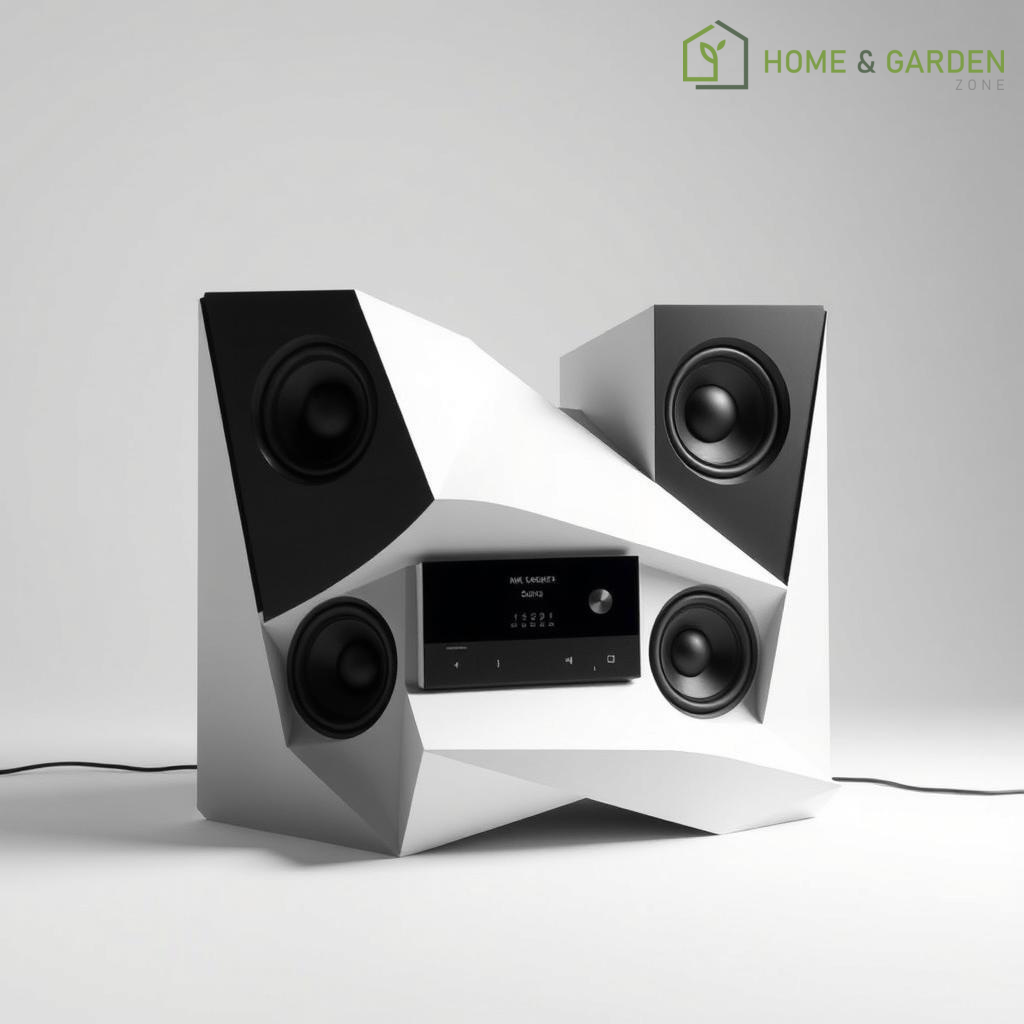
Redefining Audio: Noc's Braque System Embraces Cubist Aesthetics
In a landscape often dominated by sleek minimalism or retro revival, the Braque stereo system by Swedish designer Daniel Alm for the boutique audio tech brand Noc carves out a distinct presence. This monolithic audio sculpture is not merely a device for sound reproduction; it is a profound formal tribute to the foundational principles of Cubism and its influential namesake, Georges Braque.
A Formalist Approach to Sound
Alm's design for the Braque system eschews traditional notions of audio equipment, opting instead for a deconstructed, almost architectural presence. The system presents itself as a series of interconnected, geometric forms, challenging perceptions of solidity and space – a direct echo of Cubist painters' efforts to represent subjects from multiple viewpoints simultaneously. This approach results in a striking visual impact, transforming functional electronics into a sculptural art piece.
The system's "pared down" aesthetic is a deliberate choice, reflecting a minimalist philosophy that values essential form over superfluous detail. Yet, this simplicity is deceptive; the interplay of angles, planes, and volumes creates a complex visual dialogue, inviting contemplation much like a modernist sculpture. The materials and finishes, though not extensively detailed in general discourse, are clearly chosen to enhance this austere, yet sophisticated, presence, aligning with Noc's reputation for high-end craft.
Daniel Alm and Noc: A Vision for Integrated Design
Daniel Alm, known for his thoughtful and often sculptural approach to industrial design, has found a fitting canvas in Noc. The brand, though niche, appears to champion a design ethos that transcends mere functionality, positioning audio technology within the realm of contemporary art and interior design. The Braque system exemplifies this synergy, offering consumers not just an audio solution, but a statement piece that integrates seamlessly, yet powerfully, into discerning environments.
The choice to name the system "Braque" is critical. Georges Braque, alongside Pablo Picasso, pioneered Cubism, moving beyond traditional single-perspective representation. Alm's design seems to internalize this spirit, presenting an object that constantly reconfigures its visual identity depending on the viewer's angle, embodying a multi-faceted aesthetic that celebrates perception itself.
Conclusion
The Noc Braque stereo system stands as a compelling example of how industrial design can intersect with fine art. By drawing clear inspiration from Cubism and translating its principles into a tangible, functional object, Daniel Alm has created more than just an audio system; he has crafted a piece that engages with architectural space and art history. It underscores a growing trend where technology is conceived not just for its utility, but for its aesthetic and intellectual contribution to contemporary living.
Resources
Details
Author



Latest articles




 }})
You can now watch HBO Max for $10
Redefining Audio: Noc's Braque System Embraces Cubist Aesthetics
In a landscape often dominated by sleek minimalism or retro revival, the Braque stereo system by Swedish designer Daniel Alm for the boutique audio tech brand Noc carves out a distinct presence. This monolithic audio sculpture is not merely a device for sound reproduction; it is a profound formal tribute to the foundational principles of Cubism and its influential namesake, Georges Braque.
A Formalist Approach to Sound
Alm's design for the Braque system eschews traditional notions of audio equipment, opting instead for a deconstructed, almost architectural presence. The system presents itself as a series of interconnected, geometric forms, challenging perceptions of solidity and space – a direct echo of Cubist painters' efforts to represent subjects from multiple viewpoints simultaneously. This approach results in a striking visual impact, transforming functional electronics into a sculptural art piece.
The system's "pared down" aesthetic is a deliberate choice, reflecting a minimalist philosophy that values essential form over superfluous detail. Yet, this simplicity is deceptive; the interplay of angles, planes, and volumes creates a complex visual dialogue, inviting contemplation much like a modernist sculpture. The materials and finishes, though not extensively detailed in general discourse, are clearly chosen to enhance this austere, yet sophisticated, presence, aligning with Noc's reputation for high-end craft.
Daniel Alm and Noc: A Vision for Integrated Design
Daniel Alm, known for his thoughtful and often sculptural approach to industrial design, has found a fitting canvas in Noc. The brand, though niche, appears to champion a design ethos that transcends mere functionality, positioning audio technology within the realm of contemporary art and interior design. The Braque system exemplifies this synergy, offering consumers not just an audio solution, but a statement piece that integrates seamlessly, yet powerfully, into discerning environments.
The choice to name the system "Braque" is critical. Georges Braque, alongside Pablo Picasso, pioneered Cubism, moving beyond traditional single-perspective representation. Alm's design seems to internalize this spirit, presenting an object that constantly reconfigures its visual identity depending on the viewer's angle, embodying a multi-faceted aesthetic that celebrates perception itself.
Conclusion
The Noc Braque stereo system stands as a compelling example of how industrial design can intersect with fine art. By drawing clear inspiration from Cubism and translating its principles into a tangible, functional object, Daniel Alm has created more than just an audio system; he has crafted a piece that engages with architectural space and art history. It underscores a growing trend where technology is conceived not just for its utility, but for its aesthetic and intellectual contribution to contemporary living.
Resources
Latest articles
You can now watch HBO Max for $10
Similar posts



This is a page that only logged-in people can visit. Don't you feel special? Try clicking on a button below to do some things you can't do when you're logged out.
Example modal
At your leisure, please peruse this excerpt from a whale of a tale.
Chapter 1: Loomings.
Call me Ishmael. Some years ago—never mind how long precisely—having little or no money in my purse, and nothing particular to interest me on shore, I thought I would sail about a little and see the watery part of the world. It is a way I have of driving off the spleen and regulating the circulation. Whenever I find myself growing grim about the mouth; whenever it is a damp, drizzly November in my soul; whenever I find myself involuntarily pausing before coffin warehouses, and bringing up the rear of every funeral I meet; and especially whenever my hypos get such an upper hand of me, that it requires a strong moral principle to prevent me from deliberately stepping into the street, and methodically knocking people's hats off—then, I account it high time to get to sea as soon as I can. This is my substitute for pistol and ball. With a philosophical flourish Cato throws himself upon his sword; I quietly take to the ship. There is nothing surprising in this. If they but knew it, almost all men in their degree, some time or other, cherish very nearly the same feelings towards the ocean with me.
Comment