Global Reach for Rescue: How Satellite-Connected Smartwatches Are Becoming Indispensable for Emergency Communication Anywhere on Earth
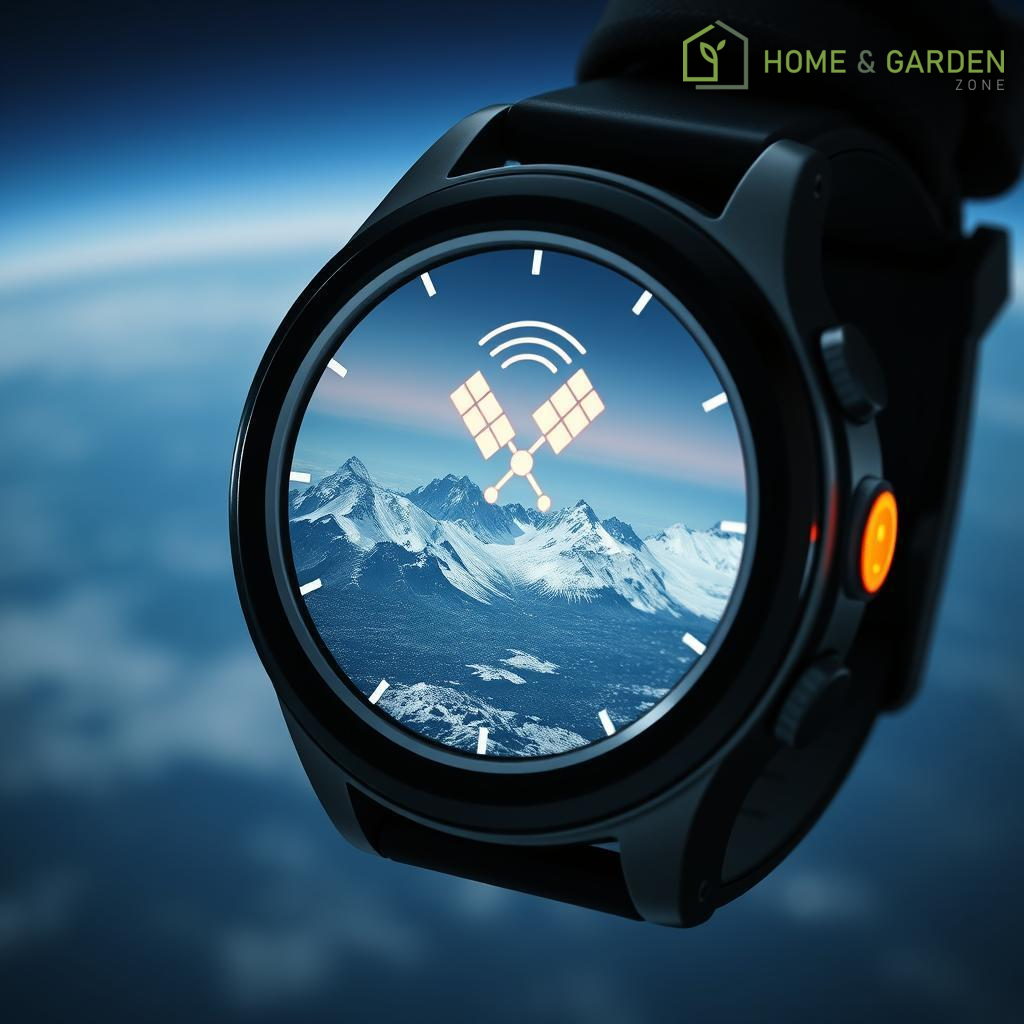
The New Frontier of Wearable Safety
In an increasingly interconnected world, vast regions remain beyond the reach of conventional mobile networks, posing significant risks for individuals venturing into remote areas or those caught in natural disasters. Historically, adventurers and professionals operating off-grid relied on bulky satellite phones or dedicated personal locator beacons. However, a new generation of satellite-connected smartwatches is fundamentally altering this landscape, transforming a daily wearable into a critical lifeline capable of enabling emergency communication anywhere on Earth.
How the Technology Works
The core innovation lies in integrating miniaturized satellite communication modules into compact smartwatch form factors. Unlike cellular connectivity, which relies on terrestrial towers, these smartwatches establish a direct link with orbiting satellite constellations, such as Globalstar or Iridium. This enables users to send distress signals and, in some cases, limited text messages, even when hundreds or thousands of miles from the nearest cell tower. The process typically involves a clear line of sight to the sky for successful transmission and reception. Upon activation of an emergency SOS feature, the device transmits vital location data and user information to a dedicated emergency response coordination center, which then dispatches local rescue services.
Impact and Life-Saving Applications
The implications of this technology for personal safety are profound. For solo hikers lost in dense wilderness, mountaineers facing unexpected weather changes, or offshore sailors encountering mechanical failures, these smartwatches offer an invaluable channel to alert authorities. Beyond recreation, the technology holds promise for professionals in field operations, aid workers in disaster-stricken zones, and individuals living in rural areas with unreliable infrastructure. The ability to quickly and accurately relay a distress signal can drastically reduce response times, directly translating into lives saved and fewer critical incidents escalating into fatalities.
Leading the Charge: Key Innovations
Several innovators are pioneering this space. Devices like the Apple Watch Ultra, for instance, have integrated an Emergency SOS via Satellite feature, leveraging the Globalstar network to connect users to emergency services when outside cellular and Wi-Fi coverage. Similarly, companies like Garmin have long offered satellite communication capabilities, often through their inReach technology, which can be integrated with or found in their robust outdoor smartwatches and handheld navigators, utilizing the Iridium satellite network for two-way messaging and SOS functions across the globe. These advancements are making sophisticated satellite communication more accessible and intuitive than ever before.
Challenges and the Path Ahead
While revolutionary, the technology is not without its limitations. Satellite connectivity often requires a clear view of the sky, and transmission speeds are generally slower than cellular data. Subscription costs for satellite services can also be a consideration for ongoing use, and battery life, while improving, remains a critical factor for extended remote expeditions. However, ongoing advancements in satellite technology, battery efficiency, and miniaturization promise to overcome these hurdles, leading to even more seamless and pervasive global emergency communication capabilities in the near future.
Summary
The advent of satellite-connected smartwatches marks a significant leap forward in personal safety and emergency preparedness. By bridging the communication gap in areas devoid of traditional cellular service, these devices empower individuals with a reliable lifeline, fundamentally changing how we approach safety in the world's most remote and challenging environments. As the technology continues to evolve, their role as indispensable tools for safeguarding lives will only grow.
Resources
Details
Author



Latest articles





 }})
You can now watch HBO Max for $10
The New Frontier of Wearable Safety
In an increasingly interconnected world, vast regions remain beyond the reach of conventional mobile networks, posing significant risks for individuals venturing into remote areas or those caught in natural disasters. Historically, adventurers and professionals operating off-grid relied on bulky satellite phones or dedicated personal locator beacons. However, a new generation of satellite-connected smartwatches is fundamentally altering this landscape, transforming a daily wearable into a critical lifeline capable of enabling emergency communication anywhere on Earth.
How the Technology Works
The core innovation lies in integrating miniaturized satellite communication modules into compact smartwatch form factors. Unlike cellular connectivity, which relies on terrestrial towers, these smartwatches establish a direct link with orbiting satellite constellations, such as Globalstar or Iridium. This enables users to send distress signals and, in some cases, limited text messages, even when hundreds or thousands of miles from the nearest cell tower. The process typically involves a clear line of sight to the sky for successful transmission and reception. Upon activation of an emergency SOS feature, the device transmits vital location data and user information to a dedicated emergency response coordination center, which then dispatches local rescue services.
Impact and Life-Saving Applications
The implications of this technology for personal safety are profound. For solo hikers lost in dense wilderness, mountaineers facing unexpected weather changes, or offshore sailors encountering mechanical failures, these smartwatches offer an invaluable channel to alert authorities. Beyond recreation, the technology holds promise for professionals in field operations, aid workers in disaster-stricken zones, and individuals living in rural areas with unreliable infrastructure. The ability to quickly and accurately relay a distress signal can drastically reduce response times, directly translating into lives saved and fewer critical incidents escalating into fatalities.
Leading the Charge: Key Innovations
Several innovators are pioneering this space. Devices like the Apple Watch Ultra, for instance, have integrated an Emergency SOS via Satellite feature, leveraging the Globalstar network to connect users to emergency services when outside cellular and Wi-Fi coverage. Similarly, companies like Garmin have long offered satellite communication capabilities, often through their inReach technology, which can be integrated with or found in their robust outdoor smartwatches and handheld navigators, utilizing the Iridium satellite network for two-way messaging and SOS functions across the globe. These advancements are making sophisticated satellite communication more accessible and intuitive than ever before.
Challenges and the Path Ahead
While revolutionary, the technology is not without its limitations. Satellite connectivity often requires a clear view of the sky, and transmission speeds are generally slower than cellular data. Subscription costs for satellite services can also be a consideration for ongoing use, and battery life, while improving, remains a critical factor for extended remote expeditions. However, ongoing advancements in satellite technology, battery efficiency, and miniaturization promise to overcome these hurdles, leading to even more seamless and pervasive global emergency communication capabilities in the near future.
Summary
The advent of satellite-connected smartwatches marks a significant leap forward in personal safety and emergency preparedness. By bridging the communication gap in areas devoid of traditional cellular service, these devices empower individuals with a reliable lifeline, fundamentally changing how we approach safety in the world's most remote and challenging environments. As the technology continues to evolve, their role as indispensable tools for safeguarding lives will only grow.
Resources
Latest articles
You can now watch HBO Max for $10
Similar posts



This is a page that only logged-in people can visit. Don't you feel special? Try clicking on a button below to do some things you can't do when you're logged out.
Example modal
At your leisure, please peruse this excerpt from a whale of a tale.
Chapter 1: Loomings.
Call me Ishmael. Some years ago—never mind how long precisely—having little or no money in my purse, and nothing particular to interest me on shore, I thought I would sail about a little and see the watery part of the world. It is a way I have of driving off the spleen and regulating the circulation. Whenever I find myself growing grim about the mouth; whenever it is a damp, drizzly November in my soul; whenever I find myself involuntarily pausing before coffin warehouses, and bringing up the rear of every funeral I meet; and especially whenever my hypos get such an upper hand of me, that it requires a strong moral principle to prevent me from deliberately stepping into the street, and methodically knocking people's hats off—then, I account it high time to get to sea as soon as I can. This is my substitute for pistol and ball. With a philosophical flourish Cato throws himself upon his sword; I quietly take to the ship. There is nothing surprising in this. If they but knew it, almost all men in their degree, some time or other, cherish very nearly the same feelings towards the ocean with me.
Comment