Unlocking the Enigma: The DIY Plasma Toroid Generator as a High-Energy Experimental Platform
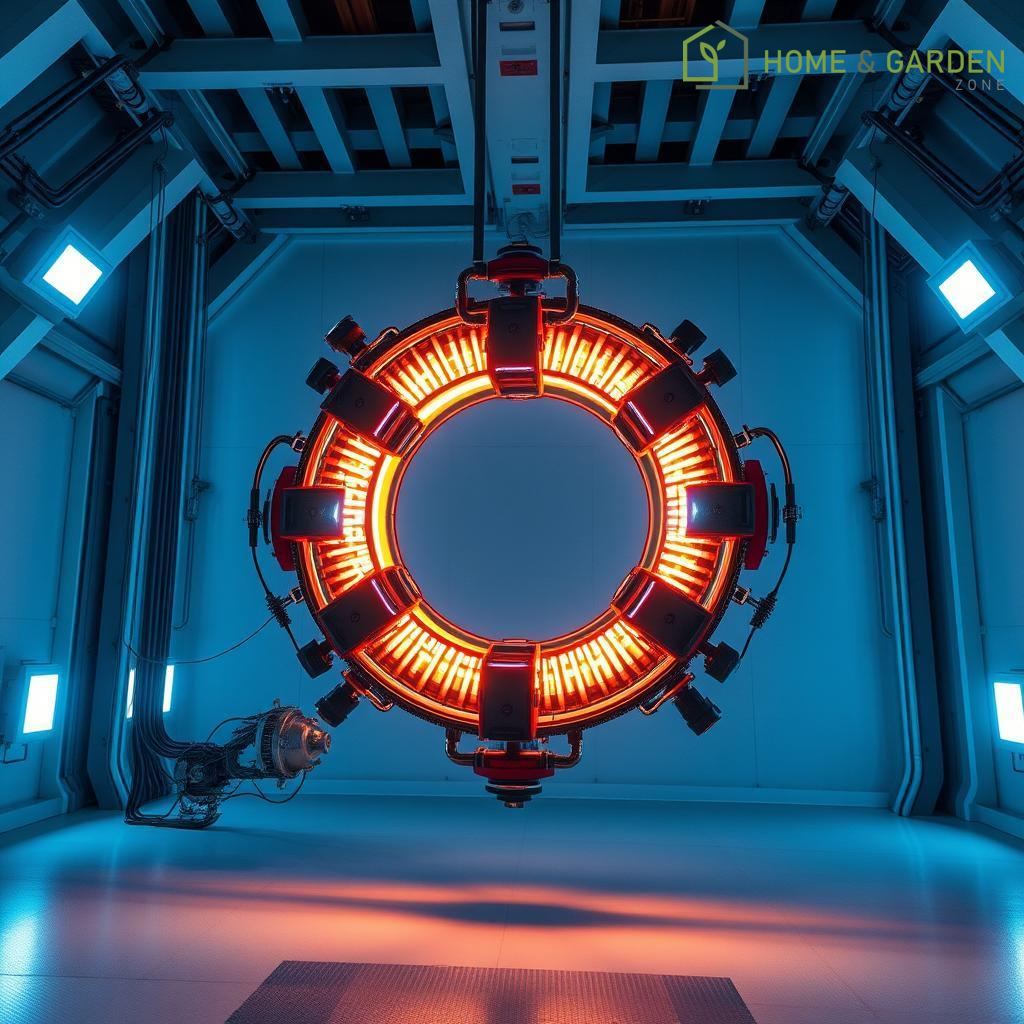
The Allure of the Plasma Toroid Generator
For enthusiasts of experimental physics and advanced DIY projects, the concept of a plasma toroid generator represents a compelling frontier. Often heralded as the "holy grail" among high-energy plasma toys, its appeal lies in the ability to create self-contained, stable rings of ionized gas, mimicking phenomena observed in much larger, sophisticated research facilities. This pursuit, once confined to specialized laboratories, is increasingly becoming accessible to the dedicated maker community, offering profound insights into electromagnetism and plasma dynamics.
Understanding Toroidal Plasmas
A plasma toroid is essentially a doughnut-shaped confinement of plasma—a state of matter where atoms are ionized, forming a gas of ions and electrons. The stability of such a configuration is crucial, and it is typically achieved through complex magnetic field geometries. In large-scale fusion research, devices like tokamaks utilize powerful magnetic fields to create and sustain toroidal plasmas at extreme temperatures, aiming for controlled nuclear fusion. On a smaller, DIY scale, the principles remain similar, though the energy levels and ultimate goals differ significantly. The challenge for makers lies in creating sufficiently strong and precise magnetic fields to contain and excite the plasma into a stable toroid.
The DIY Imperative: From Theory to Experiment
The journey to constructing a DIY plasma toroid generator involves a blend of electrical engineering, material science, and a foundational understanding of plasma physics. Typically, these projects involve high-voltage power supplies to ionize a gas (such as argon or even air at reduced pressure) within a vacuum chamber. Magnetic coils, often arranged in specific configurations like a poloidal and toroidal field, are then used to shape and contain the plasma into its desired toroid form. Experimenters often explore different coil geometries, power pulsing techniques, and gas pressures to achieve stable and visually captivating plasma rings.
While the output of a DIY toroid generator is far removed from the mega-ampere currents and fusion-grade temperatures of research tokamaks, it provides an invaluable hands-on learning experience. It allows for direct observation of magnetic confinement principles, the interaction of plasma with electromagnetic fields, and the intricate dance between energy input and plasma stability. Safety is paramount in such endeavors, given the high voltages and vacuum requirements involved.
Applications and Future Directions for Makers
Beyond the inherent educational value and the thrill of scientific discovery, DIY plasma toroid generators serve as a sophisticated platform for further experimentation. Makers can investigate various aspects, including plasma diagnostics using simple photodetectors, exploring different gas mixtures for varying plasma characteristics, or even attempting rudimentary propulsion concepts based on electromagnetic forces. The open-source nature of many maker projects fosters collaboration and rapid iteration, pushing the boundaries of what can be achieved outside traditional institutional settings.
Summary
The plasma toroid generator, once a purely academic or industrial pursuit, is transitioning into the realm of advanced DIY projects. It offers an unparalleled opportunity for makers to engage directly with high-energy plasma physics, applying fundamental principles to create mesmerizing and scientifically educational devices. While requiring meticulous attention to safety and a solid understanding of the underlying science, constructing such a generator represents a significant achievement for any dedicated experimenter, embodying the spirit of innovation at the heart of the maker movement.
Resources
Details
Author



Latest articles





 }})
You can now watch HBO Max for $10
The Allure of the Plasma Toroid Generator
For enthusiasts of experimental physics and advanced DIY projects, the concept of a plasma toroid generator represents a compelling frontier. Often heralded as the "holy grail" among high-energy plasma toys, its appeal lies in the ability to create self-contained, stable rings of ionized gas, mimicking phenomena observed in much larger, sophisticated research facilities. This pursuit, once confined to specialized laboratories, is increasingly becoming accessible to the dedicated maker community, offering profound insights into electromagnetism and plasma dynamics.
Understanding Toroidal Plasmas
A plasma toroid is essentially a doughnut-shaped confinement of plasma—a state of matter where atoms are ionized, forming a gas of ions and electrons. The stability of such a configuration is crucial, and it is typically achieved through complex magnetic field geometries. In large-scale fusion research, devices like tokamaks utilize powerful magnetic fields to create and sustain toroidal plasmas at extreme temperatures, aiming for controlled nuclear fusion. On a smaller, DIY scale, the principles remain similar, though the energy levels and ultimate goals differ significantly. The challenge for makers lies in creating sufficiently strong and precise magnetic fields to contain and excite the plasma into a stable toroid.
The DIY Imperative: From Theory to Experiment
The journey to constructing a DIY plasma toroid generator involves a blend of electrical engineering, material science, and a foundational understanding of plasma physics. Typically, these projects involve high-voltage power supplies to ionize a gas (such as argon or even air at reduced pressure) within a vacuum chamber. Magnetic coils, often arranged in specific configurations like a poloidal and toroidal field, are then used to shape and contain the plasma into its desired toroid form. Experimenters often explore different coil geometries, power pulsing techniques, and gas pressures to achieve stable and visually captivating plasma rings.
While the output of a DIY toroid generator is far removed from the mega-ampere currents and fusion-grade temperatures of research tokamaks, it provides an invaluable hands-on learning experience. It allows for direct observation of magnetic confinement principles, the interaction of plasma with electromagnetic fields, and the intricate dance between energy input and plasma stability. Safety is paramount in such endeavors, given the high voltages and vacuum requirements involved.
Applications and Future Directions for Makers
Beyond the inherent educational value and the thrill of scientific discovery, DIY plasma toroid generators serve as a sophisticated platform for further experimentation. Makers can investigate various aspects, including plasma diagnostics using simple photodetectors, exploring different gas mixtures for varying plasma characteristics, or even attempting rudimentary propulsion concepts based on electromagnetic forces. The open-source nature of many maker projects fosters collaboration and rapid iteration, pushing the boundaries of what can be achieved outside traditional institutional settings.
Summary
The plasma toroid generator, once a purely academic or industrial pursuit, is transitioning into the realm of advanced DIY projects. It offers an unparalleled opportunity for makers to engage directly with high-energy plasma physics, applying fundamental principles to create mesmerizing and scientifically educational devices. While requiring meticulous attention to safety and a solid understanding of the underlying science, constructing such a generator represents a significant achievement for any dedicated experimenter, embodying the spirit of innovation at the heart of the maker movement.
Resources
Latest articles
You can now watch HBO Max for $10
Similar posts




This is a page that only logged-in people can visit. Don't you feel special? Try clicking on a button below to do some things you can't do when you're logged out.
Example modal
At your leisure, please peruse this excerpt from a whale of a tale.
Chapter 1: Loomings.
Call me Ishmael. Some years ago—never mind how long precisely—having little or no money in my purse, and nothing particular to interest me on shore, I thought I would sail about a little and see the watery part of the world. It is a way I have of driving off the spleen and regulating the circulation. Whenever I find myself growing grim about the mouth; whenever it is a damp, drizzly November in my soul; whenever I find myself involuntarily pausing before coffin warehouses, and bringing up the rear of every funeral I meet; and especially whenever my hypos get such an upper hand of me, that it requires a strong moral principle to prevent me from deliberately stepping into the street, and methodically knocking people's hats off—then, I account it high time to get to sea as soon as I can. This is my substitute for pistol and ball. With a philosophical flourish Cato throws himself upon his sword; I quietly take to the ship. There is nothing surprising in this. If they but knew it, almost all men in their degree, some time or other, cherish very nearly the same feelings towards the ocean with me.
Comment