The ELM11: Unpacking a Surprisingly Refined Lua Development Experience on a Feather Board
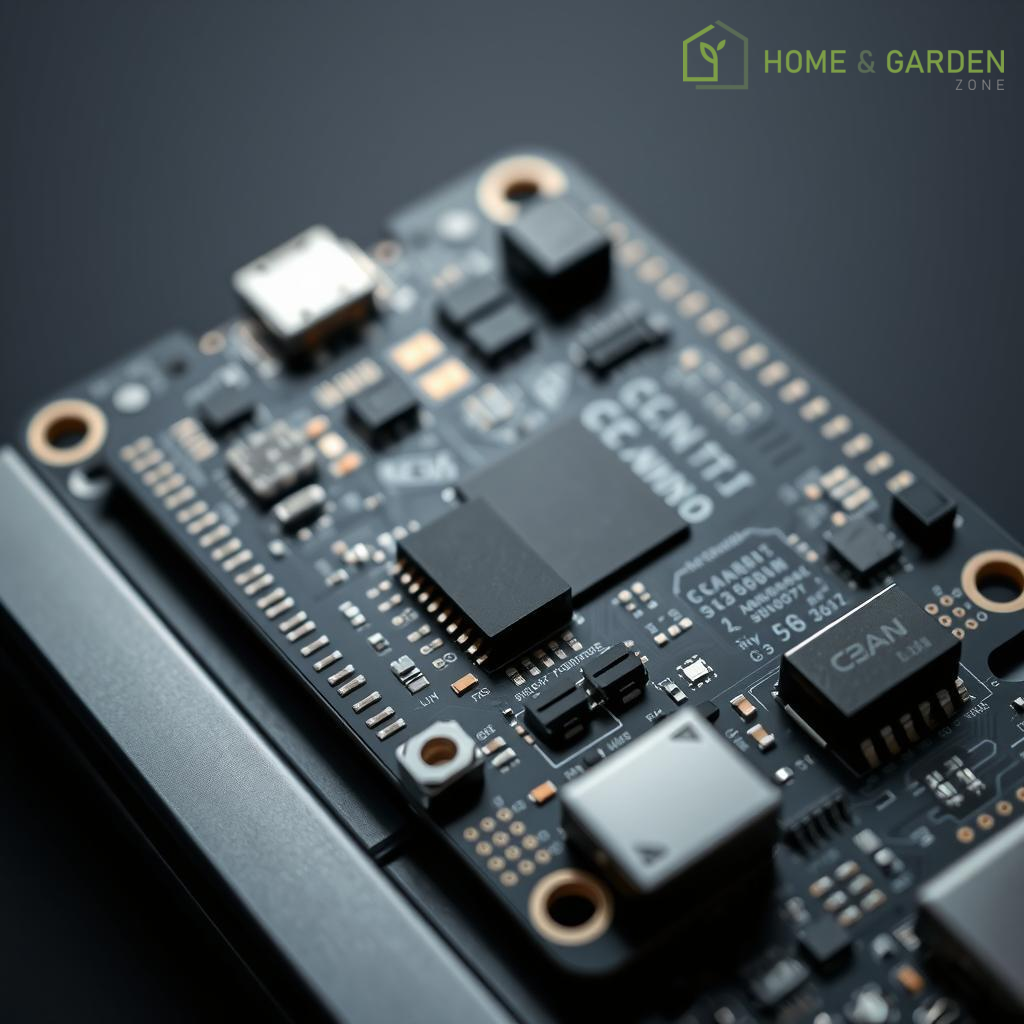
ELM11: Unpacking a Surprisingly Refined Lua Development Experience on a Feather Board
In a landscape saturated with development boards, the ELM11 emerges as a distinctive contender, particularly for those seeking a streamlined entry into embedded systems programming. This Feather-type platform, centered around the highly adaptable Lua scripting language, has garnered attention for delivering an unexpectedly polished developer experience—a crucial differentiator in a market often characterized by steep learning curves and fragmented toolchains.
The Allure of Lua on Embedded Hardware
The choice of Lua as the primary programming interface for the ELM11 is a strategic one, appealing to a broad spectrum of developers. Lua, renowned for its lightweight nature, efficiency, and ease of integration, provides a high-level abstraction that significantly simplifies the interaction with hardware. This accessibility allows for rapid prototyping and iterative development, bypassing the complexities often associated with C/C++ development environments typically found in similar boards.
The ELM11 leverages this linguistic advantage, integrating Lua within a robust firmware environment. This integration ensures that common tasks—such as GPIO manipulation, sensor interfacing, and network communication—can be executed with concise, readable scripts, thereby reducing development overhead and accelerating project timelines.
A Polished Pathway to Development
The "polished" aspect of the ELM11's developer experience extends beyond just its linguistic choice. It encompasses a holistic approach to the development workflow. Users frequently report a seamless setup process, often attributed to well-engineered firmware and intuitive supporting tools. Unlike many open-source projects where documentation can be an afterthought, the ELM11 ecosystem appears to prioritize comprehensive and accessible guides, making it easier for both novices and seasoned engineers to get started quickly and troubleshoot effectively.
Furthermore, the inherent compatibility with the Adafruit Feather form factor grants the ELM11 access to a vast array of existing FeatherWings (add-on boards), expanding its functional capabilities without requiring significant hardware modifications or custom PCB designs. This modularity, combined with a stable software foundation, fosters an environment conducive to experimentation and innovation.
Technical Underpinnings and Applications
While specific technical details may vary, the ELM11 typically features a powerful microcontroller, such as an ESP32, providing integrated Wi-Fi and Bluetooth capabilities. This makes it an ideal candidate for Internet of Things (IoT) applications, smart home automation, environmental monitoring, and educational projects where connectivity is paramount. The combination of an energy-efficient MCU and Lua's minimal footprint allows for efficient resource utilization, crucial for battery-powered or resource-constrained deployments.
Summary
The ELM11 stands out as a testament to thoughtful engineering, proving that a powerful development platform doesn't have to be intimidating. By harmonizing the lightweight elegance of Lua with a well-supported Feather-compatible hardware design, it delivers a genuinely polished experience. For makers, educators, and professional developers seeking efficiency and simplicity without compromising on capability, the ELM11 represents a compelling and refreshingly user-friendly option in the crowded field of embedded systems development.
Resources
- Make: DIY Projects and Ideas for Makers
- Adafruit Industries (For Feather ecosystem context)
- Lua.org (Official Lua Programming Language Documentation)
Details
Author



Latest articles

 }})
You can now watch HBO Max for $10
ELM11: Unpacking a Surprisingly Refined Lua Development Experience on a Feather Board
In a landscape saturated with development boards, the ELM11 emerges as a distinctive contender, particularly for those seeking a streamlined entry into embedded systems programming. This Feather-type platform, centered around the highly adaptable Lua scripting language, has garnered attention for delivering an unexpectedly polished developer experience—a crucial differentiator in a market often characterized by steep learning curves and fragmented toolchains.
The Allure of Lua on Embedded Hardware
The choice of Lua as the primary programming interface for the ELM11 is a strategic one, appealing to a broad spectrum of developers. Lua, renowned for its lightweight nature, efficiency, and ease of integration, provides a high-level abstraction that significantly simplifies the interaction with hardware. This accessibility allows for rapid prototyping and iterative development, bypassing the complexities often associated with C/C++ development environments typically found in similar boards.
The ELM11 leverages this linguistic advantage, integrating Lua within a robust firmware environment. This integration ensures that common tasks—such as GPIO manipulation, sensor interfacing, and network communication—can be executed with concise, readable scripts, thereby reducing development overhead and accelerating project timelines.
A Polished Pathway to Development
The "polished" aspect of the ELM11's developer experience extends beyond just its linguistic choice. It encompasses a holistic approach to the development workflow. Users frequently report a seamless setup process, often attributed to well-engineered firmware and intuitive supporting tools. Unlike many open-source projects where documentation can be an afterthought, the ELM11 ecosystem appears to prioritize comprehensive and accessible guides, making it easier for both novices and seasoned engineers to get started quickly and troubleshoot effectively.
Furthermore, the inherent compatibility with the Adafruit Feather form factor grants the ELM11 access to a vast array of existing FeatherWings (add-on boards), expanding its functional capabilities without requiring significant hardware modifications or custom PCB designs. This modularity, combined with a stable software foundation, fosters an environment conducive to experimentation and innovation.
Technical Underpinnings and Applications
While specific technical details may vary, the ELM11 typically features a powerful microcontroller, such as an ESP32, providing integrated Wi-Fi and Bluetooth capabilities. This makes it an ideal candidate for Internet of Things (IoT) applications, smart home automation, environmental monitoring, and educational projects where connectivity is paramount. The combination of an energy-efficient MCU and Lua's minimal footprint allows for efficient resource utilization, crucial for battery-powered or resource-constrained deployments.
Summary
The ELM11 stands out as a testament to thoughtful engineering, proving that a powerful development platform doesn't have to be intimidating. By harmonizing the lightweight elegance of Lua with a well-supported Feather-compatible hardware design, it delivers a genuinely polished experience. For makers, educators, and professional developers seeking efficiency and simplicity without compromising on capability, the ELM11 represents a compelling and refreshingly user-friendly option in the crowded field of embedded systems development.
Resources
- Make: DIY Projects and Ideas for Makers
- Adafruit Industries (For Feather ecosystem context)
- Lua.org (Official Lua Programming Language Documentation)
Latest articles
You can now watch HBO Max for $10
Similar posts


This is a page that only logged-in people can visit. Don't you feel special? Try clicking on a button below to do some things you can't do when you're logged out.
Example modal
At your leisure, please peruse this excerpt from a whale of a tale.
Chapter 1: Loomings.
Call me Ishmael. Some years ago—never mind how long precisely—having little or no money in my purse, and nothing particular to interest me on shore, I thought I would sail about a little and see the watery part of the world. It is a way I have of driving off the spleen and regulating the circulation. Whenever I find myself growing grim about the mouth; whenever it is a damp, drizzly November in my soul; whenever I find myself involuntarily pausing before coffin warehouses, and bringing up the rear of every funeral I meet; and especially whenever my hypos get such an upper hand of me, that it requires a strong moral principle to prevent me from deliberately stepping into the street, and methodically knocking people's hats off—then, I account it high time to get to sea as soon as I can. This is my substitute for pistol and ball. With a philosophical flourish Cato throws himself upon his sword; I quietly take to the ship. There is nothing surprising in this. If they but knew it, almost all men in their degree, some time or other, cherish very nearly the same feelings towards the ocean with me.
Comment