Powering the Edge: A Deep Dive into the Best Dev Boards for AI Projects
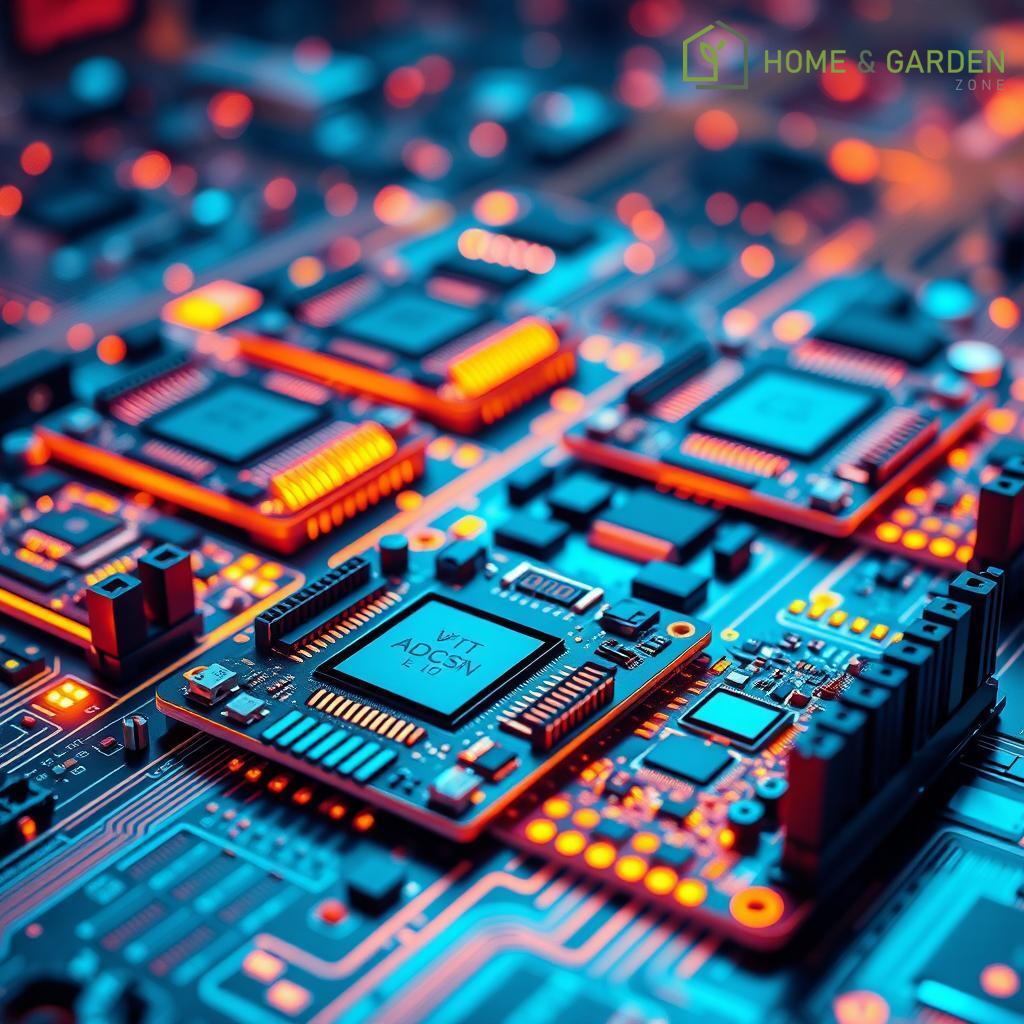
The proliferation of artificial intelligence, once confined to distant data centers, is now rapidly extending to the very periphery of our networks—the "edge." This paradigm shift, known as Edge AI, demands specialized hardware capable of performing complex computations locally, reducing latency, conserving bandwidth, and enhancing data privacy. For makers, developers, and industrial innovators, selecting the right development board is paramount to the success of any Edge AI endeavor.
While the Raspberry Pi 5 and the latest Nvidia Jetson offerings frequently emerge as front-runners in this arena, a comprehensive understanding of the diverse ecosystem is crucial. This article delves into the leading contenders and explores viable alternatives, offering insights for informed decision-making.
Raspberry Pi 5: A Versatile Contender
The Raspberry Pi has long been a staple in the maker community, and the fifth iteration significantly elevates its capabilities for Edge AI. While not equipped with a dedicated neural processing unit (NPU), the Pi 5's substantial upgrades position it as a formidable general-purpose computing platform for lighter AI workloads and as a host for external accelerators.
Key Features for Edge AI
- Enhanced Processing Power: The quad-core Arm Cortex-A76 processor clocked at 2.4GHz delivers a notable performance boost over its predecessors, enabling more complex CPU-bound AI tasks.
- PCIe Interface: The inclusion of a PCIe 2.0 interface opens up avenues for connecting high-speed peripherals, critically, external AI accelerators like the Google Coral USB Accelerator or Hailo-8 modules, dramatically increasing its AI inference capabilities.
- Robust Ecosystem: The extensive software support, vast community, and affordability make it an accessible entry point for AI development.
Use Cases and Limitations
The Raspberry Pi 5 excels in scenarios requiring local inference for tasks like basic image classification, object detection (with external accelerators), and predictive maintenance in non-critical applications. Its limitations arise when tackling highly demanding, real-time AI models or large-scale video analytics that necessitate dedicated GPU or NPU hardware for optimal performance.
Nvidia Jetson Series: Powering Industrial AI
Nvidia’s Jetson family stands as the industry benchmark for high-performance Edge AI, particularly in applications demanding significant parallel processing power. Designed from the ground up for AI, these boards integrate powerful GPUs, making them ideal for complex machine learning and deep learning tasks.
Key Models and Capabilities
- Jetson Orin Nano & Orin NX: These boards leverage the NVIDIA Ampere architecture, incorporating Tensor Cores that are specifically optimized for AI inference. They offer significantly higher AI performance per watt compared to general-purpose CPUs.
- Comprehensive Software Stack: Nvidia's JetPack SDK provides a full development environment, including CUDA-X libraries, cuDNN, TensorRT, and vision AI frameworks, simplifying deployment and optimization of AI models.
Target Applications
The Jetson series is the go-to choice for robotics, autonomous machines, advanced video analytics, medical imaging, and smart city infrastructure. Their ability to handle multiple high-resolution video streams and execute complex neural networks in real-time sets them apart for professional and industrial-grade Edge AI deployments.
Beyond the Giants: Exploring Other Edge AI Boards
While Raspberry Pi and Nvidia Jetson dominate headlines, the Edge AI landscape is rich with alternative solutions, each with unique strengths.
Google Coral Dev Board & USB Accelerator
Featuring Google's Edge TPU, the Coral series offers exceptional power efficiency and performance for TensorFlow Lite models. The Coral USB Accelerator, in particular, is an excellent add-on to existing single-board computers, providing dedicated ML inference capabilities at a low power footprint. While the standalone dev board may be less prevalent now, the accelerator remains a strong option for specific inference tasks.
Khadas VIM Series
Boards like the Khadas VIM4 often integrate powerful SoCs (e.g., Amlogic A311D2) that include dedicated Neural Processing Units (NPUs). These provide a compelling balance of general computing and AI acceleration, making them suitable for a range of multimedia and AI applications where a robust Linux environment and integrated AI are beneficial.
Intel Movidius & Hailo-8 Processors
For highly specialized AI acceleration, Intel’s Movidius Vision Processing Units (VPUs), often found in devices compatible with the OpenVINO toolkit, and dedicated AI processors like the Hailo-8 offer industry-leading inference performance for vision AI. These are typically integrated into custom solutions or added as accelerators to existing systems, providing extreme efficiency for specific neural network architectures.
Factors to Consider When Choosing
- AI Workload & Performance Requirements: Does your project demand high FPS video processing, or simple sensor data analysis? This dictates the need for GPU/NPU acceleration versus CPU.
- Power Consumption: Edge deployments often operate on limited power budgets. Prioritize boards with efficient designs.
- Cost: From the highly affordable Raspberry Pi to the more premium Jetson series, budget plays a significant role.
- Ecosystem & Software Support: The availability of libraries, frameworks (TensorFlow, PyTorch), and community support can greatly simplify development.
- Connectivity & I/O: Ensure the board offers the necessary interfaces for cameras, sensors, and network communication.
Conclusion
The choice of an Edge AI development board is not a one-size-fits-all decision. The Raspberry Pi 5, with its enhanced general-purpose capabilities and expansion potential, offers an excellent entry point for many projects. For demanding, high-performance AI applications, the Nvidia Jetson series remains the gold standard. However, the ecosystem is vibrant and continually evolving, with specialized solutions like Google Coral, Khadas VIM, and dedicated AI accelerators providing compelling alternatives. By carefully aligning the project's specific requirements with the board's capabilities, developers can harness the true potential of AI at the edge.
Resources
Details
Author



Latest articles





 }})
You can now watch HBO Max for $10
The proliferation of artificial intelligence, once confined to distant data centers, is now rapidly extending to the very periphery of our networks—the "edge." This paradigm shift, known as Edge AI, demands specialized hardware capable of performing complex computations locally, reducing latency, conserving bandwidth, and enhancing data privacy. For makers, developers, and industrial innovators, selecting the right development board is paramount to the success of any Edge AI endeavor.
While the Raspberry Pi 5 and the latest Nvidia Jetson offerings frequently emerge as front-runners in this arena, a comprehensive understanding of the diverse ecosystem is crucial. This article delves into the leading contenders and explores viable alternatives, offering insights for informed decision-making.
Raspberry Pi 5: A Versatile Contender
The Raspberry Pi has long been a staple in the maker community, and the fifth iteration significantly elevates its capabilities for Edge AI. While not equipped with a dedicated neural processing unit (NPU), the Pi 5's substantial upgrades position it as a formidable general-purpose computing platform for lighter AI workloads and as a host for external accelerators.
Key Features for Edge AI
- Enhanced Processing Power: The quad-core Arm Cortex-A76 processor clocked at 2.4GHz delivers a notable performance boost over its predecessors, enabling more complex CPU-bound AI tasks.
- PCIe Interface: The inclusion of a PCIe 2.0 interface opens up avenues for connecting high-speed peripherals, critically, external AI accelerators like the Google Coral USB Accelerator or Hailo-8 modules, dramatically increasing its AI inference capabilities.
- Robust Ecosystem: The extensive software support, vast community, and affordability make it an accessible entry point for AI development.
Use Cases and Limitations
The Raspberry Pi 5 excels in scenarios requiring local inference for tasks like basic image classification, object detection (with external accelerators), and predictive maintenance in non-critical applications. Its limitations arise when tackling highly demanding, real-time AI models or large-scale video analytics that necessitate dedicated GPU or NPU hardware for optimal performance.
Nvidia Jetson Series: Powering Industrial AI
Nvidia’s Jetson family stands as the industry benchmark for high-performance Edge AI, particularly in applications demanding significant parallel processing power. Designed from the ground up for AI, these boards integrate powerful GPUs, making them ideal for complex machine learning and deep learning tasks.
Key Models and Capabilities
- Jetson Orin Nano & Orin NX: These boards leverage the NVIDIA Ampere architecture, incorporating Tensor Cores that are specifically optimized for AI inference. They offer significantly higher AI performance per watt compared to general-purpose CPUs.
- Comprehensive Software Stack: Nvidia's JetPack SDK provides a full development environment, including CUDA-X libraries, cuDNN, TensorRT, and vision AI frameworks, simplifying deployment and optimization of AI models.
Target Applications
The Jetson series is the go-to choice for robotics, autonomous machines, advanced video analytics, medical imaging, and smart city infrastructure. Their ability to handle multiple high-resolution video streams and execute complex neural networks in real-time sets them apart for professional and industrial-grade Edge AI deployments.
Beyond the Giants: Exploring Other Edge AI Boards
While Raspberry Pi and Nvidia Jetson dominate headlines, the Edge AI landscape is rich with alternative solutions, each with unique strengths.
Google Coral Dev Board & USB Accelerator
Featuring Google's Edge TPU, the Coral series offers exceptional power efficiency and performance for TensorFlow Lite models. The Coral USB Accelerator, in particular, is an excellent add-on to existing single-board computers, providing dedicated ML inference capabilities at a low power footprint. While the standalone dev board may be less prevalent now, the accelerator remains a strong option for specific inference tasks.
Khadas VIM Series
Boards like the Khadas VIM4 often integrate powerful SoCs (e.g., Amlogic A311D2) that include dedicated Neural Processing Units (NPUs). These provide a compelling balance of general computing and AI acceleration, making them suitable for a range of multimedia and AI applications where a robust Linux environment and integrated AI are beneficial.
Intel Movidius & Hailo-8 Processors
For highly specialized AI acceleration, Intel’s Movidius Vision Processing Units (VPUs), often found in devices compatible with the OpenVINO toolkit, and dedicated AI processors like the Hailo-8 offer industry-leading inference performance for vision AI. These are typically integrated into custom solutions or added as accelerators to existing systems, providing extreme efficiency for specific neural network architectures.
Factors to Consider When Choosing
- AI Workload & Performance Requirements: Does your project demand high FPS video processing, or simple sensor data analysis? This dictates the need for GPU/NPU acceleration versus CPU.
- Power Consumption: Edge deployments often operate on limited power budgets. Prioritize boards with efficient designs.
- Cost: From the highly affordable Raspberry Pi to the more premium Jetson series, budget plays a significant role.
- Ecosystem & Software Support: The availability of libraries, frameworks (TensorFlow, PyTorch), and community support can greatly simplify development.
- Connectivity & I/O: Ensure the board offers the necessary interfaces for cameras, sensors, and network communication.
Conclusion
The choice of an Edge AI development board is not a one-size-fits-all decision. The Raspberry Pi 5, with its enhanced general-purpose capabilities and expansion potential, offers an excellent entry point for many projects. For demanding, high-performance AI applications, the Nvidia Jetson series remains the gold standard. However, the ecosystem is vibrant and continually evolving, with specialized solutions like Google Coral, Khadas VIM, and dedicated AI accelerators providing compelling alternatives. By carefully aligning the project's specific requirements with the board's capabilities, developers can harness the true potential of AI at the edge.
Resources
Latest articles
You can now watch HBO Max for $10
Similar posts




This is a page that only logged-in people can visit. Don't you feel special? Try clicking on a button below to do some things you can't do when you're logged out.
Example modal
At your leisure, please peruse this excerpt from a whale of a tale.
Chapter 1: Loomings.
Call me Ishmael. Some years ago—never mind how long precisely—having little or no money in my purse, and nothing particular to interest me on shore, I thought I would sail about a little and see the watery part of the world. It is a way I have of driving off the spleen and regulating the circulation. Whenever I find myself growing grim about the mouth; whenever it is a damp, drizzly November in my soul; whenever I find myself involuntarily pausing before coffin warehouses, and bringing up the rear of every funeral I meet; and especially whenever my hypos get such an upper hand of me, that it requires a strong moral principle to prevent me from deliberately stepping into the street, and methodically knocking people's hats off—then, I account it high time to get to sea as soon as I can. This is my substitute for pistol and ball. With a philosophical flourish Cato throws himself upon his sword; I quietly take to the ship. There is nothing surprising in this. If they but knew it, almost all men in their degree, some time or other, cherish very nearly the same feelings towards the ocean with me.
Comment