Chalupa: Unpacking the Culinary Evolution from Traditional Mexican Street Food to Fast-Food Icon
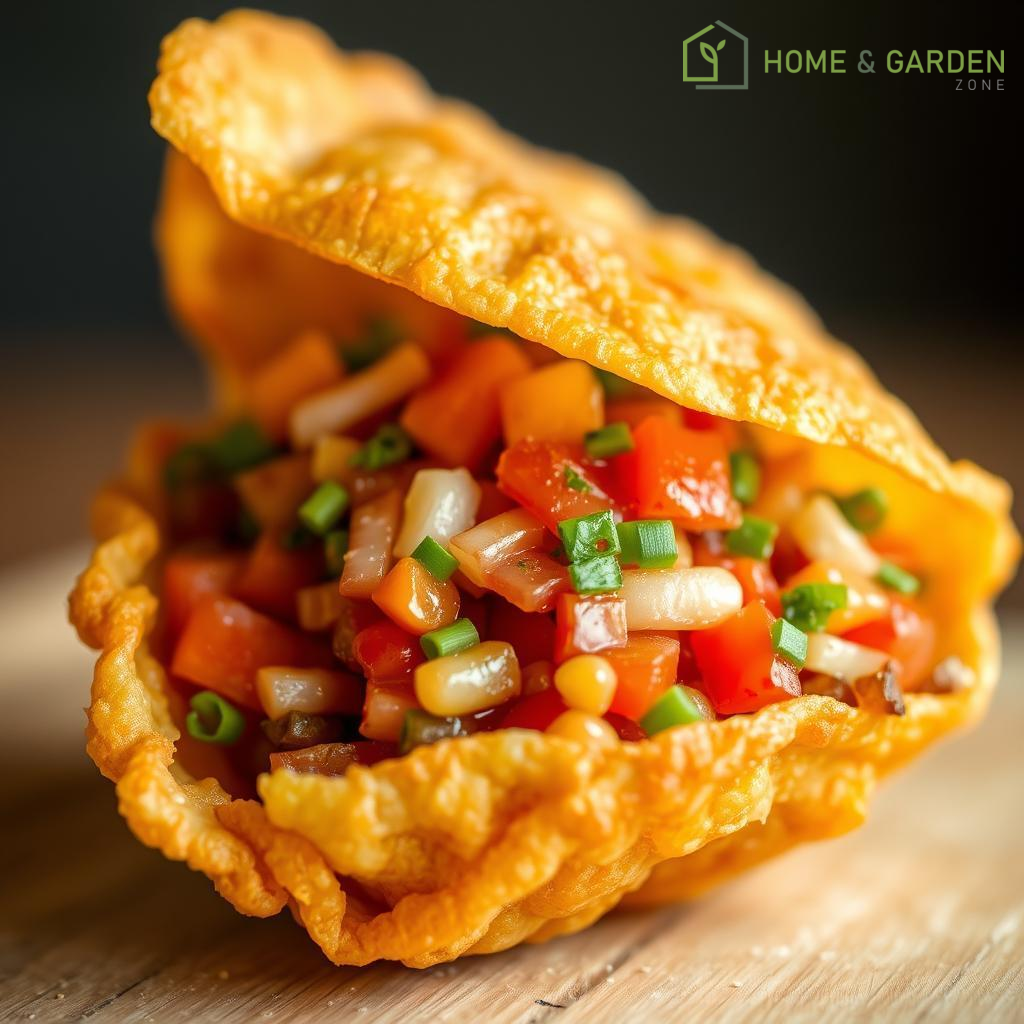
The Chalupa: A Tale of Two Tastes
The term "chalupa," translating literally to "small boat" in Spanish, conjures images of a distinct culinary item rooted deeply in Mexican gastronomic tradition. However, its widespread recognition in contemporary culture often diverges significantly from its authentic origins, largely due to its popularization by fast-food chains. This investigation delves into the dual identity of the chalupa, examining its heritage as a beloved street food and its metamorphosis into a globalized comfort item.
The Authentic Mexican Chalupa: A Culinary Heritage
In its purest form, a traditional Mexican chalupa is a testament to the simplicity and richness of regional cuisine. Originating primarily from states like Puebla, Hidalgo, and Guerrero, these small, boat-shaped antojitos (little cravings) are crafted from fresh masa (corn dough). The masa is pressed into a shallow, cup-like or boat-like shape, then deep-fried or griddled until crisp, yet still pliable. The beauty of the traditional chalupa lies in its minimalist yet flavorful toppings. Typically, it is adorned with a vibrant red or green salsa, finely shredded lettuce, crumbled cheese (often cotija or queso fresco), and sometimes a dollop of crema. Occasionally, shredded meat, such as pork or chicken, might be added, but the focus remains on the fresh masa and bright, zesty accoutrements. This unpretentious preparation highlights the quality of its fundamental components, offering a textural interplay between the soft interior and crispy exterior of the masa, complemented by the fresh, tangy toppings.
The Taco Bell Chalupa: A Modern Interpretation
The chalupa's journey across the border and into the realm of American fast food led to a significant reinterpretation, most notably by Taco Bell. Introduced in the late 1990s, the Taco Bell Chalupa diverges considerably from its Mexican namesake. Rather than a fried masa boat, Taco Bell's version features a thick, chewy, and somewhat soft fried flatbread shell, often described as a hybrid between a pita and a crispy tortilla. This proprietary shell provides a distinct textural experience—chewier and less brittle than a typical hard taco shell, yet not as delicate as traditional masa. The fillings are also distinctly Americanized, typically including seasoned ground beef, sour cream, shredded lettuce, a blend of cheeses, and sometimes tomatoes. This adaptation caters to a different palate, prioritizing hearty fillings and a unique, substantial shell that can withstand a range of moist ingredients without quickly becoming soggy. The Taco Bell Chalupa has achieved immense commercial success, becoming a staple on its menu and a popular choice for fast-food enthusiasts, albeit one that bears only a superficial resemblance to its traditional Mexican counterpart.
Culinary Adaptation and Global Reach
The divergence between the traditional and fast-food chalupa illustrates a broader phenomenon in global cuisine: the adaptation of ethnic dishes to local tastes and production capabilities. While some purists might lament the departure from authenticity, these culinary evolutions play a crucial role in introducing new flavors and concepts to a wider audience. The Taco Bell Chalupa, regardless of its traditional fidelity, has undeniably elevated the chalupa's profile, sparking curiosity and perhaps even inspiring some to seek out the original. It stands as a testament to the dynamic nature of food, capable of transforming while retaining a foundational identity, even if only in name.
Summary
From the bustling streets of Mexico where it is cherished as a simple, flavorful masa boat topped with fresh ingredients, to the drive-thrus of international fast-food chains offering a heartier, flatbread-encased meal, the chalupa embodies a fascinating culinary journey. Both versions, while distinct, have carved their own niche and contributed to the rich tapestry of global food culture, demonstrating how a single name can encompass a spectrum of gastronomic experiences.
Resources
Details
Author




Latest articles




 }})
You can now watch HBO Max for $10
The Chalupa: A Tale of Two Tastes
The term "chalupa," translating literally to "small boat" in Spanish, conjures images of a distinct culinary item rooted deeply in Mexican gastronomic tradition. However, its widespread recognition in contemporary culture often diverges significantly from its authentic origins, largely due to its popularization by fast-food chains. This investigation delves into the dual identity of the chalupa, examining its heritage as a beloved street food and its metamorphosis into a globalized comfort item.
The Authentic Mexican Chalupa: A Culinary Heritage
In its purest form, a traditional Mexican chalupa is a testament to the simplicity and richness of regional cuisine. Originating primarily from states like Puebla, Hidalgo, and Guerrero, these small, boat-shaped antojitos (little cravings) are crafted from fresh masa (corn dough). The masa is pressed into a shallow, cup-like or boat-like shape, then deep-fried or griddled until crisp, yet still pliable. The beauty of the traditional chalupa lies in its minimalist yet flavorful toppings. Typically, it is adorned with a vibrant red or green salsa, finely shredded lettuce, crumbled cheese (often cotija or queso fresco), and sometimes a dollop of crema. Occasionally, shredded meat, such as pork or chicken, might be added, but the focus remains on the fresh masa and bright, zesty accoutrements. This unpretentious preparation highlights the quality of its fundamental components, offering a textural interplay between the soft interior and crispy exterior of the masa, complemented by the fresh, tangy toppings.
The Taco Bell Chalupa: A Modern Interpretation
The chalupa's journey across the border and into the realm of American fast food led to a significant reinterpretation, most notably by Taco Bell. Introduced in the late 1990s, the Taco Bell Chalupa diverges considerably from its Mexican namesake. Rather than a fried masa boat, Taco Bell's version features a thick, chewy, and somewhat soft fried flatbread shell, often described as a hybrid between a pita and a crispy tortilla. This proprietary shell provides a distinct textural experience—chewier and less brittle than a typical hard taco shell, yet not as delicate as traditional masa. The fillings are also distinctly Americanized, typically including seasoned ground beef, sour cream, shredded lettuce, a blend of cheeses, and sometimes tomatoes. This adaptation caters to a different palate, prioritizing hearty fillings and a unique, substantial shell that can withstand a range of moist ingredients without quickly becoming soggy. The Taco Bell Chalupa has achieved immense commercial success, becoming a staple on its menu and a popular choice for fast-food enthusiasts, albeit one that bears only a superficial resemblance to its traditional Mexican counterpart.
Culinary Adaptation and Global Reach
The divergence between the traditional and fast-food chalupa illustrates a broader phenomenon in global cuisine: the adaptation of ethnic dishes to local tastes and production capabilities. While some purists might lament the departure from authenticity, these culinary evolutions play a crucial role in introducing new flavors and concepts to a wider audience. The Taco Bell Chalupa, regardless of its traditional fidelity, has undeniably elevated the chalupa's profile, sparking curiosity and perhaps even inspiring some to seek out the original. It stands as a testament to the dynamic nature of food, capable of transforming while retaining a foundational identity, even if only in name.
Summary
From the bustling streets of Mexico where it is cherished as a simple, flavorful masa boat topped with fresh ingredients, to the drive-thrus of international fast-food chains offering a heartier, flatbread-encased meal, the chalupa embodies a fascinating culinary journey. Both versions, while distinct, have carved their own niche and contributed to the rich tapestry of global food culture, demonstrating how a single name can encompass a spectrum of gastronomic experiences.
Resources
Latest articles
You can now watch HBO Max for $10
Similar posts




This is a page that only logged-in people can visit. Don't you feel special? Try clicking on a button below to do some things you can't do when you're logged out.
Example modal
At your leisure, please peruse this excerpt from a whale of a tale.
Chapter 1: Loomings.
Call me Ishmael. Some years ago—never mind how long precisely—having little or no money in my purse, and nothing particular to interest me on shore, I thought I would sail about a little and see the watery part of the world. It is a way I have of driving off the spleen and regulating the circulation. Whenever I find myself growing grim about the mouth; whenever it is a damp, drizzly November in my soul; whenever I find myself involuntarily pausing before coffin warehouses, and bringing up the rear of every funeral I meet; and especially whenever my hypos get such an upper hand of me, that it requires a strong moral principle to prevent me from deliberately stepping into the street, and methodically knocking people's hats off—then, I account it high time to get to sea as soon as I can. This is my substitute for pistol and ball. With a philosophical flourish Cato throws himself upon his sword; I quietly take to the ship. There is nothing surprising in this. If they but knew it, almost all men in their degree, some time or other, cherish very nearly the same feelings towards the ocean with me.
Comment