Patagonian Prefab: A Modular Cabin Harmonizing with Argentina's Wild Landscape
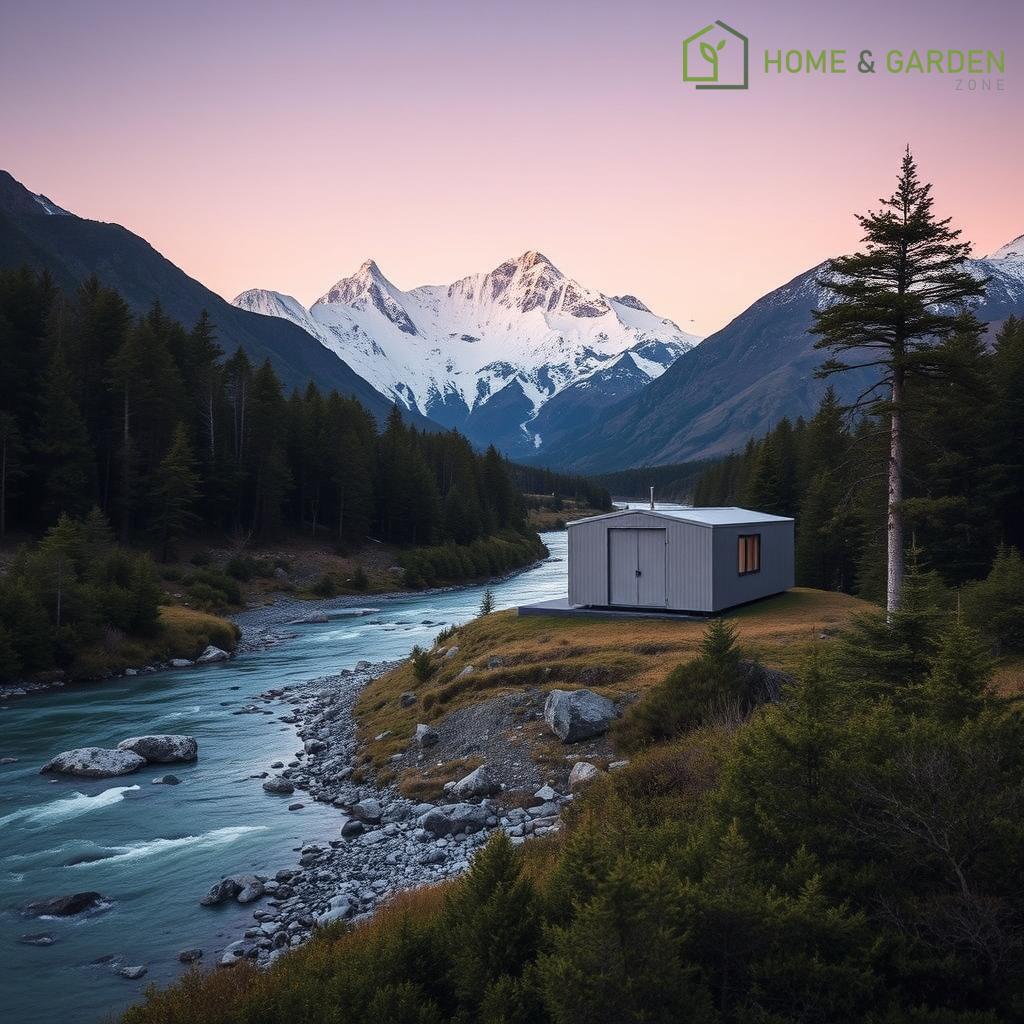
A Symphony of Structure and Scenery in Argentine Patagonia
In the dramatic intersection where pristine rivers meet ancient forests and towering mountains, a remarkable modular cabin has taken root in Argentine Patagonia. This architectural endeavor stands as a testament to the evolving philosophy of integrating human habitation with raw natural beauty, leveraging the efficiencies of prefabrication while committing to a landscape-oriented design approach.
The project, initially highlighted by designboom, underscores a growing trend in high-end, ecologically sensitive developments. Unlike traditional construction, which can be intrusive and time-consuming in remote locales, the modular approach significantly minimizes on-site impact and construction timelines. Components are manufactured off-site under controlled conditions, ensuring precision and reducing waste, then transported and assembled with meticulous care to preserve the surrounding ecosystem.
Design Philosophy: Blending with the Wild
Central to this Patagonian cabin's appeal is its profound respect for its environment. Architects embraced a design strategy that prioritizes panoramic views and natural light, orienting the structure to capture the breathtaking vistas of the Andean foothills, the meandering river, and the dense native forests. Large expanses of glazing blur the lines between interior comfort and the rugged exterior, allowing occupants an immersive experience of the ever-changing Patagonian weather and wildlife.
The choice of materials often reflects this commitment to context. Local timber, often sustainably sourced, and other natural elements are frequently incorporated, ensuring the cabin not only withstands the harsh Patagonian climate but also visually recedes into the landscape. The prefabrication methodology also allows for advanced insulation and energy-efficient systems to be integrated from the outset, contributing to a reduced operational footprint in a sensitive ecological zone.
The Advantage of Modularity in Remote Locations
The allure of modular construction in remote, challenging environments like Patagonia is manifold. Beyond the reduction of on-site disruption, it addresses logistical hurdles inherent in transporting materials and labor to isolated sites. Quality control, often a concern in dispersed projects, is enhanced through factory production. This methodology proves particularly advantageous for developers and individuals seeking to establish a presence in protected or difficult-to-access natural areas without compromising environmental stewardship.
This particular cabin exemplifies how prefabrication can elevate design, rather than constrain it. It demonstrates that modularity is not synonymous with uniformity, but can instead be a powerful tool for bespoke, context-responsive architecture that celebrates its unique location.
Summary
The modular cabin in Argentine Patagonia represents a sophisticated convergence of innovative construction techniques and sensitive environmental design. By embracing prefabrication, the project successfully navigates the complexities of building in a remote, pristine landscape, delivering a structure that is both efficient and deeply connected to its stunning surroundings. It sets a precedent for sustainable, high-quality architectural interventions in environmentally delicate regions globally.
Resources
Details
Author
Latest articles


 }})
You can now watch HBO Max for $10
A Symphony of Structure and Scenery in Argentine Patagonia
In the dramatic intersection where pristine rivers meet ancient forests and towering mountains, a remarkable modular cabin has taken root in Argentine Patagonia. This architectural endeavor stands as a testament to the evolving philosophy of integrating human habitation with raw natural beauty, leveraging the efficiencies of prefabrication while committing to a landscape-oriented design approach.
The project, initially highlighted by designboom, underscores a growing trend in high-end, ecologically sensitive developments. Unlike traditional construction, which can be intrusive and time-consuming in remote locales, the modular approach significantly minimizes on-site impact and construction timelines. Components are manufactured off-site under controlled conditions, ensuring precision and reducing waste, then transported and assembled with meticulous care to preserve the surrounding ecosystem.
Design Philosophy: Blending with the Wild
Central to this Patagonian cabin's appeal is its profound respect for its environment. Architects embraced a design strategy that prioritizes panoramic views and natural light, orienting the structure to capture the breathtaking vistas of the Andean foothills, the meandering river, and the dense native forests. Large expanses of glazing blur the lines between interior comfort and the rugged exterior, allowing occupants an immersive experience of the ever-changing Patagonian weather and wildlife.
The choice of materials often reflects this commitment to context. Local timber, often sustainably sourced, and other natural elements are frequently incorporated, ensuring the cabin not only withstands the harsh Patagonian climate but also visually recedes into the landscape. The prefabrication methodology also allows for advanced insulation and energy-efficient systems to be integrated from the outset, contributing to a reduced operational footprint in a sensitive ecological zone.
The Advantage of Modularity in Remote Locations
The allure of modular construction in remote, challenging environments like Patagonia is manifold. Beyond the reduction of on-site disruption, it addresses logistical hurdles inherent in transporting materials and labor to isolated sites. Quality control, often a concern in dispersed projects, is enhanced through factory production. This methodology proves particularly advantageous for developers and individuals seeking to establish a presence in protected or difficult-to-access natural areas without compromising environmental stewardship.
This particular cabin exemplifies how prefabrication can elevate design, rather than constrain it. It demonstrates that modularity is not synonymous with uniformity, but can instead be a powerful tool for bespoke, context-responsive architecture that celebrates its unique location.
Summary
The modular cabin in Argentine Patagonia represents a sophisticated convergence of innovative construction techniques and sensitive environmental design. By embracing prefabrication, the project successfully navigates the complexities of building in a remote, pristine landscape, delivering a structure that is both efficient and deeply connected to its stunning surroundings. It sets a precedent for sustainable, high-quality architectural interventions in environmentally delicate regions globally.
Resources
Latest articles
You can now watch HBO Max for $10
Similar posts
This is a page that only logged-in people can visit. Don't you feel special? Try clicking on a button below to do some things you can't do when you're logged out.
Example modal
At your leisure, please peruse this excerpt from a whale of a tale.
Chapter 1: Loomings.
Call me Ishmael. Some years ago—never mind how long precisely—having little or no money in my purse, and nothing particular to interest me on shore, I thought I would sail about a little and see the watery part of the world. It is a way I have of driving off the spleen and regulating the circulation. Whenever I find myself growing grim about the mouth; whenever it is a damp, drizzly November in my soul; whenever I find myself involuntarily pausing before coffin warehouses, and bringing up the rear of every funeral I meet; and especially whenever my hypos get such an upper hand of me, that it requires a strong moral principle to prevent me from deliberately stepping into the street, and methodically knocking people's hats off—then, I account it high time to get to sea as soon as I can. This is my substitute for pistol and ball. With a philosophical flourish Cato throws himself upon his sword; I quietly take to the ship. There is nothing surprising in this. If they but knew it, almost all men in their degree, some time or other, cherish very nearly the same feelings towards the ocean with me.
Comment