The Rapid Ascent of AI in 3D Model Generation: A Year of Unprecedented Progress
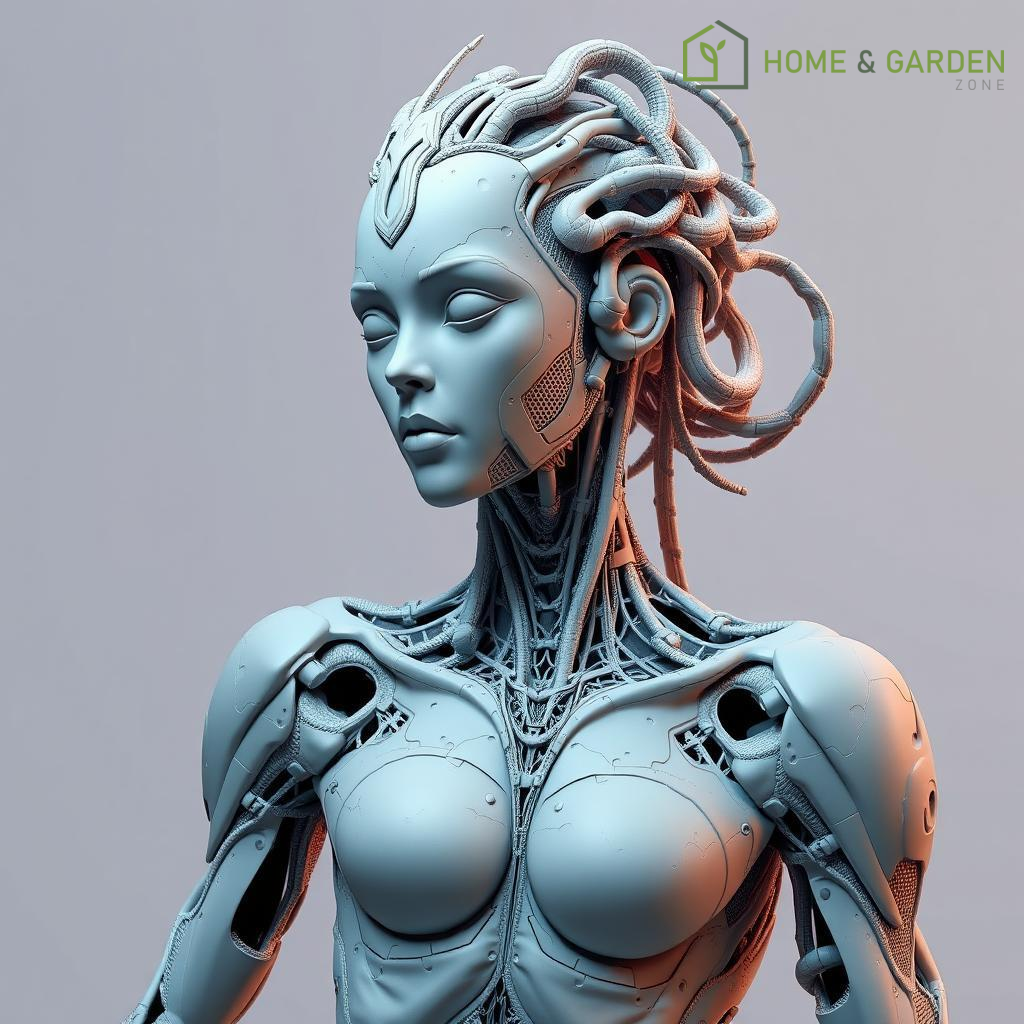
The landscape of 3D model generation has undergone a profound transformation, particularly witnessing an explosive acceleration in capabilities since late 2024. What was once a nascent field, requiring specialized expertise and extensive manual labor, has rapidly evolved into an accessible domain powered by sophisticated artificial intelligence. A mere year ago, testing early AI-driven sites often yielded rudimentary results; today, the sophistication and speed of these tools are redefining digital content creation across industries.
The Evolution of AI in Three Dimensions
Traditional 3D modeling, relying on software like Blender or Autodesk Maya, demands meticulous attention to vertices, edges, and faces. The advent of AI has begun to democratize this process, enabling users—from hobbyists to seasoned professionals—to generate complex 3D assets with unprecedented ease. This rapid advancement is largely attributed to breakthroughs in generative AI models, which can interpret textual prompts or 2D images and translate them into coherent, three-dimensional forms.
Key AI Models and Approaches Driving Innovation
- Text-to-3D Synthesis: Pioneering models now allow creators to describe a desired object or scene in natural language, and the AI constructs a corresponding 3D model. This capability, building on foundational research in neural radiance fields (NeRFs) and diffusion models, has seen significant refinement. Tools like Luma AI’s Genie, for instance, have demonstrated remarkable ability to produce detailed 3D assets from simple text prompts, making concept visualization incredibly fluid.
- Image-to-3D Reconstruction: Another powerful avenue involves converting one or more 2D images into a comprehensive 3D model. AI algorithms can infer depth, volume, and texture from flat images, reconstructing spatial information that would typically require specialized scanning equipment. This is particularly valuable for digitizing existing objects or creating models from concept art.
- Automated Mesh Generation and Texture Mapping: Beyond initial shape creation, AI systems are becoming adept at refining polygonal meshes, optimizing topology, and generating high-fidelity textures. This ensures that the generated models are not only geometrically sound but also visually rich and production-ready, often outperforming manual texturing processes in speed and consistency.
Impact Across Industries
The implications of advanced AI 3D generation are far-reaching. In the gaming industry, developers can rapidly prototype environments and characters, drastically cutting down production cycles. Architects and product designers leverage these tools for quick iterations and visualizations, while animators and filmmakers find new avenues for creating dynamic assets and special effects. The burgeoning fields of augmented and virtual reality also stand to benefit immensely, as AI can generate vast libraries of immersive content tailored to specific virtual environments.
Challenges and the Path Forward
Despite the remarkable progress, challenges persist. High-fidelity 3D generation remains computationally intensive, often requiring powerful hardware. Achieving precise artistic control over every minute detail can still be elusive, and the ethical considerations surrounding AI-generated content, including potential misuse or questions of originality, continue to be areas of active discussion. Nevertheless, ongoing research into more efficient algorithms, user-friendly interfaces, and greater semantic understanding promises to address these hurdles, propelling the technology toward even broader adoption.
Summary
In just over a year since late 2024, AI's role in 3D model generation has evolved from experimental to indispensable. The rapid maturation of text-to-3D and image-to-3D technologies, coupled with sophisticated mesh and texture generation, has fundamentally reshaped workflows across creative and technical sectors. While challenges remain, the trajectory of innovation indicates a future where sophisticated 3D modeling is accessible, intuitive, and seamlessly integrated into virtually every aspect of digital creation.
Resources
Details
Author




Latest articles




 }})
You can now watch HBO Max for $10
The landscape of 3D model generation has undergone a profound transformation, particularly witnessing an explosive acceleration in capabilities since late 2024. What was once a nascent field, requiring specialized expertise and extensive manual labor, has rapidly evolved into an accessible domain powered by sophisticated artificial intelligence. A mere year ago, testing early AI-driven sites often yielded rudimentary results; today, the sophistication and speed of these tools are redefining digital content creation across industries.
The Evolution of AI in Three Dimensions
Traditional 3D modeling, relying on software like Blender or Autodesk Maya, demands meticulous attention to vertices, edges, and faces. The advent of AI has begun to democratize this process, enabling users—from hobbyists to seasoned professionals—to generate complex 3D assets with unprecedented ease. This rapid advancement is largely attributed to breakthroughs in generative AI models, which can interpret textual prompts or 2D images and translate them into coherent, three-dimensional forms.
Key AI Models and Approaches Driving Innovation
- Text-to-3D Synthesis: Pioneering models now allow creators to describe a desired object or scene in natural language, and the AI constructs a corresponding 3D model. This capability, building on foundational research in neural radiance fields (NeRFs) and diffusion models, has seen significant refinement. Tools like Luma AI’s Genie, for instance, have demonstrated remarkable ability to produce detailed 3D assets from simple text prompts, making concept visualization incredibly fluid.
- Image-to-3D Reconstruction: Another powerful avenue involves converting one or more 2D images into a comprehensive 3D model. AI algorithms can infer depth, volume, and texture from flat images, reconstructing spatial information that would typically require specialized scanning equipment. This is particularly valuable for digitizing existing objects or creating models from concept art.
- Automated Mesh Generation and Texture Mapping: Beyond initial shape creation, AI systems are becoming adept at refining polygonal meshes, optimizing topology, and generating high-fidelity textures. This ensures that the generated models are not only geometrically sound but also visually rich and production-ready, often outperforming manual texturing processes in speed and consistency.
Impact Across Industries
The implications of advanced AI 3D generation are far-reaching. In the gaming industry, developers can rapidly prototype environments and characters, drastically cutting down production cycles. Architects and product designers leverage these tools for quick iterations and visualizations, while animators and filmmakers find new avenues for creating dynamic assets and special effects. The burgeoning fields of augmented and virtual reality also stand to benefit immensely, as AI can generate vast libraries of immersive content tailored to specific virtual environments.
Challenges and the Path Forward
Despite the remarkable progress, challenges persist. High-fidelity 3D generation remains computationally intensive, often requiring powerful hardware. Achieving precise artistic control over every minute detail can still be elusive, and the ethical considerations surrounding AI-generated content, including potential misuse or questions of originality, continue to be areas of active discussion. Nevertheless, ongoing research into more efficient algorithms, user-friendly interfaces, and greater semantic understanding promises to address these hurdles, propelling the technology toward even broader adoption.
Summary
In just over a year since late 2024, AI's role in 3D model generation has evolved from experimental to indispensable. The rapid maturation of text-to-3D and image-to-3D technologies, coupled with sophisticated mesh and texture generation, has fundamentally reshaped workflows across creative and technical sectors. While challenges remain, the trajectory of innovation indicates a future where sophisticated 3D modeling is accessible, intuitive, and seamlessly integrated into virtually every aspect of digital creation.
Resources
Latest articles
You can now watch HBO Max for $10
Similar posts




This is a page that only logged-in people can visit. Don't you feel special? Try clicking on a button below to do some things you can't do when you're logged out.
Example modal
At your leisure, please peruse this excerpt from a whale of a tale.
Chapter 1: Loomings.
Call me Ishmael. Some years ago—never mind how long precisely—having little or no money in my purse, and nothing particular to interest me on shore, I thought I would sail about a little and see the watery part of the world. It is a way I have of driving off the spleen and regulating the circulation. Whenever I find myself growing grim about the mouth; whenever it is a damp, drizzly November in my soul; whenever I find myself involuntarily pausing before coffin warehouses, and bringing up the rear of every funeral I meet; and especially whenever my hypos get such an upper hand of me, that it requires a strong moral principle to prevent me from deliberately stepping into the street, and methodically knocking people's hats off—then, I account it high time to get to sea as soon as I can. This is my substitute for pistol and ball. With a philosophical flourish Cato throws himself upon his sword; I quietly take to the ship. There is nothing surprising in this. If they but knew it, almost all men in their degree, some time or other, cherish very nearly the same feelings towards the ocean with me.
Comment