Cultivating Imagination: The Enduring Appeal of Felt Gardening Tools & Seeds in Early Childhood Play
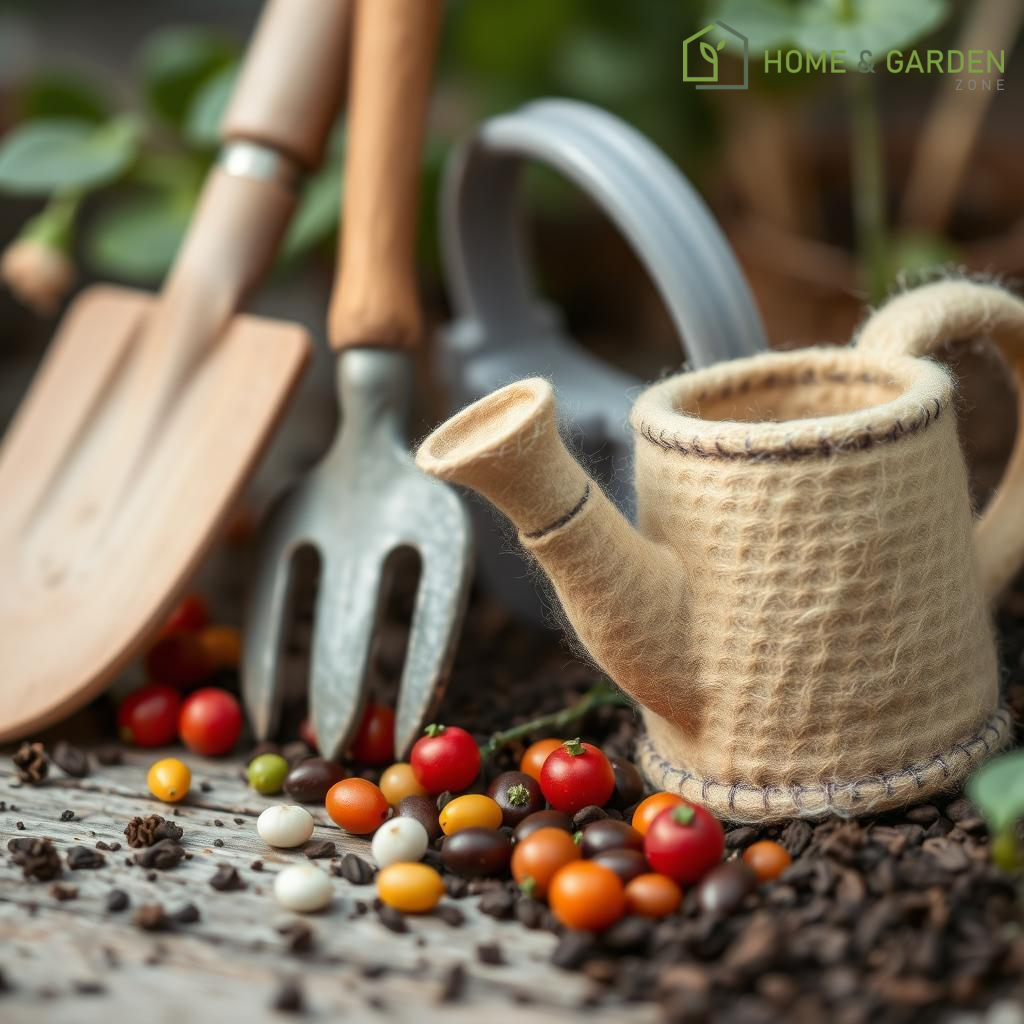
In an increasingly digital world, the enduring appeal of tactile, imaginative play remains a cornerstone of early childhood development. Among the myriad of creative outlets available, the concept of felt gardening tools and seeds offers a uniquely charming and developmentally beneficial experience. Transforming everyday garden essentials into a soft, handcrafted collection, these sets, often accompanied by complementary items like a felt play watering can, provide a rich landscape for young imaginations to flourish, irrespective of the season or a child’s access to a real garden.
The Allure of Tactile Play: Felt in Early Childhood Development
The very nature of felt—its softness, varied textures, and vibrant colors—makes it an ideal medium for children's play items. Unlike rigid plastic toys, felt encourages sensory exploration, engaging children's tactile senses as they manipulate the lightweight, pliable pieces. This hands-on interaction is critical for developing fine motor skills, hand-eye coordination, and spatial awareness as children grasp, place, and arrange their felt plants and tools.
Sensory Engagement and Fine Motor Skills
Crafting and playing with felt items inherently involves activities that refine small muscle control. Pretending to plant felt seeds, "digging" with a felt trowel, or "watering" with a soft watering can all contribute to the strengthening of hand muscles and improving dexterity. This sensory engagement also plays a vital role in cognitive development, helping children to understand textures, shapes, and colors in a tangible way.
Nurturing Creativity and Role-Playing
A felt gardening set transcends mere physical activity, serving as a powerful catalyst for imaginative role-playing. Children can immerse themselves in the roles of gardeners, farmers, or even botanists, creating narratives and scenarios that mirror real-world activities. This type of open-ended play is crucial for developing problem-solving skills, fostering language development as they vocalize their actions and stories, and enhancing social-emotional intelligence through collaborative play with peers or caregivers.
Beyond the Backyard: The Rise of DIY Felt Crafting
The trend towards DIY felt crafting for children's toys aligns with a broader movement emphasizing sustainability, personalization, and mindful consumption. Parents and educators areincreasingly seeking alternatives to mass-produced plastic toys, opting instead for handmade items that are often more durable, environmentally friendly, and imbued with a personal touch. Projects like felt gardening sets, popularized by crafting luminaries such as Lia Griffith, represent a convergence of aesthetic appeal and developmental utility, making them attractive to those who value both design and function in children's play.
Sustainability and Personalization in Play
Creating felt play sets at home allows for a degree of customization that commercial products rarely offer. Families can select colors, design specific plants, or even incorporate elements unique to their local flora, making the play experience more relevant and engaging. Furthermore, the longevity and repairability of felt items contribute to a more sustainable approach to toy consumption, teaching children the value of cherished possessions over disposable novelties.
Summary: Sowing the Seeds of Creativity
The simple yet profound concept of felt gardening tools and seeds offers a multifaceted approach to early childhood education and imaginative play. By providing a tangible, safe, and endlessly reconfigurable world, these sets empower children to explore, create, and learn through hands-on engagement. They underscore the importance of tactile experiences and open-ended play in fostering crucial developmental skills, proving that sometimes, the most impactful learning tools are those that fit right in the palm of a child's hand.
Resources
- National Association for the Education of Young Children (NAEYC) - https://www.naeyc.org/resources/pubs/yc/may2016/ten-things-every-child-needs (General resource for child development principles related to play)
- Scholastic Parents - https://www.scholastic.com/parents/kids-activities/activities-by-age/preschool-toddler/benefits-creative-play.html (Focus on benefits of creative play)
- Lia Griffith - https://liagriffith.com/ (Illustrates the source inspiration and a community of high-quality DIY crafts)
Details
Author




Latest articles




 }})
You can now watch HBO Max for $10
In an increasingly digital world, the enduring appeal of tactile, imaginative play remains a cornerstone of early childhood development. Among the myriad of creative outlets available, the concept of felt gardening tools and seeds offers a uniquely charming and developmentally beneficial experience. Transforming everyday garden essentials into a soft, handcrafted collection, these sets, often accompanied by complementary items like a felt play watering can, provide a rich landscape for young imaginations to flourish, irrespective of the season or a child’s access to a real garden.
The Allure of Tactile Play: Felt in Early Childhood Development
The very nature of felt—its softness, varied textures, and vibrant colors—makes it an ideal medium for children's play items. Unlike rigid plastic toys, felt encourages sensory exploration, engaging children's tactile senses as they manipulate the lightweight, pliable pieces. This hands-on interaction is critical for developing fine motor skills, hand-eye coordination, and spatial awareness as children grasp, place, and arrange their felt plants and tools.
Sensory Engagement and Fine Motor Skills
Crafting and playing with felt items inherently involves activities that refine small muscle control. Pretending to plant felt seeds, "digging" with a felt trowel, or "watering" with a soft watering can all contribute to the strengthening of hand muscles and improving dexterity. This sensory engagement also plays a vital role in cognitive development, helping children to understand textures, shapes, and colors in a tangible way.
Nurturing Creativity and Role-Playing
A felt gardening set transcends mere physical activity, serving as a powerful catalyst for imaginative role-playing. Children can immerse themselves in the roles of gardeners, farmers, or even botanists, creating narratives and scenarios that mirror real-world activities. This type of open-ended play is crucial for developing problem-solving skills, fostering language development as they vocalize their actions and stories, and enhancing social-emotional intelligence through collaborative play with peers or caregivers.
Beyond the Backyard: The Rise of DIY Felt Crafting
The trend towards DIY felt crafting for children's toys aligns with a broader movement emphasizing sustainability, personalization, and mindful consumption. Parents and educators areincreasingly seeking alternatives to mass-produced plastic toys, opting instead for handmade items that are often more durable, environmentally friendly, and imbued with a personal touch. Projects like felt gardening sets, popularized by crafting luminaries such as Lia Griffith, represent a convergence of aesthetic appeal and developmental utility, making them attractive to those who value both design and function in children's play.
Sustainability and Personalization in Play
Creating felt play sets at home allows for a degree of customization that commercial products rarely offer. Families can select colors, design specific plants, or even incorporate elements unique to their local flora, making the play experience more relevant and engaging. Furthermore, the longevity and repairability of felt items contribute to a more sustainable approach to toy consumption, teaching children the value of cherished possessions over disposable novelties.
Summary: Sowing the Seeds of Creativity
The simple yet profound concept of felt gardening tools and seeds offers a multifaceted approach to early childhood education and imaginative play. By providing a tangible, safe, and endlessly reconfigurable world, these sets empower children to explore, create, and learn through hands-on engagement. They underscore the importance of tactile experiences and open-ended play in fostering crucial developmental skills, proving that sometimes, the most impactful learning tools are those that fit right in the palm of a child's hand.
Resources
- National Association for the Education of Young Children (NAEYC) - https://www.naeyc.org/resources/pubs/yc/may2016/ten-things-every-child-needs (General resource for child development principles related to play)
- Scholastic Parents - https://www.scholastic.com/parents/kids-activities/activities-by-age/preschool-toddler/benefits-creative-play.html (Focus on benefits of creative play)
- Lia Griffith - https://liagriffith.com/ (Illustrates the source inspiration and a community of high-quality DIY crafts)
Latest articles
You can now watch HBO Max for $10
Similar posts




This is a page that only logged-in people can visit. Don't you feel special? Try clicking on a button below to do some things you can't do when you're logged out.
Example modal
At your leisure, please peruse this excerpt from a whale of a tale.
Chapter 1: Loomings.
Call me Ishmael. Some years ago—never mind how long precisely—having little or no money in my purse, and nothing particular to interest me on shore, I thought I would sail about a little and see the watery part of the world. It is a way I have of driving off the spleen and regulating the circulation. Whenever I find myself growing grim about the mouth; whenever it is a damp, drizzly November in my soul; whenever I find myself involuntarily pausing before coffin warehouses, and bringing up the rear of every funeral I meet; and especially whenever my hypos get such an upper hand of me, that it requires a strong moral principle to prevent me from deliberately stepping into the street, and methodically knocking people's hats off—then, I account it high time to get to sea as soon as I can. This is my substitute for pistol and ball. With a philosophical flourish Cato throws himself upon his sword; I quietly take to the ship. There is nothing surprising in this. If they but knew it, almost all men in their degree, some time or other, cherish very nearly the same feelings towards the ocean with me.
Comment