Architectural Homage to Mexico's Cacao Roots: La Cacaotera Museum Unveils Heritage in Striking Red Concrete
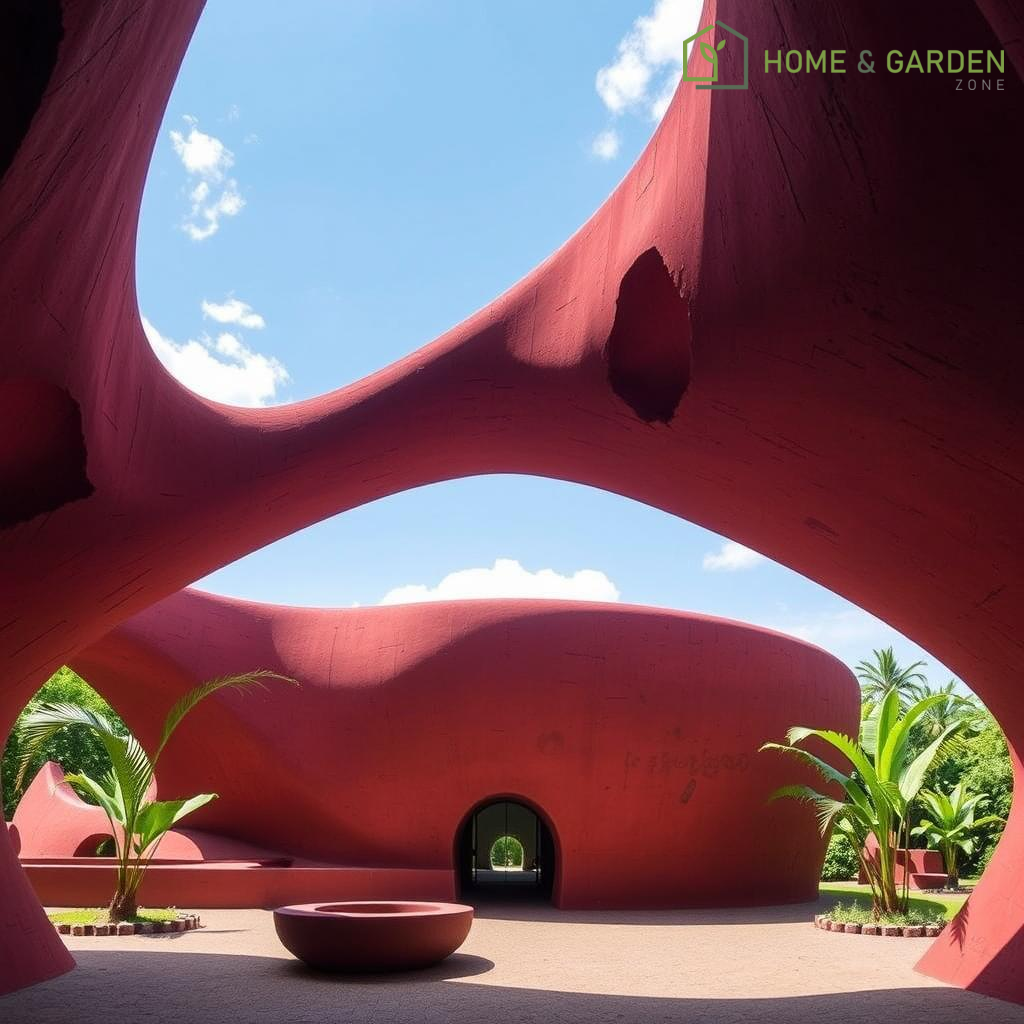
In the heart of Tabasco, Mexico, where the legacy of cacao intertwines deeply with the cultural fabric, stands La Cacaotera Museum—a profound architectural statement dedicated to preserving and celebrating the region's ancient chocolate heritage. Designed by Colectivo C733, this institution emerges from the landscape with a striking presence, primarily defined by its innovative use of red-pigmented concrete.
An Architectural Dialogue with History and Landscape
The museum's structure is a masterful blend of contemporary design and indigenous reverence. The choice of red-pigmented concrete is not merely aesthetic; it evokes the rich, fertile earth of the cacao-growing region and perhaps even the vibrant tones of ancient Mayan architecture, which often featured painted structures. This dominant material forms a robust and enduring shell, giving the museum a powerful, almost monolithic, yet inviting character.
Complementing the substantial concrete forms, a meticulously curated material palette unfolds within. Intricate wooden latticework, or 'celosías', plays a crucial role, allowing natural light and air to permeate the spaces while creating dynamic patterns of shadow and light, reminiscent of traditional Mexican architectural elements. The tactile warmth of locally sourced clay floors grounds the visitor experience, connecting the interior to the very soil that nourishes cacao trees. Expanses of glass offer curated views of the surrounding natural environment, fostering a dialogue between the built structure and its ecological context, while robust iron elements provide structural integrity and finely detailed accents.
Celebrating the 'Food of the Gods'
La Cacaotera Museum serves as an essential hub for understanding the profound significance of cacao. From its origins as a sacred commodity among pre-Hispanic civilizations—revered as the "food of the gods"—to its evolution into a global delicacy, the museum meticulously charts this rich history. Exhibits delve into the cultivation processes, the traditional methods of chocolate making, and the socio-economic impact of cacao on Mexican communities. It highlights not just the plant itself, but the ancestral knowledge and practices that have sustained its legacy for millennia.
Summary
La Cacaotera Museum stands as more than just an exhibition space; it is a meticulously crafted architectural homage to Mexico's enduring cacao heritage. Through its bold use of red-pigmented concrete and a harmonious integration of local materials like latticework, clay, glass, and iron, the museum creates an immersive environment that is both visually captivating and culturally resonant. It successfully bridges ancient traditions with modern design, offering visitors a deep appreciation for the "food of the gods" and its indelible mark on Mexican identity.
Resources
- designboom: www.designboom.com
- ArchDaily: www.archdaily.com
- Secretaría de Cultura, Gobierno de México: www.cultura.gob.mx
Details
Author




Latest articles





 }})
You can now watch HBO Max for $10
In the heart of Tabasco, Mexico, where the legacy of cacao intertwines deeply with the cultural fabric, stands La Cacaotera Museum—a profound architectural statement dedicated to preserving and celebrating the region's ancient chocolate heritage. Designed by Colectivo C733, this institution emerges from the landscape with a striking presence, primarily defined by its innovative use of red-pigmented concrete.
An Architectural Dialogue with History and Landscape
The museum's structure is a masterful blend of contemporary design and indigenous reverence. The choice of red-pigmented concrete is not merely aesthetic; it evokes the rich, fertile earth of the cacao-growing region and perhaps even the vibrant tones of ancient Mayan architecture, which often featured painted structures. This dominant material forms a robust and enduring shell, giving the museum a powerful, almost monolithic, yet inviting character.
Complementing the substantial concrete forms, a meticulously curated material palette unfolds within. Intricate wooden latticework, or 'celosías', plays a crucial role, allowing natural light and air to permeate the spaces while creating dynamic patterns of shadow and light, reminiscent of traditional Mexican architectural elements. The tactile warmth of locally sourced clay floors grounds the visitor experience, connecting the interior to the very soil that nourishes cacao trees. Expanses of glass offer curated views of the surrounding natural environment, fostering a dialogue between the built structure and its ecological context, while robust iron elements provide structural integrity and finely detailed accents.
Celebrating the 'Food of the Gods'
La Cacaotera Museum serves as an essential hub for understanding the profound significance of cacao. From its origins as a sacred commodity among pre-Hispanic civilizations—revered as the "food of the gods"—to its evolution into a global delicacy, the museum meticulously charts this rich history. Exhibits delve into the cultivation processes, the traditional methods of chocolate making, and the socio-economic impact of cacao on Mexican communities. It highlights not just the plant itself, but the ancestral knowledge and practices that have sustained its legacy for millennia.
Summary
La Cacaotera Museum stands as more than just an exhibition space; it is a meticulously crafted architectural homage to Mexico's enduring cacao heritage. Through its bold use of red-pigmented concrete and a harmonious integration of local materials like latticework, clay, glass, and iron, the museum creates an immersive environment that is both visually captivating and culturally resonant. It successfully bridges ancient traditions with modern design, offering visitors a deep appreciation for the "food of the gods" and its indelible mark on Mexican identity.
Resources
- designboom: www.designboom.com
- ArchDaily: www.archdaily.com
- Secretaría de Cultura, Gobierno de México: www.cultura.gob.mx
Latest articles
You can now watch HBO Max for $10
Similar posts



This is a page that only logged-in people can visit. Don't you feel special? Try clicking on a button below to do some things you can't do when you're logged out.
Example modal
At your leisure, please peruse this excerpt from a whale of a tale.
Chapter 1: Loomings.
Call me Ishmael. Some years ago—never mind how long precisely—having little or no money in my purse, and nothing particular to interest me on shore, I thought I would sail about a little and see the watery part of the world. It is a way I have of driving off the spleen and regulating the circulation. Whenever I find myself growing grim about the mouth; whenever it is a damp, drizzly November in my soul; whenever I find myself involuntarily pausing before coffin warehouses, and bringing up the rear of every funeral I meet; and especially whenever my hypos get such an upper hand of me, that it requires a strong moral principle to prevent me from deliberately stepping into the street, and methodically knocking people's hats off—then, I account it high time to get to sea as soon as I can. This is my substitute for pistol and ball. With a philosophical flourish Cato throws himself upon his sword; I quietly take to the ship. There is nothing surprising in this. If they but knew it, almost all men in their degree, some time or other, cherish very nearly the same feelings towards the ocean with me.
Comment