Dan Flavin's Luminous Grids: An Investigation into Fluorescent Light and Spatial Immersion at David Zwirner, NYC
Introduction
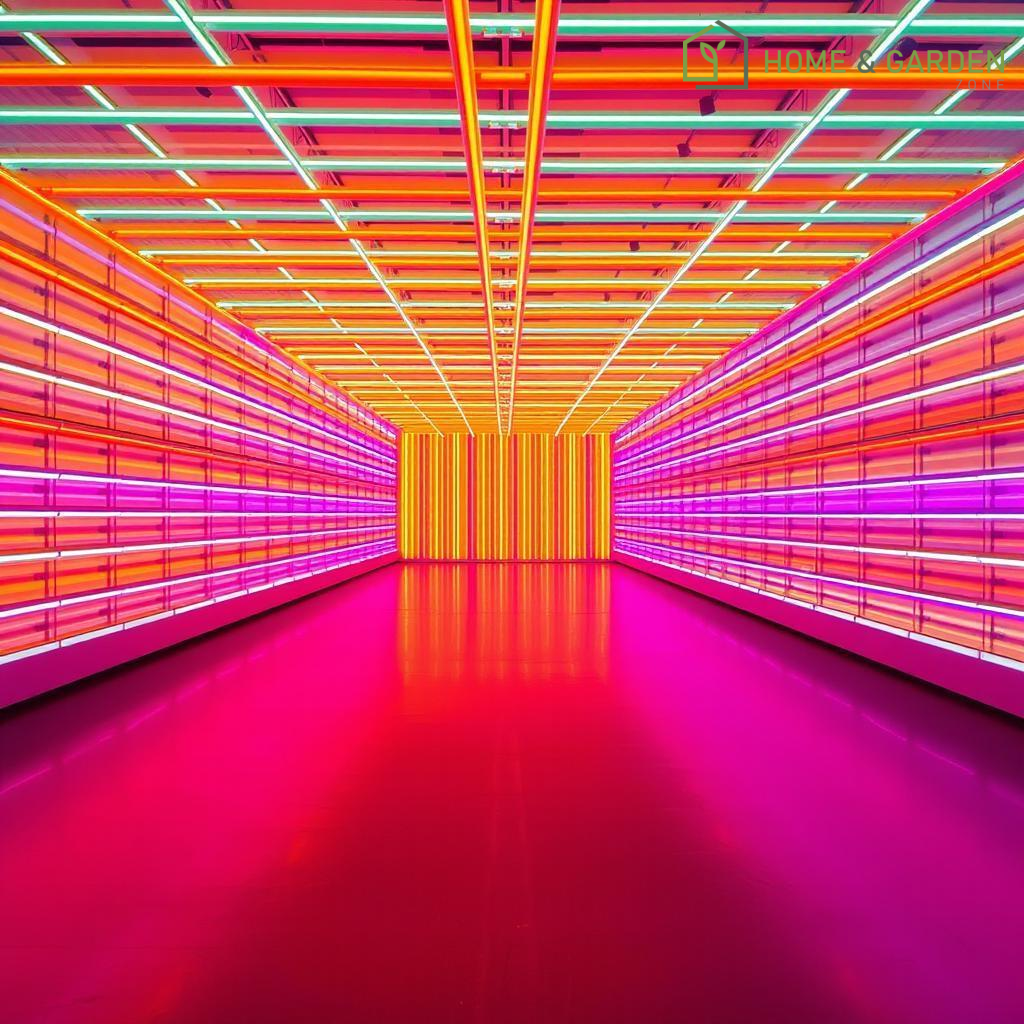
From November 10 to December 17, 2022, David Zwirner’s gallery on West 19th Street in New York City was transformed by "Dan Flavin: grids," an exhibition that masterfully deployed the late artist’s iconic fluorescent light sculptures. The show offered a profound exploration of Flavin’s engagement with the grid motif, immersing visitors in a series of dynamic and optically charged environments. Far from mere illumination, Flavin's installations became the very fabric of the space, inviting a re-evaluation of light, color, and architectural perception.The Grid as a Luminous Framework
Dan Flavin, a pioneer of Minimalism, consistently challenged traditional notions of sculpture and painting by utilizing readily available commercial fluorescent light fixtures. In "grids," the exhibition presented a crucial body of work from 1970–72, where Flavin systematically investigated the grid as both a structural framework and a medium for pure light. These installations consisted of straight fluorescent tubes, often in various colors—red, pink, yellow, blue, green, and cool white—arranged in precise, orthogonal configurations. The light emitted was not simply reflected but actively shaped and colored the surrounding architecture, effectively flooding the gallery rooms with vibrant, shifting hues. This deliberate use of standardized components to create complex visual and spatial experiences is a hallmark of Flavin’s groundbreaking practice.Immersive Atmospheres and Perceptual Shifts
Walking through "Dan Flavin: grids" was an exercise in sensory engagement. Each gallery space presented a distinct atmosphere, meticulously crafted by the interplay of colored light. The intense emanations from the fluorescent tubes dissolved architectural boundaries, blurring corners and walls into fields of pure color. Viewers experienced profound perceptual shifts as they moved from one installation to another, witnessing how a simple grid of light could radically alter spatial depth, temperature, and even mood. The light wasn't just illuminating; it became an ephemeral, architectural material that dictated the viewer's experience of the physical environment, demonstrating Flavin’s unique ability to merge art with the surrounding context.Summary
"Dan Flavin: grids" at David Zwirner was a compelling exhibition that reaffirmed the enduring power and relevance of Flavin's minimalist yet deeply immersive light installations. By focusing on his exploration of the grid, the exhibition provided a fresh perspective on how industrial materials and elemental forms could generate profound aesthetic and spatial experiences. The show underscored Flavin’s legacy as an artist who, through simple means, fundamentally reconfigured the relationship between art, architecture, and human perception.Resources
- David Zwirner Gallery: https://www.davidzwirner.com/exhibitions/dan-flavin-grids
- Designboom: https://www.designboom.com/art/dan-flavin-grids-floods-nyc-david-zwirner-gallery-fluorescent-color-11-21-2022/
- ArtDaily: https://artdaily.com/news/152345/Dan-Flavin-s--grids--floods-NYC-s-David-Zwirner-gallery-with-fluorescent-color
Details
Author



Latest articles




 }})
You can now watch HBO Max for $10
Introduction
From November 10 to December 17, 2022, David Zwirner’s gallery on West 19th Street in New York City was transformed by "Dan Flavin: grids," an exhibition that masterfully deployed the late artist’s iconic fluorescent light sculptures. The show offered a profound exploration of Flavin’s engagement with the grid motif, immersing visitors in a series of dynamic and optically charged environments. Far from mere illumination, Flavin's installations became the very fabric of the space, inviting a re-evaluation of light, color, and architectural perception.The Grid as a Luminous Framework
Dan Flavin, a pioneer of Minimalism, consistently challenged traditional notions of sculpture and painting by utilizing readily available commercial fluorescent light fixtures. In "grids," the exhibition presented a crucial body of work from 1970–72, where Flavin systematically investigated the grid as both a structural framework and a medium for pure light. These installations consisted of straight fluorescent tubes, often in various colors—red, pink, yellow, blue, green, and cool white—arranged in precise, orthogonal configurations. The light emitted was not simply reflected but actively shaped and colored the surrounding architecture, effectively flooding the gallery rooms with vibrant, shifting hues. This deliberate use of standardized components to create complex visual and spatial experiences is a hallmark of Flavin’s groundbreaking practice.Immersive Atmospheres and Perceptual Shifts
Walking through "Dan Flavin: grids" was an exercise in sensory engagement. Each gallery space presented a distinct atmosphere, meticulously crafted by the interplay of colored light. The intense emanations from the fluorescent tubes dissolved architectural boundaries, blurring corners and walls into fields of pure color. Viewers experienced profound perceptual shifts as they moved from one installation to another, witnessing how a simple grid of light could radically alter spatial depth, temperature, and even mood. The light wasn't just illuminating; it became an ephemeral, architectural material that dictated the viewer's experience of the physical environment, demonstrating Flavin’s unique ability to merge art with the surrounding context.Summary
"Dan Flavin: grids" at David Zwirner was a compelling exhibition that reaffirmed the enduring power and relevance of Flavin's minimalist yet deeply immersive light installations. By focusing on his exploration of the grid, the exhibition provided a fresh perspective on how industrial materials and elemental forms could generate profound aesthetic and spatial experiences. The show underscored Flavin’s legacy as an artist who, through simple means, fundamentally reconfigured the relationship between art, architecture, and human perception.Resources
- David Zwirner Gallery: https://www.davidzwirner.com/exhibitions/dan-flavin-grids
- Designboom: https://www.designboom.com/art/dan-flavin-grids-floods-nyc-david-zwirner-gallery-fluorescent-color-11-21-2022/
- ArtDaily: https://artdaily.com/news/152345/Dan-Flavin-s--grids--floods-NYC-s-David-Zwirner-gallery-with-fluorescent-color
Latest articles
You can now watch HBO Max for $10
Similar posts



This is a page that only logged-in people can visit. Don't you feel special? Try clicking on a button below to do some things you can't do when you're logged out.
Example modal
At your leisure, please peruse this excerpt from a whale of a tale.
Chapter 1: Loomings.
Call me Ishmael. Some years ago—never mind how long precisely—having little or no money in my purse, and nothing particular to interest me on shore, I thought I would sail about a little and see the watery part of the world. It is a way I have of driving off the spleen and regulating the circulation. Whenever I find myself growing grim about the mouth; whenever it is a damp, drizzly November in my soul; whenever I find myself involuntarily pausing before coffin warehouses, and bringing up the rear of every funeral I meet; and especially whenever my hypos get such an upper hand of me, that it requires a strong moral principle to prevent me from deliberately stepping into the street, and methodically knocking people's hats off—then, I account it high time to get to sea as soon as I can. This is my substitute for pistol and ball. With a philosophical flourish Cato throws himself upon his sword; I quietly take to the ship. There is nothing surprising in this. If they but knew it, almost all men in their degree, some time or other, cherish very nearly the same feelings towards the ocean with me.
Comment