Symbiotic Futures: Lisbon Exhibition Unveils Plants as Design Collaborators
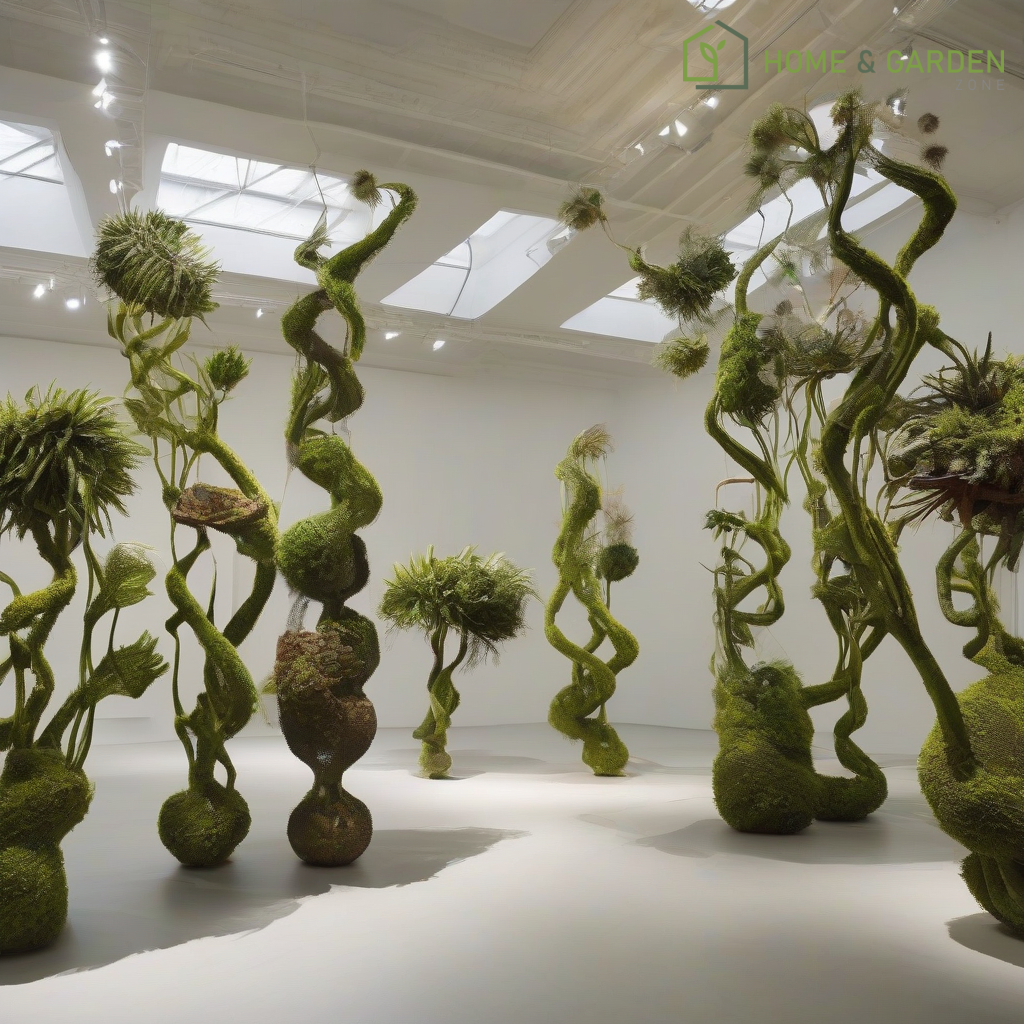
Lisbon is currently hosting a groundbreaking exhibition titled "Ways of Growing," where an international cohort of 20 artists and designers are challenging conventional notions of creation. This pivotal showcase reframes plants not merely as aesthetic inspiration but as active, indispensable collaborators in the realms of art and design, marking a significant shift towards symbiotic creative practices.
Cultivating New Paradigms
The exhibition serves as a vibrant laboratory, demonstrating how biological processes and natural materials can be harnessed to forge innovative and sustainable outputs. Practitioners delve into a spectrum of organic mediums, including the delicate intricacies of bacterial cellulose, the robust networks of living mycelium, the rich palette of plant-dyed textiles, and the transformative power of botanical chemistry. Each material choice underscores a commitment to ecological principles, emphasizing renewable resources and biodegradable alternatives to conventional industrial processes.
Visitors are invited to explore installations and works that illustrate the potential of co-creation with nature. From furniture sculpted by fungal growth to garments dyed with ancient plant pigments, the exhibition highlights a future where design is intrinsically linked to the life cycles of the natural world. This approach not only pushes the boundaries of material science but also encourages a deeper philosophical inquiry into humanity's relationship with the environment.
Artists as Interlocutors
The 20 participating artists act as interlocutors between human creativity and natural intelligence. Their methodologies often involve patient observation and meticulous cultivation, allowing the inherent properties and growth patterns of organisms to dictate forms and aesthetics. This collaborative ethos results in pieces that are dynamic, often evolving over the course of the exhibition, and imbued with a unique biological narrative.
The works collectively advocate for a paradigm shift from extractive industries to regenerative practices. By showcasing the practical applications and artistic expressions derived from these bio-integrated methods, "Ways of Growing" aims to inspire both the design community and the general public to consider more harmonious ways of interacting with our planet.
Summary
"Ways of Growing" in Lisbon stands as a testament to the burgeoning field of biodesign, where art and science converge to explore sustainable futures. The exhibition masterfully illustrates how plants, through various biological and chemical processes, can become integral partners in creating visually compelling and environmentally responsible works. It is a powerful statement on the potential for collaboration with the natural world, fostering innovation that respects and integrates ecological principles into the core of creative endeavor.
Resources
Details
Author


Latest articles
 }})
You can now watch HBO Max for $10
Lisbon is currently hosting a groundbreaking exhibition titled "Ways of Growing," where an international cohort of 20 artists and designers are challenging conventional notions of creation. This pivotal showcase reframes plants not merely as aesthetic inspiration but as active, indispensable collaborators in the realms of art and design, marking a significant shift towards symbiotic creative practices.
Cultivating New Paradigms
The exhibition serves as a vibrant laboratory, demonstrating how biological processes and natural materials can be harnessed to forge innovative and sustainable outputs. Practitioners delve into a spectrum of organic mediums, including the delicate intricacies of bacterial cellulose, the robust networks of living mycelium, the rich palette of plant-dyed textiles, and the transformative power of botanical chemistry. Each material choice underscores a commitment to ecological principles, emphasizing renewable resources and biodegradable alternatives to conventional industrial processes.
Visitors are invited to explore installations and works that illustrate the potential of co-creation with nature. From furniture sculpted by fungal growth to garments dyed with ancient plant pigments, the exhibition highlights a future where design is intrinsically linked to the life cycles of the natural world. This approach not only pushes the boundaries of material science but also encourages a deeper philosophical inquiry into humanity's relationship with the environment.
Artists as Interlocutors
The 20 participating artists act as interlocutors between human creativity and natural intelligence. Their methodologies often involve patient observation and meticulous cultivation, allowing the inherent properties and growth patterns of organisms to dictate forms and aesthetics. This collaborative ethos results in pieces that are dynamic, often evolving over the course of the exhibition, and imbued with a unique biological narrative.
The works collectively advocate for a paradigm shift from extractive industries to regenerative practices. By showcasing the practical applications and artistic expressions derived from these bio-integrated methods, "Ways of Growing" aims to inspire both the design community and the general public to consider more harmonious ways of interacting with our planet.
Summary
"Ways of Growing" in Lisbon stands as a testament to the burgeoning field of biodesign, where art and science converge to explore sustainable futures. The exhibition masterfully illustrates how plants, through various biological and chemical processes, can become integral partners in creating visually compelling and environmentally responsible works. It is a powerful statement on the potential for collaboration with the natural world, fostering innovation that respects and integrates ecological principles into the core of creative endeavor.
Resources
Latest articles
You can now watch HBO Max for $10
Similar posts
This is a page that only logged-in people can visit. Don't you feel special? Try clicking on a button below to do some things you can't do when you're logged out.
Example modal
At your leisure, please peruse this excerpt from a whale of a tale.
Chapter 1: Loomings.
Call me Ishmael. Some years ago—never mind how long precisely—having little or no money in my purse, and nothing particular to interest me on shore, I thought I would sail about a little and see the watery part of the world. It is a way I have of driving off the spleen and regulating the circulation. Whenever I find myself growing grim about the mouth; whenever it is a damp, drizzly November in my soul; whenever I find myself involuntarily pausing before coffin warehouses, and bringing up the rear of every funeral I meet; and especially whenever my hypos get such an upper hand of me, that it requires a strong moral principle to prevent me from deliberately stepping into the street, and methodically knocking people's hats off—then, I account it high time to get to sea as soon as I can. This is my substitute for pistol and ball. With a philosophical flourish Cato throws himself upon his sword; I quietly take to the ship. There is nothing surprising in this. If they but knew it, almost all men in their degree, some time or other, cherish very nearly the same feelings towards the ocean with me.
Comment