SpikerBot: Cultivating Young Neuroscientists with a Brain on Wheels, No Code Required
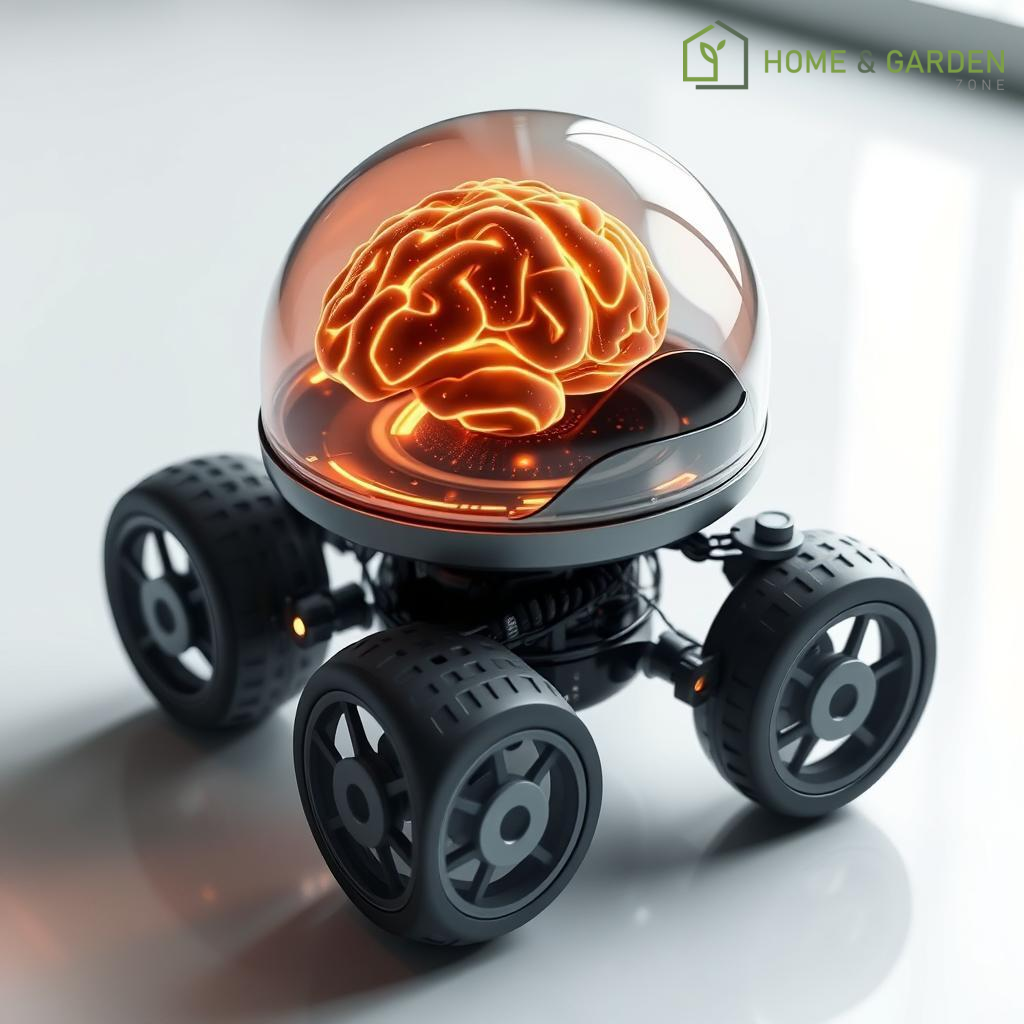
In an era increasingly defined by technological literacy, a groundbreaking educational tool, the SpikerBot robot from Backyard Brains, is redefining how children engage with neuroscience and robotics. This innovative platform allows young learners to program lifelike behaviors into a mobile robot, offering a tangible, intuitive introduction to complex biological principles without requiring a single line of traditional code.
Demystifying Neuroscience Through Embodied Learning
Traditional neuroscience education often involves abstract concepts and complex terminology. SpikerBot, however, bridges this gap by providing an embodied learning experience. Children connect the robot's "brain" – a microcontroller – to various sensors, mimicking how biological organisms perceive their environment. They then configure simple rules and connections that dictate the robot's actions, such as moving towards light or avoiding obstacles, directly translating into an understanding of neural pathways and sensory-motor integration.
The brilliance of SpikerBot lies in its accessibility. By eliminating the barrier of text-based programming, it empowers a wider demographic of students to explore computational thinking and neurobiology. Instead of debugging syntax errors, students focus on the logical flow of information and the resulting behaviors, fostering a deeper conceptual understanding of how a brain processes input and generates output.
Backyard Brains: Pioneering Accessible Science
Backyard Brains, the organization behind SpikerBot, has long been at the forefront of making advanced scientific concepts accessible to K-12 students and enthusiasts. Their philosophy revolves around providing affordable, open-source tools that allow anyone to conduct genuine neuroscience experiments. SpikerBot represents a significant evolution in this mission, integrating robotics to further illustrate neural principles in a dynamic, interactive manner.
The robot's design encourages experimentation and iteration. Children can hypothesize how different sensor configurations or rule sets will affect the robot's behavior, then test their theories in real-time. This iterative process mirrors the scientific method, promoting critical thinking, problem-solving, and an appreciation for the complexities of biological systems.
Impact on STEM Education
The introduction of SpikerBot into educational settings has profound implications for STEM (Science, Technology, Engineering, and Mathematics) education. It offers a unique interdisciplinary approach, blending biology, engineering, and computational logic. By making these subjects engaging and hands-on, SpikerBot helps cultivate an early interest in scientific inquiry and technological innovation, potentially inspiring the next generation of neuroscientists, engineers, and researchers.
Moreover, the emphasis on designing "lifelike" behaviors instills an appreciation for biomimicry and the elegance of natural systems. Students don't just build a robot; they endeavor to replicate the adaptive, responsive characteristics of living organisms, gaining insights into the evolutionary advantages of specific neural architectures.
Summary
SpikerBot stands as a testament to the power of innovative educational design. By offering a code-free, hands-on platform, it effectively programs a "brain on wheels" that demystifies neuroscience and robotics for young learners. This tool from Backyard Brains is not merely a toy but a sophisticated educational instrument, fostering critical thinking, scientific curiosity, and a foundational understanding of how brains—biological or artificial—process information to navigate the world. Its success lies in transforming complex scientific principles into an engaging, accessible, and deeply intuitive learning experience.
Resources
- Backyard Brains - SpikerBot Official Page
- Backyard Brains YouTube Channel (for related educational content)
- Make: DIY Projects and Ideas for Makers (original brief mentioned)
Details
Author



Latest articles




 }})
You can now watch HBO Max for $10
In an era increasingly defined by technological literacy, a groundbreaking educational tool, the SpikerBot robot from Backyard Brains, is redefining how children engage with neuroscience and robotics. This innovative platform allows young learners to program lifelike behaviors into a mobile robot, offering a tangible, intuitive introduction to complex biological principles without requiring a single line of traditional code.
Demystifying Neuroscience Through Embodied Learning
Traditional neuroscience education often involves abstract concepts and complex terminology. SpikerBot, however, bridges this gap by providing an embodied learning experience. Children connect the robot's "brain" – a microcontroller – to various sensors, mimicking how biological organisms perceive their environment. They then configure simple rules and connections that dictate the robot's actions, such as moving towards light or avoiding obstacles, directly translating into an understanding of neural pathways and sensory-motor integration.
The brilliance of SpikerBot lies in its accessibility. By eliminating the barrier of text-based programming, it empowers a wider demographic of students to explore computational thinking and neurobiology. Instead of debugging syntax errors, students focus on the logical flow of information and the resulting behaviors, fostering a deeper conceptual understanding of how a brain processes input and generates output.
Backyard Brains: Pioneering Accessible Science
Backyard Brains, the organization behind SpikerBot, has long been at the forefront of making advanced scientific concepts accessible to K-12 students and enthusiasts. Their philosophy revolves around providing affordable, open-source tools that allow anyone to conduct genuine neuroscience experiments. SpikerBot represents a significant evolution in this mission, integrating robotics to further illustrate neural principles in a dynamic, interactive manner.
The robot's design encourages experimentation and iteration. Children can hypothesize how different sensor configurations or rule sets will affect the robot's behavior, then test their theories in real-time. This iterative process mirrors the scientific method, promoting critical thinking, problem-solving, and an appreciation for the complexities of biological systems.
Impact on STEM Education
The introduction of SpikerBot into educational settings has profound implications for STEM (Science, Technology, Engineering, and Mathematics) education. It offers a unique interdisciplinary approach, blending biology, engineering, and computational logic. By making these subjects engaging and hands-on, SpikerBot helps cultivate an early interest in scientific inquiry and technological innovation, potentially inspiring the next generation of neuroscientists, engineers, and researchers.
Moreover, the emphasis on designing "lifelike" behaviors instills an appreciation for biomimicry and the elegance of natural systems. Students don't just build a robot; they endeavor to replicate the adaptive, responsive characteristics of living organisms, gaining insights into the evolutionary advantages of specific neural architectures.
Summary
SpikerBot stands as a testament to the power of innovative educational design. By offering a code-free, hands-on platform, it effectively programs a "brain on wheels" that demystifies neuroscience and robotics for young learners. This tool from Backyard Brains is not merely a toy but a sophisticated educational instrument, fostering critical thinking, scientific curiosity, and a foundational understanding of how brains—biological or artificial—process information to navigate the world. Its success lies in transforming complex scientific principles into an engaging, accessible, and deeply intuitive learning experience.
Resources
- Backyard Brains - SpikerBot Official Page
- Backyard Brains YouTube Channel (for related educational content)
- Make: DIY Projects and Ideas for Makers (original brief mentioned)
Latest articles
You can now watch HBO Max for $10
Similar posts




This is a page that only logged-in people can visit. Don't you feel special? Try clicking on a button below to do some things you can't do when you're logged out.
Example modal
At your leisure, please peruse this excerpt from a whale of a tale.
Chapter 1: Loomings.
Call me Ishmael. Some years ago—never mind how long precisely—having little or no money in my purse, and nothing particular to interest me on shore, I thought I would sail about a little and see the watery part of the world. It is a way I have of driving off the spleen and regulating the circulation. Whenever I find myself growing grim about the mouth; whenever it is a damp, drizzly November in my soul; whenever I find myself involuntarily pausing before coffin warehouses, and bringing up the rear of every funeral I meet; and especially whenever my hypos get such an upper hand of me, that it requires a strong moral principle to prevent me from deliberately stepping into the street, and methodically knocking people's hats off—then, I account it high time to get to sea as soon as I can. This is my substitute for pistol and ball. With a philosophical flourish Cato throws himself upon his sword; I quietly take to the ship. There is nothing surprising in this. If they but knew it, almost all men in their degree, some time or other, cherish very nearly the same feelings towards the ocean with me.
Comment