Carsten Höller on the Subconscious Architect: Guiding Dreams and Collective Experience at MIT
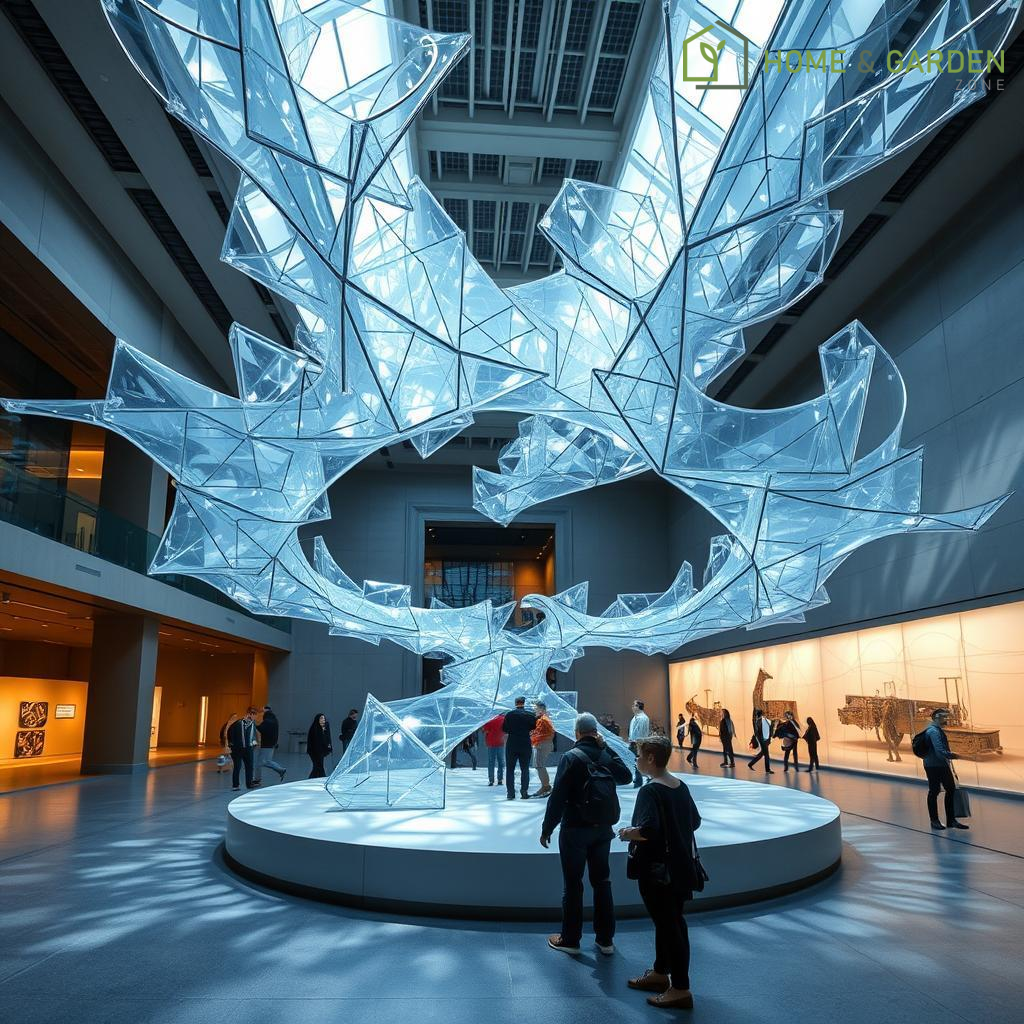
In the realm where art intersects with psychology and neuroscience, Carsten Höller stands as a pivotal figure, constantly challenging our understanding of perception and reality. His thought-provoking explorations, particularly at the MIT List Visual Arts Center, delve into the enigmatic landscapes of sleep, dreams, and the potential for a shared human experience beyond waking consciousness.
The Subconscious as the Grand Architect
Höller frequently articulates a profound perspective on the dreaming mind, christening it "the most powerful architect." This moniker is not merely poetic; it reflects a deep appreciation for the subconscious's unparalleled capacity to construct intricate, immersive realities during sleep. Unlike conscious thought, which often operates within logical constraints, the dreaming mind builds worlds without visible blueprints, shaping narratives and environments that are both intensely personal and universally resonant. At the MIT exhibition, this concept is central, inviting viewers to ponder the origins of these nocturnal constructions and their profound influence on our waking lives.
Guiding the Dreamscape: Towards Collective Consciousness
A cornerstone of Höller's discourse revolves around the fascinating idea of 'guided sleep.' While acknowledging that dreams, by their very nature, resist absolute control, his work investigates methodologies to subtly influence the dream narrative. This involves creating specific sensory environments or shared stimuli designed to resonate within multiple individuals simultaneously. The ambition is not to dictate dreams, but to cultivate a fertile ground where dreams might "echo across multiple minds," fostering a collective, albeit individually experienced, consciousness. This paradigm shift from solitary dreaming to a potentially shared dreamscape challenges conventional notions of individual perception and opens avenues for understanding human connection at a deeper, non-verbal level.
Höller's Vision: Redefining Human Perception
Höller's tenure at MIT, a nexus of scientific inquiry and artistic innovation, provided an ideal backdrop for these explorations. His installations are not merely static displays; they are often interactive environments that prompt participants into altered states, inviting introspection and a re-evaluation of sensory input. By focusing on sleep and dreams, Höller pushes the boundaries of what art can achieve, moving beyond visual aesthetics to engage directly with our most intimate and often unexamined mental processes. His work serves as a compelling reminder that the human mind, particularly in its unconscious state, remains a vast, uncharted territory with immense creative and connective potential.
Summary
Carsten Höller's impactful work, notably at the MIT List Visual Arts Center, masterfully intertwines art with the mysteries of the human mind. Through concepts like "the most powerful architect" of the subconscious and the innovative idea of 'guided sleep' leading to collective dreaming, Höller challenges our fundamental understanding of consciousness. His installations invite participants into a shared exploration of perception, illustrating how deeply interwoven our individual mental landscapes can become, and prompting a deeper appreciation for the mind's creative and connective power.
Resources
- Designboom: Carsten Höller Interview (specific article about the MIT exhibition and sleep concepts)
- MIT List Visual Arts Center: Exhibition archives for "The Great Yes, The Great No"
- Artforum International: Review of Carsten Höller's work on consciousness and perception
Details
Author




Latest articles




 }})
You can now watch HBO Max for $10
In the realm where art intersects with psychology and neuroscience, Carsten Höller stands as a pivotal figure, constantly challenging our understanding of perception and reality. His thought-provoking explorations, particularly at the MIT List Visual Arts Center, delve into the enigmatic landscapes of sleep, dreams, and the potential for a shared human experience beyond waking consciousness.
The Subconscious as the Grand Architect
Höller frequently articulates a profound perspective on the dreaming mind, christening it "the most powerful architect." This moniker is not merely poetic; it reflects a deep appreciation for the subconscious's unparalleled capacity to construct intricate, immersive realities during sleep. Unlike conscious thought, which often operates within logical constraints, the dreaming mind builds worlds without visible blueprints, shaping narratives and environments that are both intensely personal and universally resonant. At the MIT exhibition, this concept is central, inviting viewers to ponder the origins of these nocturnal constructions and their profound influence on our waking lives.
Guiding the Dreamscape: Towards Collective Consciousness
A cornerstone of Höller's discourse revolves around the fascinating idea of 'guided sleep.' While acknowledging that dreams, by their very nature, resist absolute control, his work investigates methodologies to subtly influence the dream narrative. This involves creating specific sensory environments or shared stimuli designed to resonate within multiple individuals simultaneously. The ambition is not to dictate dreams, but to cultivate a fertile ground where dreams might "echo across multiple minds," fostering a collective, albeit individually experienced, consciousness. This paradigm shift from solitary dreaming to a potentially shared dreamscape challenges conventional notions of individual perception and opens avenues for understanding human connection at a deeper, non-verbal level.
Höller's Vision: Redefining Human Perception
Höller's tenure at MIT, a nexus of scientific inquiry and artistic innovation, provided an ideal backdrop for these explorations. His installations are not merely static displays; they are often interactive environments that prompt participants into altered states, inviting introspection and a re-evaluation of sensory input. By focusing on sleep and dreams, Höller pushes the boundaries of what art can achieve, moving beyond visual aesthetics to engage directly with our most intimate and often unexamined mental processes. His work serves as a compelling reminder that the human mind, particularly in its unconscious state, remains a vast, uncharted territory with immense creative and connective potential.
Summary
Carsten Höller's impactful work, notably at the MIT List Visual Arts Center, masterfully intertwines art with the mysteries of the human mind. Through concepts like "the most powerful architect" of the subconscious and the innovative idea of 'guided sleep' leading to collective dreaming, Höller challenges our fundamental understanding of consciousness. His installations invite participants into a shared exploration of perception, illustrating how deeply interwoven our individual mental landscapes can become, and prompting a deeper appreciation for the mind's creative and connective power.
Resources
- Designboom: Carsten Höller Interview (specific article about the MIT exhibition and sleep concepts)
- MIT List Visual Arts Center: Exhibition archives for "The Great Yes, The Great No"
- Artforum International: Review of Carsten Höller's work on consciousness and perception
Latest articles
You can now watch HBO Max for $10
Similar posts



This is a page that only logged-in people can visit. Don't you feel special? Try clicking on a button below to do some things you can't do when you're logged out.
Example modal
At your leisure, please peruse this excerpt from a whale of a tale.
Chapter 1: Loomings.
Call me Ishmael. Some years ago—never mind how long precisely—having little or no money in my purse, and nothing particular to interest me on shore, I thought I would sail about a little and see the watery part of the world. It is a way I have of driving off the spleen and regulating the circulation. Whenever I find myself growing grim about the mouth; whenever it is a damp, drizzly November in my soul; whenever I find myself involuntarily pausing before coffin warehouses, and bringing up the rear of every funeral I meet; and especially whenever my hypos get such an upper hand of me, that it requires a strong moral principle to prevent me from deliberately stepping into the street, and methodically knocking people's hats off—then, I account it high time to get to sea as soon as I can. This is my substitute for pistol and ball. With a philosophical flourish Cato throws himself upon his sword; I quietly take to the ship. There is nothing surprising in this. If they but knew it, almost all men in their degree, some time or other, cherish very nearly the same feelings towards the ocean with me.
Comment