Beyond Automation: How Hong Kong's Architectural Innovators Are Forging AI's Role as a Personal Design Ally
Introduction: The Shifting Paradigm of AI in Architecture
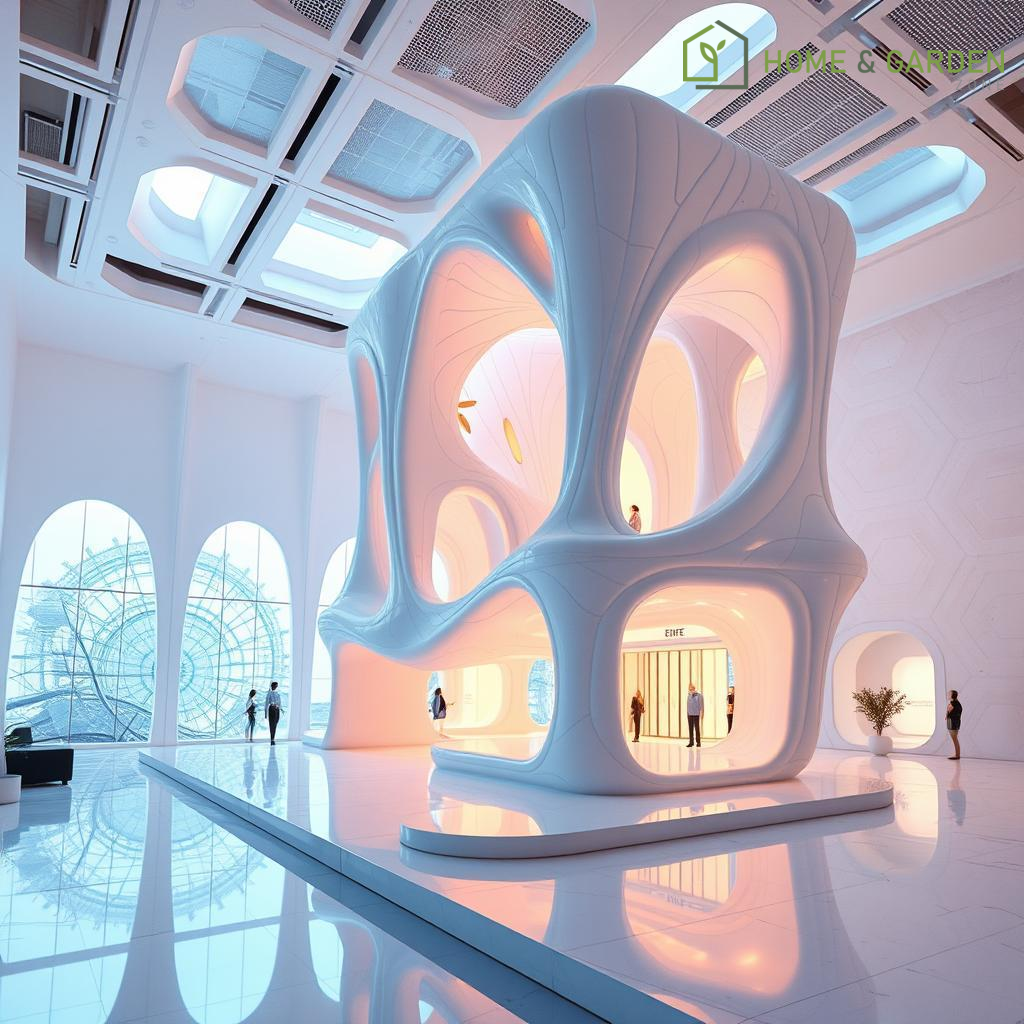
For years, the discourse around Artificial Intelligence in creative fields, particularly architecture, often centered on its capacity for automation or replication. AI was perceived by many as a sophisticated tool for generating variations, a "copycat" of existing styles, or merely an advanced rendering engine. However, a significant paradigm shift is underway, spearheaded by visionary institutions in locales like Hong Kong. These architectural schools are moving beyond the rudimentary applications of AI, actively cultivating its evolution into a truly collaborative partner throughout the intricate stages of architectural design.
From Generative Tools to Intelligent Companions
Early Applications vs. Evolving Capabilities
Initially, AI’s appeal in architecture stemmed from its ability to rapidly produce design alternatives or process vast datasets for tasks like site analysis. While valuable, these applications often lacked the nuanced understanding required for genuine design partnership. The current trajectory, however, emphasizes AI models that learn, adapt, and anticipate designer needs. This evolution transforms AI from a mere executor of commands into a proactive assistant capable of interpreting design intent.
AI in Conceptualization and Iterative Design
Modern architectural education is increasingly integrating AI as a co-creator in the earliest conceptual phases. Instead of simply generating random forms, AI systems are being developed to engage in a dialogue with designers, offering insights based on contextual data, historical precedents, and user preferences. This collaborative process extends to iterative design, where AI can quickly simulate performance metrics—structural integrity, energy efficiency, daylighting—allowing architects to explore complex design spaces with unprecedented speed and informed decision-making. This significantly reduces the design cycle and fosters innovation.
Optimizing Performance and Sustainability
Beyond aesthetics and form generation, AI's role as a design partner shines in the realm of performance optimization. By leveraging advanced algorithms, AI can analyze complex environmental data, material properties, and building codes to suggest design solutions that are not only aesthetically pleasing but also highly efficient and sustainable. This capability allows architects to integrate sustainable practices intrinsically from the initial sketches, moving beyond reactive adjustments to proactive, data-driven design choices.
The Collaborative Human-AI Workflow
The essence of AI evolving into a "personal design partner" lies in the establishment of a seamless, intuitive workflow between human creativity and artificial intelligence. The human architect remains the visionary, the source of original ideas, and the arbiter of aesthetic and experiential quality. AI, in this partnership, acts as an intelligent extension of the architect’s capabilities, managing computational complexities, providing informed feedback, and suggesting novel pathways that might otherwise be overlooked. This synergy empowers architects to push creative boundaries while ensuring the functional and sustainable viability of their designs, ultimately leading to more innovative and impactful built environments.
Summary: A New Era of Architectural Design
The journey of AI in architecture from a generic tool to a personalized design partner signifies a profound transformation in how buildings are conceived, developed, and realized. By fostering AI systems that are intuitive, adaptable, and deeply integrated into the design process, institutions in Hong Kong are demonstrating a compelling future where technology amplifies human creativity, rather than merely automating it. This new era promises more intelligent, sustainable, and human-centric architectural outcomes.
Resources
- Research on AI-driven generative design from the University of Hong Kong's Department of Architecture.
- Studies on human-computer interaction in architectural design from the Chinese University of Hong Kong.
- Articles exploring advanced computational design tools in leading industry publications like Designboom and ArchDaily.
Details
Author



Latest articles





 }})
You can now watch HBO Max for $10
Introduction: The Shifting Paradigm of AI in Architecture
For years, the discourse around Artificial Intelligence in creative fields, particularly architecture, often centered on its capacity for automation or replication. AI was perceived by many as a sophisticated tool for generating variations, a "copycat" of existing styles, or merely an advanced rendering engine. However, a significant paradigm shift is underway, spearheaded by visionary institutions in locales like Hong Kong. These architectural schools are moving beyond the rudimentary applications of AI, actively cultivating its evolution into a truly collaborative partner throughout the intricate stages of architectural design.
From Generative Tools to Intelligent Companions
Early Applications vs. Evolving Capabilities
Initially, AI’s appeal in architecture stemmed from its ability to rapidly produce design alternatives or process vast datasets for tasks like site analysis. While valuable, these applications often lacked the nuanced understanding required for genuine design partnership. The current trajectory, however, emphasizes AI models that learn, adapt, and anticipate designer needs. This evolution transforms AI from a mere executor of commands into a proactive assistant capable of interpreting design intent.
AI in Conceptualization and Iterative Design
Modern architectural education is increasingly integrating AI as a co-creator in the earliest conceptual phases. Instead of simply generating random forms, AI systems are being developed to engage in a dialogue with designers, offering insights based on contextual data, historical precedents, and user preferences. This collaborative process extends to iterative design, where AI can quickly simulate performance metrics—structural integrity, energy efficiency, daylighting—allowing architects to explore complex design spaces with unprecedented speed and informed decision-making. This significantly reduces the design cycle and fosters innovation.
Optimizing Performance and Sustainability
Beyond aesthetics and form generation, AI's role as a design partner shines in the realm of performance optimization. By leveraging advanced algorithms, AI can analyze complex environmental data, material properties, and building codes to suggest design solutions that are not only aesthetically pleasing but also highly efficient and sustainable. This capability allows architects to integrate sustainable practices intrinsically from the initial sketches, moving beyond reactive adjustments to proactive, data-driven design choices.
The Collaborative Human-AI Workflow
The essence of AI evolving into a "personal design partner" lies in the establishment of a seamless, intuitive workflow between human creativity and artificial intelligence. The human architect remains the visionary, the source of original ideas, and the arbiter of aesthetic and experiential quality. AI, in this partnership, acts as an intelligent extension of the architect’s capabilities, managing computational complexities, providing informed feedback, and suggesting novel pathways that might otherwise be overlooked. This synergy empowers architects to push creative boundaries while ensuring the functional and sustainable viability of their designs, ultimately leading to more innovative and impactful built environments.
Summary: A New Era of Architectural Design
The journey of AI in architecture from a generic tool to a personalized design partner signifies a profound transformation in how buildings are conceived, developed, and realized. By fostering AI systems that are intuitive, adaptable, and deeply integrated into the design process, institutions in Hong Kong are demonstrating a compelling future where technology amplifies human creativity, rather than merely automating it. This new era promises more intelligent, sustainable, and human-centric architectural outcomes.
Resources
- Research on AI-driven generative design from the University of Hong Kong's Department of Architecture.
- Studies on human-computer interaction in architectural design from the Chinese University of Hong Kong.
- Articles exploring advanced computational design tools in leading industry publications like Designboom and ArchDaily.
Latest articles
You can now watch HBO Max for $10
Similar posts




This is a page that only logged-in people can visit. Don't you feel special? Try clicking on a button below to do some things you can't do when you're logged out.
Example modal
At your leisure, please peruse this excerpt from a whale of a tale.
Chapter 1: Loomings.
Call me Ishmael. Some years ago—never mind how long precisely—having little or no money in my purse, and nothing particular to interest me on shore, I thought I would sail about a little and see the watery part of the world. It is a way I have of driving off the spleen and regulating the circulation. Whenever I find myself growing grim about the mouth; whenever it is a damp, drizzly November in my soul; whenever I find myself involuntarily pausing before coffin warehouses, and bringing up the rear of every funeral I meet; and especially whenever my hypos get such an upper hand of me, that it requires a strong moral principle to prevent me from deliberately stepping into the street, and methodically knocking people's hats off—then, I account it high time to get to sea as soon as I can. This is my substitute for pistol and ball. With a philosophical flourish Cato throws himself upon his sword; I quietly take to the ship. There is nothing surprising in this. If they but knew it, almost all men in their degree, some time or other, cherish very nearly the same feelings towards the ocean with me.
Comment