Standard Bed Dimensions: An Investigative Guide to Choosing Your Ideal Sleep Surface in CM and Inches
Understanding Standard Bed Dimensions: A Comprehensive Guide
Selecting the right bed size is a critical decision, influencing not only the quality of your sleep but also the functionality and aesthetics of your bedroom. As a senior investigative journalist and data analyst specializing in high-end digital publications, this guide offers a meticulous breakdown of standard bed dimensions across various regions, presented in both centimeters and inches, to empower you in making an informed choice.
Single/Twin Beds: The Foundation for Individual Sleepers
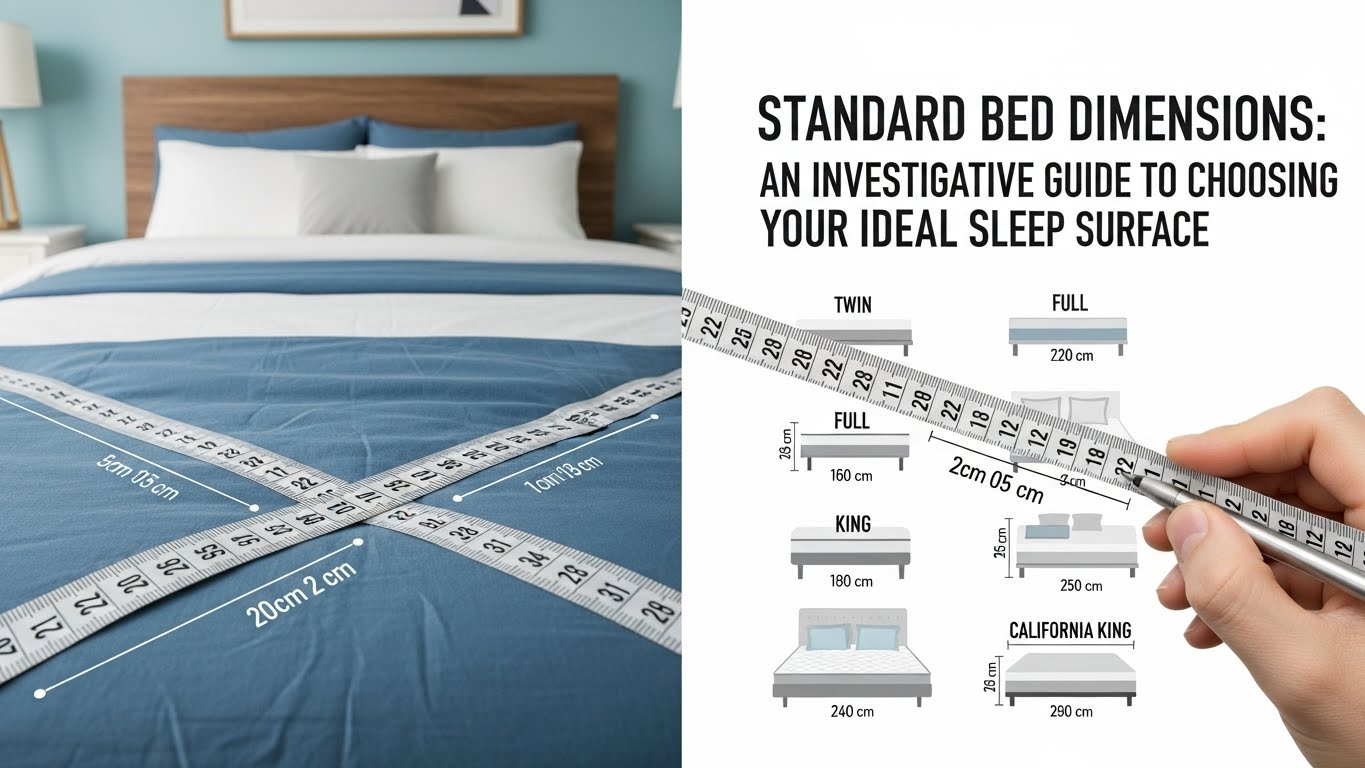
For individuals sleeping alone, the single bed, often referred to as a twin bed in North America, provides ample space. Standard widths typically hover around 90 cm (approximately 35-36 inches), with lengths ranging from 190 to 200 cm (75 to 79 inches). This foundational size caters effectively to most solo adults.
However, personal preference and occasional needs can dictate a larger single option. Some sleepers prefer a wider single bed, around 120 cm (approximately 47 inches), especially if the sleeping space is occasionally shared with a child or pet. This "designer" or "eco-designed" single bed offers enhanced comfort without demanding the footprint of a full double bed.
Double/Full Beds: The Transitional Choice
Moving up in size, the double bed, known as a full bed in the United States, offers more width than a single, suitable for a single adult desiring extra room or for couples who prefer a snug sleeping arrangement. Standard double bed dimensions generally fall around 135-140 cm (53-55 inches) in width and 190-200 cm (75-79 inches) in length.
Queen Beds: The Popular Choice for Couples
Queen-sized beds represent a significant step up in space, making them a popular choice for couples and individuals who prioritize generous sleeping dimensions. These beds typically measure approximately 150-160 cm (59-63 inches) in width and 200-203 cm (79-80 inches) in length, offering a comfortable balance between spaciousness and room compatibility.
King Beds: The Ultimate in Sleep Luxury
For those seeking the utmost in sleeping luxury and sprawling space, king-sized beds are the pinnacle. International standards vary slightly, but generally, king beds are around 180-193 cm (71-76 inches) in width and 200-203 cm (79-80 inches) in length. North America also offers the "California King," a slightly narrower but longer variant, at roughly 183 cm (72 inches) wide by 213 cm (84 inches) long, ideal for taller individuals.
Special Considerations: The "Yours + 20 cm" Rule and Scandinavian Sizes
When selecting your ideal bed length, a practical guideline often recommended by experts is to choose a bed that is at least "yours + 20 cm" (your height plus approximately 8 inches). This allows for free movement and ensures your feet do not hang over the edge, contributing significantly to sleep comfort.
For exceptionally tall individuals, regional variations can be highly beneficial. For instance, Scandinavian bed bases sometimes extend to 90x210 cm (approximately 35x83 inches), providing that crucial extra length that ensures comfort for those above average height.
Choosing Your Ideal Bed Size
The decision of what bed size to purchase extends beyond mere numbers. Consider these critical factors:
- Sleeper's Height and Body Type: Taller individuals benefit from longer beds (e.g., European lengths, California King).
- Number of Occupants: Single, couple, or occasional co-sleeper (child/pet).
- Bedroom Dimensions: Ensure there is enough space around the bed for movement and other furniture. A bed should not overwhelm the room.
- Personal Sleep Habits: Do you toss and turn? Do you prefer to spread out?
- Budget: Larger beds and mattresses typically come with a higher price tag.
Summary
Navigating the world of bed dimensions requires understanding both metric and imperial measurements, along with global variations. From the compact single to the expansive king, each size serves a distinct purpose. By aligning standard dimensions with personal needs, room capacity, and specific guidelines like the "yours + 20 cm" rule, consumers can confidently select a bed that promises restorative sleep and enhances their living space.
Resources
Details
Author




Latest articles





 }})
You can now watch HBO Max for $10
Understanding Standard Bed Dimensions: A Comprehensive Guide
Selecting the right bed size is a critical decision, influencing not only the quality of your sleep but also the functionality and aesthetics of your bedroom. As a senior investigative journalist and data analyst specializing in high-end digital publications, this guide offers a meticulous breakdown of standard bed dimensions across various regions, presented in both centimeters and inches, to empower you in making an informed choice.
Single/Twin Beds: The Foundation for Individual Sleepers
For individuals sleeping alone, the single bed, often referred to as a twin bed in North America, provides ample space. Standard widths typically hover around 90 cm (approximately 35-36 inches), with lengths ranging from 190 to 200 cm (75 to 79 inches). This foundational size caters effectively to most solo adults.
However, personal preference and occasional needs can dictate a larger single option. Some sleepers prefer a wider single bed, around 120 cm (approximately 47 inches), especially if the sleeping space is occasionally shared with a child or pet. This "designer" or "eco-designed" single bed offers enhanced comfort without demanding the footprint of a full double bed.
Double/Full Beds: The Transitional Choice
Moving up in size, the double bed, known as a full bed in the United States, offers more width than a single, suitable for a single adult desiring extra room or for couples who prefer a snug sleeping arrangement. Standard double bed dimensions generally fall around 135-140 cm (53-55 inches) in width and 190-200 cm (75-79 inches) in length.
Queen Beds: The Popular Choice for Couples
Queen-sized beds represent a significant step up in space, making them a popular choice for couples and individuals who prioritize generous sleeping dimensions. These beds typically measure approximately 150-160 cm (59-63 inches) in width and 200-203 cm (79-80 inches) in length, offering a comfortable balance between spaciousness and room compatibility.
King Beds: The Ultimate in Sleep Luxury
For those seeking the utmost in sleeping luxury and sprawling space, king-sized beds are the pinnacle. International standards vary slightly, but generally, king beds are around 180-193 cm (71-76 inches) in width and 200-203 cm (79-80 inches) in length. North America also offers the "California King," a slightly narrower but longer variant, at roughly 183 cm (72 inches) wide by 213 cm (84 inches) long, ideal for taller individuals.
Special Considerations: The "Yours + 20 cm" Rule and Scandinavian Sizes
When selecting your ideal bed length, a practical guideline often recommended by experts is to choose a bed that is at least "yours + 20 cm" (your height plus approximately 8 inches). This allows for free movement and ensures your feet do not hang over the edge, contributing significantly to sleep comfort.
For exceptionally tall individuals, regional variations can be highly beneficial. For instance, Scandinavian bed bases sometimes extend to 90x210 cm (approximately 35x83 inches), providing that crucial extra length that ensures comfort for those above average height.
Choosing Your Ideal Bed Size
The decision of what bed size to purchase extends beyond mere numbers. Consider these critical factors:
- Sleeper's Height and Body Type: Taller individuals benefit from longer beds (e.g., European lengths, California King).
- Number of Occupants: Single, couple, or occasional co-sleeper (child/pet).
- Bedroom Dimensions: Ensure there is enough space around the bed for movement and other furniture. A bed should not overwhelm the room.
- Personal Sleep Habits: Do you toss and turn? Do you prefer to spread out?
- Budget: Larger beds and mattresses typically come with a higher price tag.
Summary
Navigating the world of bed dimensions requires understanding both metric and imperial measurements, along with global variations. From the compact single to the expansive king, each size serves a distinct purpose. By aligning standard dimensions with personal needs, room capacity, and specific guidelines like the "yours + 20 cm" rule, consumers can confidently select a bed that promises restorative sleep and enhances their living space.
Resources
Latest articles
You can now watch HBO Max for $10
Similar posts




This is a page that only logged-in people can visit. Don't you feel special? Try clicking on a button below to do some things you can't do when you're logged out.
Example modal
At your leisure, please peruse this excerpt from a whale of a tale.
Chapter 1: Loomings.
Call me Ishmael. Some years ago—never mind how long precisely—having little or no money in my purse, and nothing particular to interest me on shore, I thought I would sail about a little and see the watery part of the world. It is a way I have of driving off the spleen and regulating the circulation. Whenever I find myself growing grim about the mouth; whenever it is a damp, drizzly November in my soul; whenever I find myself involuntarily pausing before coffin warehouses, and bringing up the rear of every funeral I meet; and especially whenever my hypos get such an upper hand of me, that it requires a strong moral principle to prevent me from deliberately stepping into the street, and methodically knocking people's hats off—then, I account it high time to get to sea as soon as I can. This is my substitute for pistol and ball. With a philosophical flourish Cato throws himself upon his sword; I quietly take to the ship. There is nothing surprising in this. If they but knew it, almost all men in their degree, some time or other, cherish very nearly the same feelings towards the ocean with me.
Comment