Heilig Objects Transforms Reclaimed Fiberglass into Luminous, Structural Art
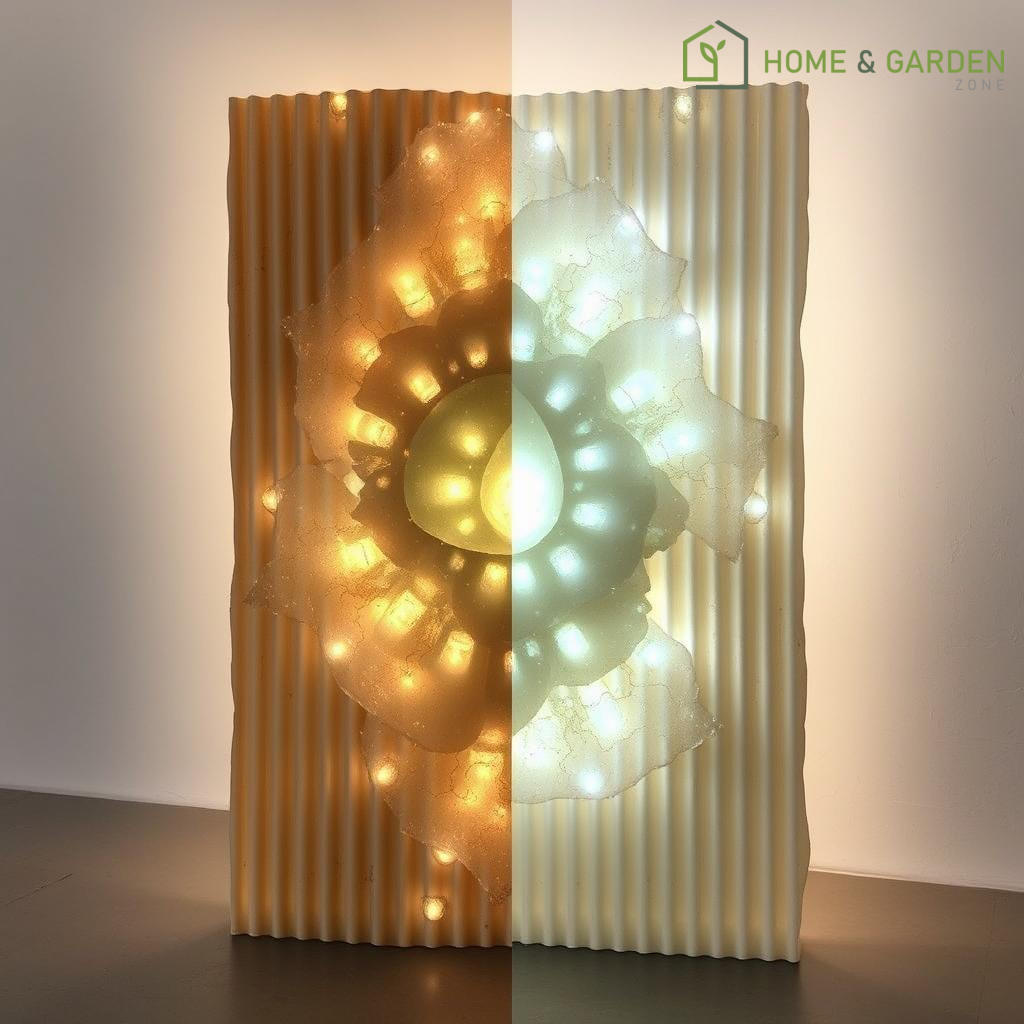
The Material Reinvention of Luminous Sculpture
In a notable departure from conventional art practices, Heilig Objects, an innovative design studio, has redefined the aesthetic and structural potential of reclaimed corrugated fiberglass panels. Their work culminates in luminous sculptures where the intrinsic qualities of fiberglass are celebrated as the primary material expression, rather than relegated to a mere decorative function. This approach aligns with a growing movement towards sustainable artistry, challenging perceptions of waste materials and elevating them into objects of profound beauty and utility.
Reclaiming the Industrial Aesthetic
The core of Heilig Objects' methodology lies in the deliberate selection and transformation of industrial cast-offs. Corrugated fiberglass, often found in utilitarian applications like roofing or partitions, possesses inherent translucence and structural rigidity. Rather than concealing these characteristics, the studio amplifies them. The material's existing ripples and textures, a byproduct of its manufacturing process, become integral to the sculpture's form, creating dynamic surfaces that interact uniquely with light.
When illuminated, the reclaimed panels reveal a complex interplay of shadows and glows, turning the once mundane material into a vibrant spectacle. The luminosity is not an external application but an internal quality brought forth by thoughtful design. This method ensures that the fiberglass retains its honest material identity, celebrating its history and inherent properties.
Process and Philosophy: Beyond Decoration
Heilig Objects' design philosophy emphasizes integrity and authenticity. Each panel is meticulously processed, often cleaned and reshaped, but crucially, its corrugated nature and fibrous composition are preserved. This commitment to the material's original state ensures that the finished sculptures are not simply objects adorned with fiberglass, but rather, works where the fiberglass itself is the subject.
The resultant sculptures function as both artistic statements and functional lighting elements, blurring the lines between art, design, and environmental consciousness. By working with reclaimed materials, Heilig Objects contributes to a circular economy model, demonstrating that discarded industrial components can possess significant artistic and commercial value when reimagined through a lens of creative innovation.
Summary
Heilig Objects stands out for its masterful transformation of reclaimed corrugated fiberglass into captivating luminous sculptures. Their work exemplifies a deep respect for material honesty, allowing the inherent characteristics of fiberglass to dictate the form and aesthetic rather than imposing decorative effects. This innovative practice not only yields striking visual art but also champions sustainable design principles, proving that beauty and function can emerge from the reimagining of industrial waste.
Resources
- Designboom | Architecture & Design Magazine - Articles featuring Heilig Objects' work.
- Heilig Objects Official Website - Provides insight into their design philosophy and portfolio.
- Architectural Digest - Publications occasionally cover artists and designers working with sustainable or unconventional materials.
Details
Author


Latest articles



 }})
You can now watch HBO Max for $10
The Material Reinvention of Luminous Sculpture
In a notable departure from conventional art practices, Heilig Objects, an innovative design studio, has redefined the aesthetic and structural potential of reclaimed corrugated fiberglass panels. Their work culminates in luminous sculptures where the intrinsic qualities of fiberglass are celebrated as the primary material expression, rather than relegated to a mere decorative function. This approach aligns with a growing movement towards sustainable artistry, challenging perceptions of waste materials and elevating them into objects of profound beauty and utility.
Reclaiming the Industrial Aesthetic
The core of Heilig Objects' methodology lies in the deliberate selection and transformation of industrial cast-offs. Corrugated fiberglass, often found in utilitarian applications like roofing or partitions, possesses inherent translucence and structural rigidity. Rather than concealing these characteristics, the studio amplifies them. The material's existing ripples and textures, a byproduct of its manufacturing process, become integral to the sculpture's form, creating dynamic surfaces that interact uniquely with light.
When illuminated, the reclaimed panels reveal a complex interplay of shadows and glows, turning the once mundane material into a vibrant spectacle. The luminosity is not an external application but an internal quality brought forth by thoughtful design. This method ensures that the fiberglass retains its honest material identity, celebrating its history and inherent properties.
Process and Philosophy: Beyond Decoration
Heilig Objects' design philosophy emphasizes integrity and authenticity. Each panel is meticulously processed, often cleaned and reshaped, but crucially, its corrugated nature and fibrous composition are preserved. This commitment to the material's original state ensures that the finished sculptures are not simply objects adorned with fiberglass, but rather, works where the fiberglass itself is the subject.
The resultant sculptures function as both artistic statements and functional lighting elements, blurring the lines between art, design, and environmental consciousness. By working with reclaimed materials, Heilig Objects contributes to a circular economy model, demonstrating that discarded industrial components can possess significant artistic and commercial value when reimagined through a lens of creative innovation.
Summary
Heilig Objects stands out for its masterful transformation of reclaimed corrugated fiberglass into captivating luminous sculptures. Their work exemplifies a deep respect for material honesty, allowing the inherent characteristics of fiberglass to dictate the form and aesthetic rather than imposing decorative effects. This innovative practice not only yields striking visual art but also champions sustainable design principles, proving that beauty and function can emerge from the reimagining of industrial waste.
Resources
- Designboom | Architecture & Design Magazine - Articles featuring Heilig Objects' work.
- Heilig Objects Official Website - Provides insight into their design philosophy and portfolio.
- Architectural Digest - Publications occasionally cover artists and designers working with sustainable or unconventional materials.
Latest articles
You can now watch HBO Max for $10
Similar posts
This is a page that only logged-in people can visit. Don't you feel special? Try clicking on a button below to do some things you can't do when you're logged out.
Example modal
At your leisure, please peruse this excerpt from a whale of a tale.
Chapter 1: Loomings.
Call me Ishmael. Some years ago—never mind how long precisely—having little or no money in my purse, and nothing particular to interest me on shore, I thought I would sail about a little and see the watery part of the world. It is a way I have of driving off the spleen and regulating the circulation. Whenever I find myself growing grim about the mouth; whenever it is a damp, drizzly November in my soul; whenever I find myself involuntarily pausing before coffin warehouses, and bringing up the rear of every funeral I meet; and especially whenever my hypos get such an upper hand of me, that it requires a strong moral principle to prevent me from deliberately stepping into the street, and methodically knocking people's hats off—then, I account it high time to get to sea as soon as I can. This is my substitute for pistol and ball. With a philosophical flourish Cato throws himself upon his sword; I quietly take to the ship. There is nothing surprising in this. If they but knew it, almost all men in their degree, some time or other, cherish very nearly the same feelings towards the ocean with me.
Comment