Arduboy FX-C: A Deep Dive into a Pocket-Sized Powerhouse for Retro Gaming Enthusiasts
Introduction
In a landscape dominated by high-fidelity graphics and sprawling open worlds, a niche yet vibrant segment of the gaming community continues to champion simplicity and ingenuity. The Arduboy FX-C emerges from this spirit, presenting itself not merely as a gaming device but as a compact, open-source platform pushing the boundaries of what a credit card-sized handheld can achieve. Billed as a console that "packs a surprising amount of experiences into a pocket-sized handheld," our investigation delves into whether this diminutive device lives up to its ambitious promise.
Design and Ergonomics
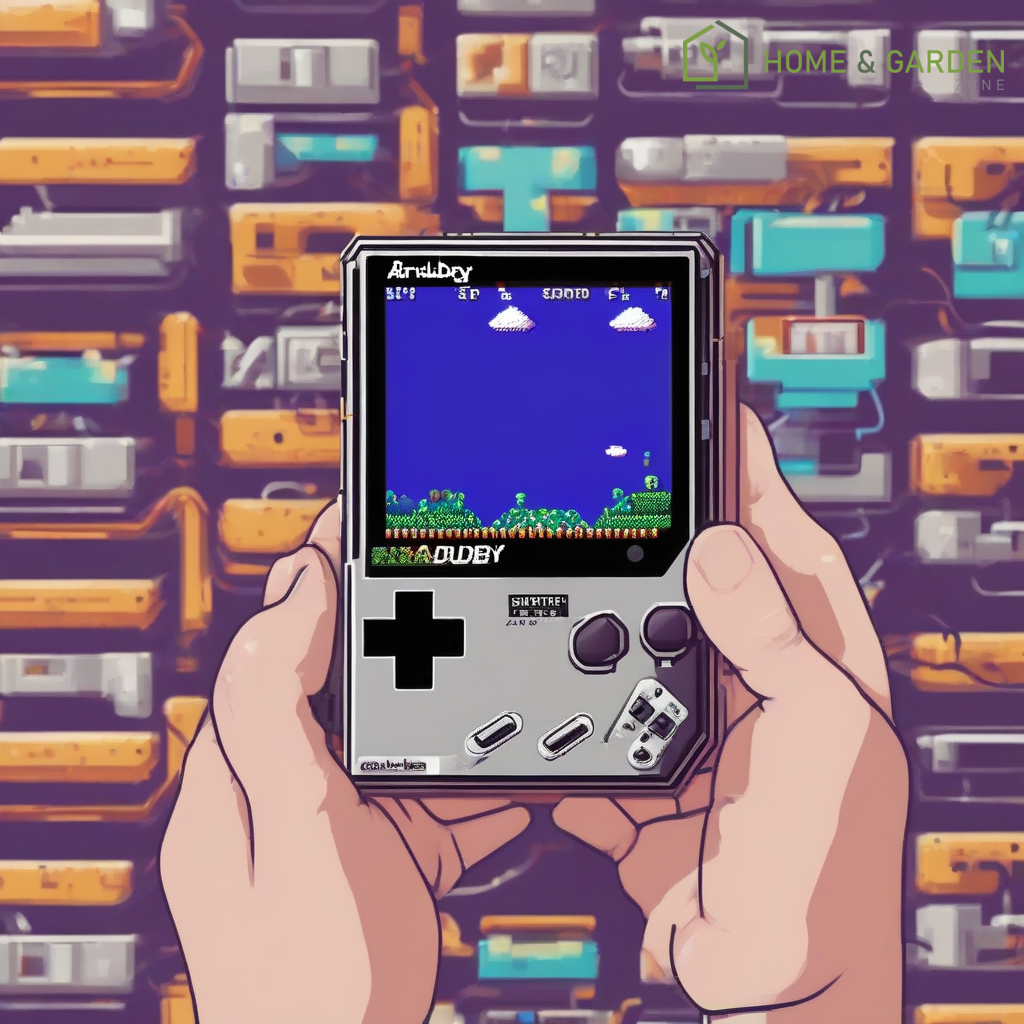
The Arduboy FX-C retains the iconic form factor of its predecessors: a sleek, minimalist design reminiscent of a credit card, featuring a monochrome OLED screen, tactile buttons, and a D-pad. Its diminutive size (approximately 85x55x7mm) makes it genuinely pocketable, an immediate advantage for on-the-go entertainment. While the small buttons require some adaptation for larger hands, their responsiveness is commendable, ensuring precision in gameplay. The bright OLED screen, despite its limited resolution and color palette, delivers crisp visuals, perfectly suited for the retro aesthetic it embraces.
Technical Specifications and Core Innovation
Underpinning the FX-C is an ATmega32U4 microcontroller, a staple in many Arduino-compatible projects, but augmented with a crucial innovation: the addition of a custom flash memory chip. This "FX" chip significantly expands the device's storage capacity, allowing it to hold hundreds of games directly on the device, eliminating the need for constant reprogramming. This is a monumental leap from earlier Arduboy models, which often required users to flash a new game every time they wished to switch titles. The USB-C port further modernizes the device, offering convenient connectivity for programming and charging.
Gaming Experience and Software Ecosystem
The true heart of the Arduboy FX-C lies in its extensive, community-driven game library. Thanks to its open-source nature, a dedicated community of developers continually creates and ports a vast array of 8-bit style games, ranging from classic arcade interpretations to unique puzzle games and platformers. The FX-C's increased storage means players can carry an entire library of these experiences, accessible via an intuitive on-screen menu. While the games are graphically simple, they are often ingeniously designed, offering challenging and engaging gameplay loops that hark back to the golden age of handhelds. The simplicity fosters creativity, and many titles demonstrate remarkable ingenuity within the platform's constraints.
Beyond Gaming: A Maker's Delight
The Arduboy FX-C transcends its role as a mere gaming device; it is a powerful tool for education and creative expression. Its Arduino compatibility means users can program their own games, applications, or even small utilities. This aspect makes it incredibly appealing to makers, educators, and aspiring game developers, offering a tangible platform to learn about microcontrollers, C++ programming, and game design principles. The robust online community provides ample resources, tutorials, and support, fostering a collaborative environment for innovation.
Summary
The Arduboy FX-C undeniably delivers on its promise. It masterfully combines nostalgic appeal with modern convenience, offering a vast, diverse, and surprisingly deep gaming experience within an incredibly compact form factor. Its true genius, however, lies in its open-source foundation, transforming it from a simple entertainment device into a versatile platform for learning and creation. While its monochrome screen and small controls might not appeal to everyone, for retro gaming aficionados, DIY enthusiasts, and budding programmers, the FX-C represents a compelling and remarkably powerful handheld that continues to surprise and inspire.
Resources
Details
Author



Latest articles




 }})
You can now watch HBO Max for $10
Introduction
In a landscape dominated by high-fidelity graphics and sprawling open worlds, a niche yet vibrant segment of the gaming community continues to champion simplicity and ingenuity. The Arduboy FX-C emerges from this spirit, presenting itself not merely as a gaming device but as a compact, open-source platform pushing the boundaries of what a credit card-sized handheld can achieve. Billed as a console that "packs a surprising amount of experiences into a pocket-sized handheld," our investigation delves into whether this diminutive device lives up to its ambitious promise.
Design and Ergonomics
The Arduboy FX-C retains the iconic form factor of its predecessors: a sleek, minimalist design reminiscent of a credit card, featuring a monochrome OLED screen, tactile buttons, and a D-pad. Its diminutive size (approximately 85x55x7mm) makes it genuinely pocketable, an immediate advantage for on-the-go entertainment. While the small buttons require some adaptation for larger hands, their responsiveness is commendable, ensuring precision in gameplay. The bright OLED screen, despite its limited resolution and color palette, delivers crisp visuals, perfectly suited for the retro aesthetic it embraces.
Technical Specifications and Core Innovation
Underpinning the FX-C is an ATmega32U4 microcontroller, a staple in many Arduino-compatible projects, but augmented with a crucial innovation: the addition of a custom flash memory chip. This "FX" chip significantly expands the device's storage capacity, allowing it to hold hundreds of games directly on the device, eliminating the need for constant reprogramming. This is a monumental leap from earlier Arduboy models, which often required users to flash a new game every time they wished to switch titles. The USB-C port further modernizes the device, offering convenient connectivity for programming and charging.
Gaming Experience and Software Ecosystem
The true heart of the Arduboy FX-C lies in its extensive, community-driven game library. Thanks to its open-source nature, a dedicated community of developers continually creates and ports a vast array of 8-bit style games, ranging from classic arcade interpretations to unique puzzle games and platformers. The FX-C's increased storage means players can carry an entire library of these experiences, accessible via an intuitive on-screen menu. While the games are graphically simple, they are often ingeniously designed, offering challenging and engaging gameplay loops that hark back to the golden age of handhelds. The simplicity fosters creativity, and many titles demonstrate remarkable ingenuity within the platform's constraints.
Beyond Gaming: A Maker's Delight
The Arduboy FX-C transcends its role as a mere gaming device; it is a powerful tool for education and creative expression. Its Arduino compatibility means users can program their own games, applications, or even small utilities. This aspect makes it incredibly appealing to makers, educators, and aspiring game developers, offering a tangible platform to learn about microcontrollers, C++ programming, and game design principles. The robust online community provides ample resources, tutorials, and support, fostering a collaborative environment for innovation.
Summary
The Arduboy FX-C undeniably delivers on its promise. It masterfully combines nostalgic appeal with modern convenience, offering a vast, diverse, and surprisingly deep gaming experience within an incredibly compact form factor. Its true genius, however, lies in its open-source foundation, transforming it from a simple entertainment device into a versatile platform for learning and creation. While its monochrome screen and small controls might not appeal to everyone, for retro gaming aficionados, DIY enthusiasts, and budding programmers, the FX-C represents a compelling and remarkably powerful handheld that continues to surprise and inspire.
Resources
Latest articles
You can now watch HBO Max for $10
Similar posts




This is a page that only logged-in people can visit. Don't you feel special? Try clicking on a button below to do some things you can't do when you're logged out.
Example modal
At your leisure, please peruse this excerpt from a whale of a tale.
Chapter 1: Loomings.
Call me Ishmael. Some years ago—never mind how long precisely—having little or no money in my purse, and nothing particular to interest me on shore, I thought I would sail about a little and see the watery part of the world. It is a way I have of driving off the spleen and regulating the circulation. Whenever I find myself growing grim about the mouth; whenever it is a damp, drizzly November in my soul; whenever I find myself involuntarily pausing before coffin warehouses, and bringing up the rear of every funeral I meet; and especially whenever my hypos get such an upper hand of me, that it requires a strong moral principle to prevent me from deliberately stepping into the street, and methodically knocking people's hats off—then, I account it high time to get to sea as soon as I can. This is my substitute for pistol and ball. With a philosophical flourish Cato throws himself upon his sword; I quietly take to the ship. There is nothing surprising in this. If they but knew it, almost all men in their degree, some time or other, cherish very nearly the same feelings towards the ocean with me.
Comment