Katrien Van Der Shueren's "The Ark of Us": Personal Narratives in Contemporary Cabinets of Curiosity
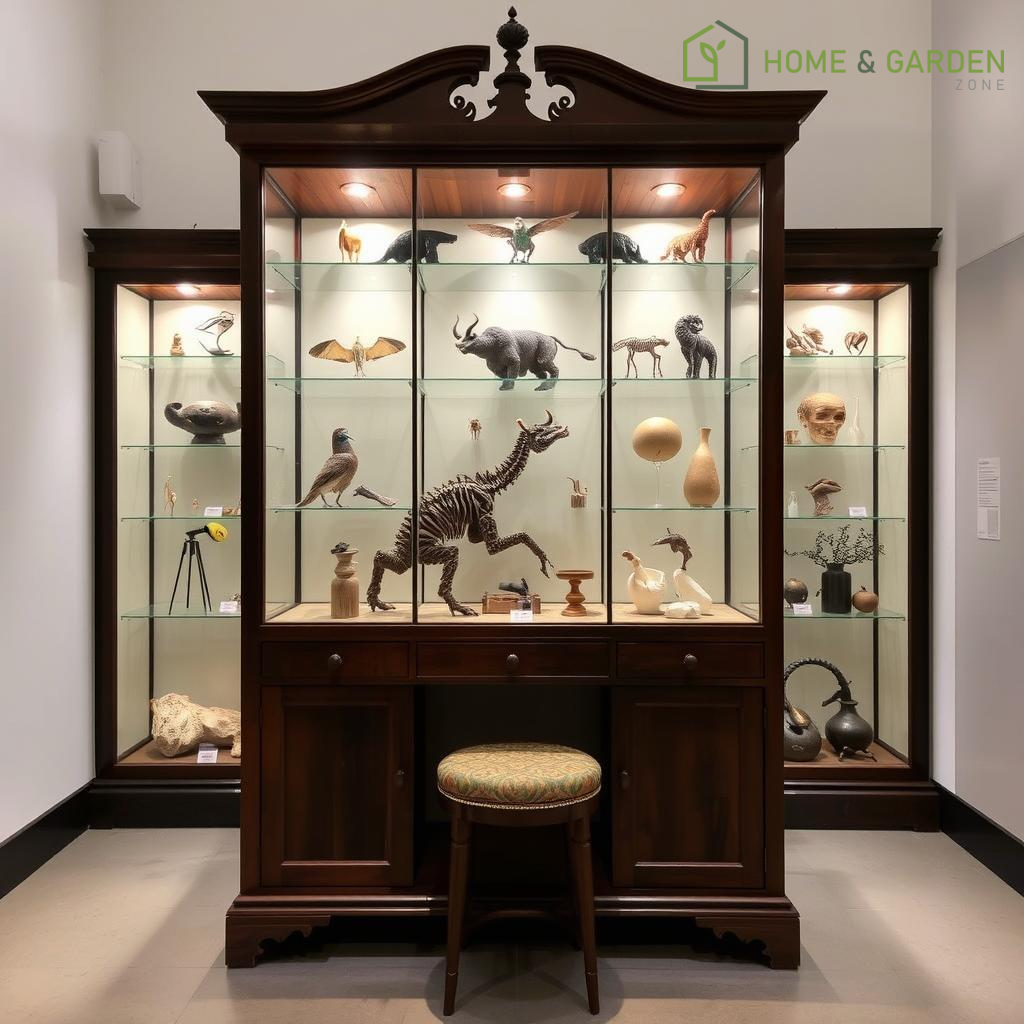
In the evolving landscape of contemporary art, certain artists distinguish themselves by drawing upon historical precedents while imbuing them with profoundly personal and modern interpretations. Among these, the L.A.-based Belgian artist Katrien Van Der Shueren stands out. Her evocative series, "The Ark of Us," reanimates the ancient concept of the cabinet of curiosity, transforming it into a compelling exploration of individual and collective experience.
Reimagining the Cabinet of Curiosity
Historically, cabinets of curiosity—or Wunderkammern—were encyclopedic collections of objects whose categorical boundaries were yet to be defined. These pre-Enlightenment spaces housed a diverse array of artifacts, specimens, and artworks, often reflecting the collector's worldview and status. Van Der Shueren reinterprets this tradition not as a display of exoticism or scientific classification, but as an intimate repository of personal significance.
Her wall-mounted "Ark of Us" sculptures are, at their core, compartments of collected experience. Each piece functions as a miniature world, meticulously arranged to tell a story or evoke a feeling. This approach allows the viewer to engage with the artifacts not merely as objects, but as fragments of a lived journey, echoing the primeval human impulse to gather and preserve that which holds meaning.
The Ark of Us: Forging Portraits from Experience
Van Der Shueren's methodology involves a careful selection and arrangement of found objects, natural elements, and crafted items. These diverse components are thoughtfully composed within their designated spaces, often taking on new resonance through their juxtaposition. The artist's hand is evident in the delicate balance and intentional placement, transforming disparate elements into a cohesive visual narrative.
The "Ark of Us" series transcends mere assemblage; it becomes a form of portraiture. Rather than depicting physical likeness, these works capture the essence of an individual or a moment through the objects they accumulate or are associated with. They are silent testaments to memory, identity, and the quiet accumulation of a life lived, resonating with a universal human desire to define oneself through one's environment and possessions.
The duality highlighted in her work – "primeval and present-day" – stems from this very practice. The act of collecting and organizing, of finding meaning in the tangible world, is an ancient human behavior. Yet, Van Der Shueren’s aesthetic and conceptual framing grounds these practices firmly in contemporary artistic discourse, inviting reflection on modern identity in an increasingly digital and often de-materialized world.
Summary
Katrien Van Der Shueren’s "The Ark of Us" sculptures offer a profound commentary on personal history and the enduring human connection to material culture. By recontextualizing the historical cabinet of curiosity, she creates compelling, wall-mounted narratives that are both deeply personal and universally resonant. Her work reminds us that the most potent stories are often found in the curated fragments of our collected experiences, bridging the ancient impulse to gather with contemporary introspection.
Resources
Details
Author



Latest articles

 }})
You can now watch HBO Max for $10
In the evolving landscape of contemporary art, certain artists distinguish themselves by drawing upon historical precedents while imbuing them with profoundly personal and modern interpretations. Among these, the L.A.-based Belgian artist Katrien Van Der Shueren stands out. Her evocative series, "The Ark of Us," reanimates the ancient concept of the cabinet of curiosity, transforming it into a compelling exploration of individual and collective experience.
Reimagining the Cabinet of Curiosity
Historically, cabinets of curiosity—or Wunderkammern—were encyclopedic collections of objects whose categorical boundaries were yet to be defined. These pre-Enlightenment spaces housed a diverse array of artifacts, specimens, and artworks, often reflecting the collector's worldview and status. Van Der Shueren reinterprets this tradition not as a display of exoticism or scientific classification, but as an intimate repository of personal significance.
Her wall-mounted "Ark of Us" sculptures are, at their core, compartments of collected experience. Each piece functions as a miniature world, meticulously arranged to tell a story or evoke a feeling. This approach allows the viewer to engage with the artifacts not merely as objects, but as fragments of a lived journey, echoing the primeval human impulse to gather and preserve that which holds meaning.
The Ark of Us: Forging Portraits from Experience
Van Der Shueren's methodology involves a careful selection and arrangement of found objects, natural elements, and crafted items. These diverse components are thoughtfully composed within their designated spaces, often taking on new resonance through their juxtaposition. The artist's hand is evident in the delicate balance and intentional placement, transforming disparate elements into a cohesive visual narrative.
The "Ark of Us" series transcends mere assemblage; it becomes a form of portraiture. Rather than depicting physical likeness, these works capture the essence of an individual or a moment through the objects they accumulate or are associated with. They are silent testaments to memory, identity, and the quiet accumulation of a life lived, resonating with a universal human desire to define oneself through one's environment and possessions.
The duality highlighted in her work – "primeval and present-day" – stems from this very practice. The act of collecting and organizing, of finding meaning in the tangible world, is an ancient human behavior. Yet, Van Der Shueren’s aesthetic and conceptual framing grounds these practices firmly in contemporary artistic discourse, inviting reflection on modern identity in an increasingly digital and often de-materialized world.
Summary
Katrien Van Der Shueren’s "The Ark of Us" sculptures offer a profound commentary on personal history and the enduring human connection to material culture. By recontextualizing the historical cabinet of curiosity, she creates compelling, wall-mounted narratives that are both deeply personal and universally resonant. Her work reminds us that the most potent stories are often found in the curated fragments of our collected experiences, bridging the ancient impulse to gather with contemporary introspection.
Resources
Latest articles
You can now watch HBO Max for $10
Similar posts
This is a page that only logged-in people can visit. Don't you feel special? Try clicking on a button below to do some things you can't do when you're logged out.
Example modal
At your leisure, please peruse this excerpt from a whale of a tale.
Chapter 1: Loomings.
Call me Ishmael. Some years ago—never mind how long precisely—having little or no money in my purse, and nothing particular to interest me on shore, I thought I would sail about a little and see the watery part of the world. It is a way I have of driving off the spleen and regulating the circulation. Whenever I find myself growing grim about the mouth; whenever it is a damp, drizzly November in my soul; whenever I find myself involuntarily pausing before coffin warehouses, and bringing up the rear of every funeral I meet; and especially whenever my hypos get such an upper hand of me, that it requires a strong moral principle to prevent me from deliberately stepping into the street, and methodically knocking people's hats off—then, I account it high time to get to sea as soon as I can. This is my substitute for pistol and ball. With a philosophical flourish Cato throws himself upon his sword; I quietly take to the ship. There is nothing surprising in this. If they but knew it, almost all men in their degree, some time or other, cherish very nearly the same feelings towards the ocean with me.
Comment