Francesco Faccin Reimagines Pedestals: From Silent Supports to Dynamic Sculptural Protagonists
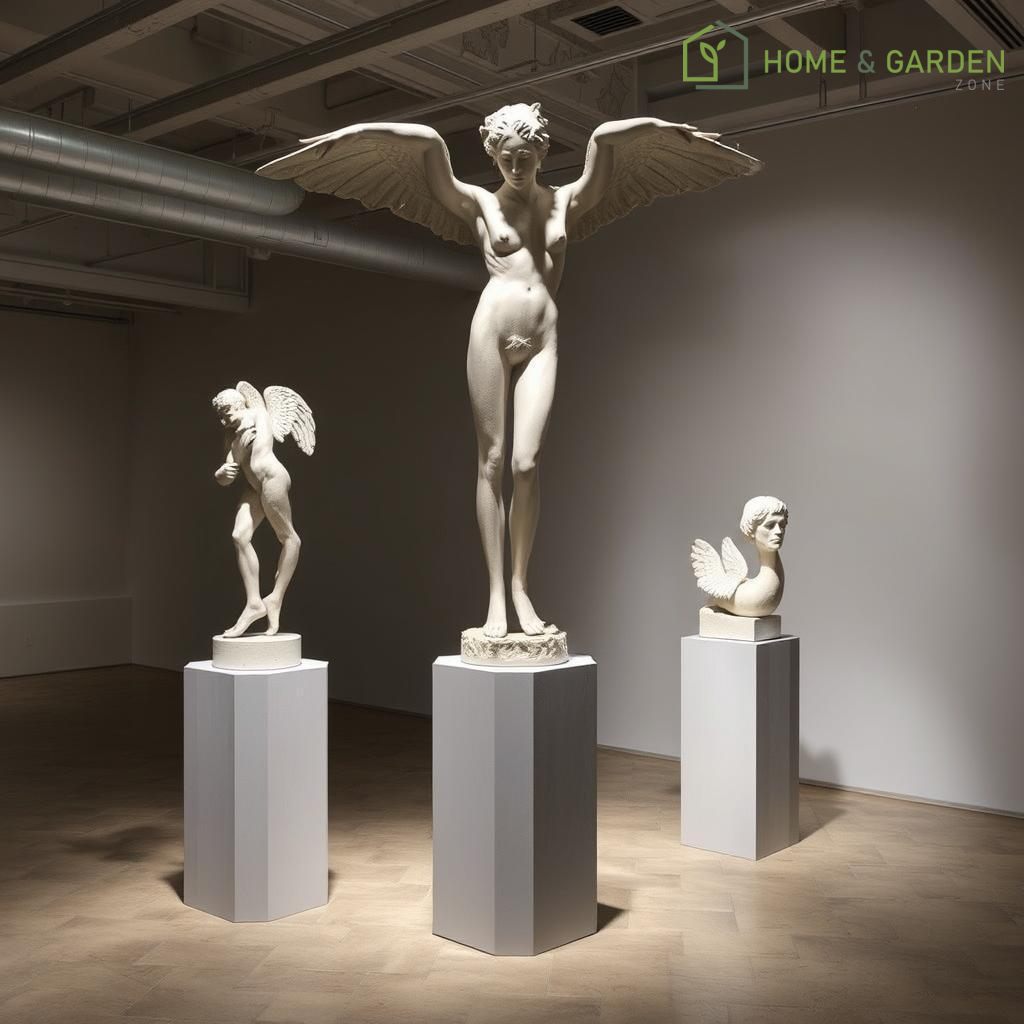
In a compelling re-evaluation of exhibition design, Milanese designer Francesco Faccin has meticulously redefined the role of the pedestal, transforming what was once a subservient structural element into a sculptural protagonist. Through a thoughtful exploration of materials—steel, pyrex, and wood—Faccin’s latest collection delves into the intrinsic architecture of display, challenging observers to consider the profound impact of an object's support on its perception.
Deconstructing the Pedestal: An Architectural Inquiry
Traditionally, pedestals serve a singular purpose: to elevate and present. They are designed to recede into the background, ensuring the focus remains squarely on the artwork or object they hold. Faccin, however, subverts this convention. His investigation begins with the fundamental question of how display influences interpretation and how the support itself can contribute to the narrative of the displayed item. By imbuing the pedestals with their own distinct aesthetic and material integrity, he compels a dual observation – both of the object and its platform.
Materiality as Narrative: Steel, Pyrex, and Wood
Each material chosen by Faccin—steel, pyrex, and wood—is not merely a construction choice but a narrative device. Steel, with its inherent strength and industrial precision, offers a stark, minimalist frame, suggesting permanence and a clean, uninterrupted line of sight. Pyrex, known for its transparency and fragility, introduces an ethereal quality, playing with light and reflection to create a sense of weightlessness or optical illusion. This material choice subtly questions the solidity of display. Wood, conversely, brings warmth, organic texture, and a connection to artisanal craft, grounding the displayed object with a sense of natural history and tactile resonance.
The interplay of these disparate materials creates a dynamic dialogue. A steel pedestal might accentuate the geometric rigor of a contemporary sculpture, while a pyrex counterpart could lend an antique artifact a delicate, almost floating presence. The wooden bases, with their subtle grain and handcrafted appeal, might complement pieces emphasizing organic forms or traditional techniques.
Redefining Display: Beyond Utility
Faccin’s work extends beyond mere aesthetics; it is an academic inquiry into semiotics of space and object. By elevating the pedestal to a sculptural entity, he broadens the scope of what constitutes an exhibition piece. This innovative approach encourages curators, artists, and viewers alike to engage with the entire display apparatus, recognizing its potential to enhance, contextualize, and even challenge the primary subject. His creations are not just supports; they are statements on perception, presence, and the unspoken language of design.
Summary
Francesco Faccin's recent work on pedestals marks a significant departure from conventional exhibition design. By masterfully employing steel, pyrex, and wood, he transforms these functional objects into compelling sculptures that actively participate in the display narrative. This project reasserts the importance of every element within a curated space, urging a more holistic appreciation of design's power to shape experience and meaning.
Resources
Details
Author




Latest articles


 }})
You can now watch HBO Max for $10
In a compelling re-evaluation of exhibition design, Milanese designer Francesco Faccin has meticulously redefined the role of the pedestal, transforming what was once a subservient structural element into a sculptural protagonist. Through a thoughtful exploration of materials—steel, pyrex, and wood—Faccin’s latest collection delves into the intrinsic architecture of display, challenging observers to consider the profound impact of an object's support on its perception.
Deconstructing the Pedestal: An Architectural Inquiry
Traditionally, pedestals serve a singular purpose: to elevate and present. They are designed to recede into the background, ensuring the focus remains squarely on the artwork or object they hold. Faccin, however, subverts this convention. His investigation begins with the fundamental question of how display influences interpretation and how the support itself can contribute to the narrative of the displayed item. By imbuing the pedestals with their own distinct aesthetic and material integrity, he compels a dual observation – both of the object and its platform.
Materiality as Narrative: Steel, Pyrex, and Wood
Each material chosen by Faccin—steel, pyrex, and wood—is not merely a construction choice but a narrative device. Steel, with its inherent strength and industrial precision, offers a stark, minimalist frame, suggesting permanence and a clean, uninterrupted line of sight. Pyrex, known for its transparency and fragility, introduces an ethereal quality, playing with light and reflection to create a sense of weightlessness or optical illusion. This material choice subtly questions the solidity of display. Wood, conversely, brings warmth, organic texture, and a connection to artisanal craft, grounding the displayed object with a sense of natural history and tactile resonance.
The interplay of these disparate materials creates a dynamic dialogue. A steel pedestal might accentuate the geometric rigor of a contemporary sculpture, while a pyrex counterpart could lend an antique artifact a delicate, almost floating presence. The wooden bases, with their subtle grain and handcrafted appeal, might complement pieces emphasizing organic forms or traditional techniques.
Redefining Display: Beyond Utility
Faccin’s work extends beyond mere aesthetics; it is an academic inquiry into semiotics of space and object. By elevating the pedestal to a sculptural entity, he broadens the scope of what constitutes an exhibition piece. This innovative approach encourages curators, artists, and viewers alike to engage with the entire display apparatus, recognizing its potential to enhance, contextualize, and even challenge the primary subject. His creations are not just supports; they are statements on perception, presence, and the unspoken language of design.
Summary
Francesco Faccin's recent work on pedestals marks a significant departure from conventional exhibition design. By masterfully employing steel, pyrex, and wood, he transforms these functional objects into compelling sculptures that actively participate in the display narrative. This project reasserts the importance of every element within a curated space, urging a more holistic appreciation of design's power to shape experience and meaning.
Resources
Latest articles
You can now watch HBO Max for $10
Similar posts



This is a page that only logged-in people can visit. Don't you feel special? Try clicking on a button below to do some things you can't do when you're logged out.
Example modal
At your leisure, please peruse this excerpt from a whale of a tale.
Chapter 1: Loomings.
Call me Ishmael. Some years ago—never mind how long precisely—having little or no money in my purse, and nothing particular to interest me on shore, I thought I would sail about a little and see the watery part of the world. It is a way I have of driving off the spleen and regulating the circulation. Whenever I find myself growing grim about the mouth; whenever it is a damp, drizzly November in my soul; whenever I find myself involuntarily pausing before coffin warehouses, and bringing up the rear of every funeral I meet; and especially whenever my hypos get such an upper hand of me, that it requires a strong moral principle to prevent me from deliberately stepping into the street, and methodically knocking people's hats off—then, I account it high time to get to sea as soon as I can. This is my substitute for pistol and ball. With a philosophical flourish Cato throws himself upon his sword; I quietly take to the ship. There is nothing surprising in this. If they but knew it, almost all men in their degree, some time or other, cherish very nearly the same feelings towards the ocean with me.
Comment