Autonomous Beehives: Nicolas Nielsen's HYVE Project Reimagines Urban Pollination Through Self-Driving Technology
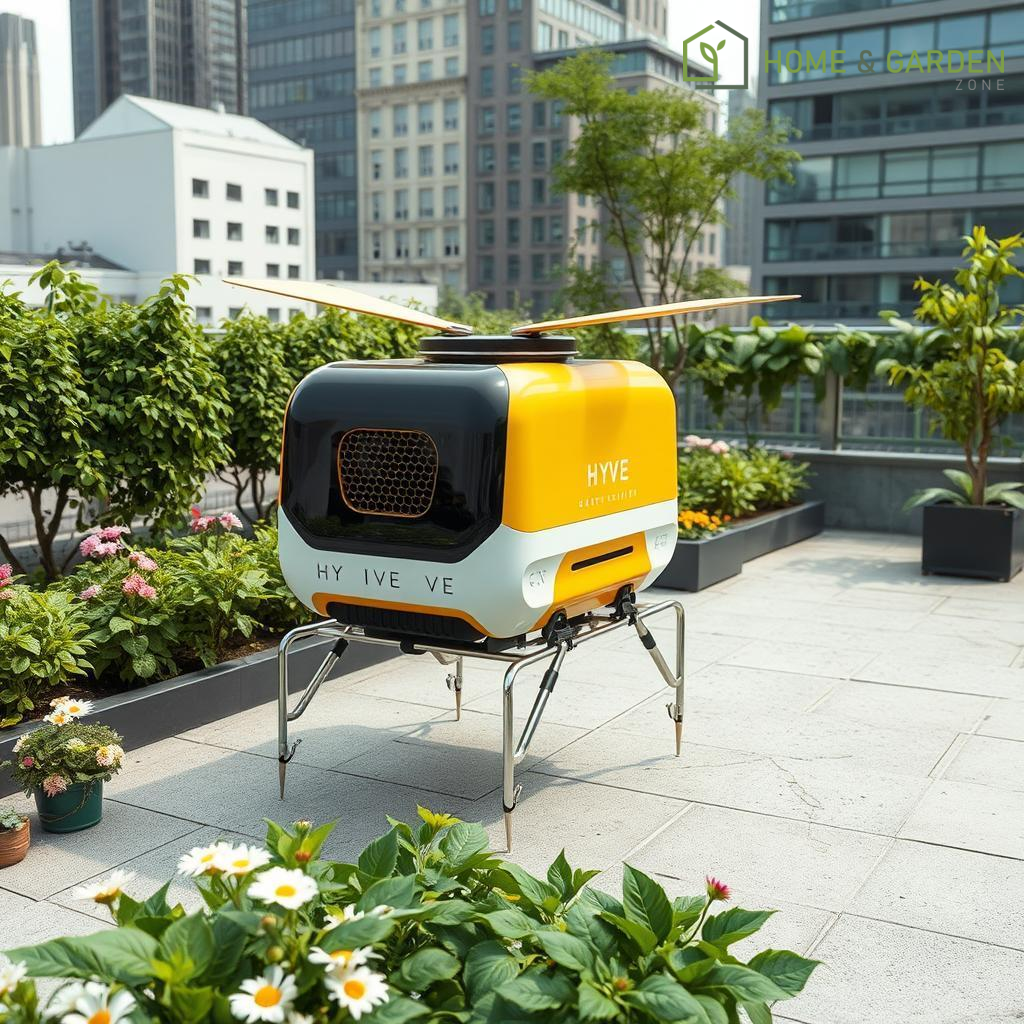
The Autonomous Beekeeper: Reimagining Urban Pollination with HYVE
As cities expand and green spaces become increasingly fragmented, the critical role of pollinators, particularly bees, faces unprecedented challenges. Addressing this ecological imbalance, designer Nicolas Nielsen has introduced the "HYVE" – a visionary concept for a self-driving beehive designed to autonomously navigate urban landscapes, facilitating pollination across disparate green zones.
Concept and Design: A Mobile Ecosystem
The HYVE project represents a significant departure from traditional static beekeeping. Nielsen's design envisions a mobile, self-sufficient unit that acts as a dynamic carrier of pollination. The core idea is to bridge the ecological gaps within urban environments by moving bee colonies to areas most in need of their services. This adaptive approach aims to bolster biodiversity and support urban agriculture by ensuring more widespread and efficient plant reproduction.
The aesthetic of the HYVE blends organic forms with advanced robotics. While specific technical details on propulsion and navigation are still within the conceptual realm, the premise suggests an intelligent system capable of identifying optimal pollination routes and adjusting its position accordingly. This autonomy is crucial for minimizing human intervention and maximizing the beehive's ecological impact.
Bridging Ecological Gaps in Fragmented Urban Spaces
Urbanization often leads to isolated pockets of greenery, making it difficult for bee colonies to effectively pollinate an entire city's flora. The HYVE's mobility directly addresses this issue by providing a mechanism to transport bees between these fragmented green spaces, parks, and rooftop gardens. This not only enhances the health of urban plant life but also supports the resilience of bee populations by expanding their foraging territories.
The concept extends beyond mere transportation; it embodies a holistic approach to urban ecology. By strategically distributing pollination efforts, the HYVE could contribute to the increased yield of urban farms and community gardens, fostering a more sustainable and food-secure urban future.
Challenges and Future Outlook
While innovative, the implementation of autonomous beehives like HYVE presents several considerations. Navigational safety in bustling urban environments, public perception, regulatory frameworks for autonomous vehicles, and the welfare of the bee colonies themselves are all critical factors that would need thorough investigation and development. The integration of advanced sensors, AI-driven pathfinding, and perhaps even collaboration with smart city infrastructure would be essential for a successful deployment.
Nielsen's HYVE stands as a testament to design thinking applied to ecological challenges. It offers a provocative glimpse into a future where technology and nature can synergize to address pressing environmental concerns, particularly in the context of rapidly expanding urban centers. The project underscores the potential for intelligent design to foster biodiversity and create more livable, sustainable cities.
Summary
Nicolas Nielsen's self-driving HYVE beehive proposes a transformative solution for urban pollination, utilizing autonomous technology to transport bee colonies between fragmented green spaces. This innovative concept aims to enhance urban biodiversity, support local agriculture, and adapt to the challenges of modern cityscapes by ensuring more comprehensive pollination efforts. While facing practical hurdles, the HYVE represents a compelling vision for a more ecologically integrated urban future.
Resources
- Designboom: https://www.designboom.com/design/nicolas-nielsen-self-driving-hyve-beehive-pollinate-cities-11-20-2020/
- World Economic Forum (related discussions on urban sustainability and technology): https://www.weforum.org/agenda/archive/
- National Geographic (general information on bee decline and urban ecology): https://www.nationalgeographic.com/animals/insects/facts/honeybee/
Details
Author



Latest articles


 }})
You can now watch HBO Max for $10
The Autonomous Beekeeper: Reimagining Urban Pollination with HYVE
As cities expand and green spaces become increasingly fragmented, the critical role of pollinators, particularly bees, faces unprecedented challenges. Addressing this ecological imbalance, designer Nicolas Nielsen has introduced the "HYVE" – a visionary concept for a self-driving beehive designed to autonomously navigate urban landscapes, facilitating pollination across disparate green zones.
Concept and Design: A Mobile Ecosystem
The HYVE project represents a significant departure from traditional static beekeeping. Nielsen's design envisions a mobile, self-sufficient unit that acts as a dynamic carrier of pollination. The core idea is to bridge the ecological gaps within urban environments by moving bee colonies to areas most in need of their services. This adaptive approach aims to bolster biodiversity and support urban agriculture by ensuring more widespread and efficient plant reproduction.
The aesthetic of the HYVE blends organic forms with advanced robotics. While specific technical details on propulsion and navigation are still within the conceptual realm, the premise suggests an intelligent system capable of identifying optimal pollination routes and adjusting its position accordingly. This autonomy is crucial for minimizing human intervention and maximizing the beehive's ecological impact.
Bridging Ecological Gaps in Fragmented Urban Spaces
Urbanization often leads to isolated pockets of greenery, making it difficult for bee colonies to effectively pollinate an entire city's flora. The HYVE's mobility directly addresses this issue by providing a mechanism to transport bees between these fragmented green spaces, parks, and rooftop gardens. This not only enhances the health of urban plant life but also supports the resilience of bee populations by expanding their foraging territories.
The concept extends beyond mere transportation; it embodies a holistic approach to urban ecology. By strategically distributing pollination efforts, the HYVE could contribute to the increased yield of urban farms and community gardens, fostering a more sustainable and food-secure urban future.
Challenges and Future Outlook
While innovative, the implementation of autonomous beehives like HYVE presents several considerations. Navigational safety in bustling urban environments, public perception, regulatory frameworks for autonomous vehicles, and the welfare of the bee colonies themselves are all critical factors that would need thorough investigation and development. The integration of advanced sensors, AI-driven pathfinding, and perhaps even collaboration with smart city infrastructure would be essential for a successful deployment.
Nielsen's HYVE stands as a testament to design thinking applied to ecological challenges. It offers a provocative glimpse into a future where technology and nature can synergize to address pressing environmental concerns, particularly in the context of rapidly expanding urban centers. The project underscores the potential for intelligent design to foster biodiversity and create more livable, sustainable cities.
Summary
Nicolas Nielsen's self-driving HYVE beehive proposes a transformative solution for urban pollination, utilizing autonomous technology to transport bee colonies between fragmented green spaces. This innovative concept aims to enhance urban biodiversity, support local agriculture, and adapt to the challenges of modern cityscapes by ensuring more comprehensive pollination efforts. While facing practical hurdles, the HYVE represents a compelling vision for a more ecologically integrated urban future.
Resources
- Designboom: https://www.designboom.com/design/nicolas-nielsen-self-driving-hyve-beehive-pollinate-cities-11-20-2020/
- World Economic Forum (related discussions on urban sustainability and technology): https://www.weforum.org/agenda/archive/
- National Geographic (general information on bee decline and urban ecology): https://www.nationalgeographic.com/animals/insects/facts/honeybee/
Latest articles
You can now watch HBO Max for $10
Similar posts

This is a page that only logged-in people can visit. Don't you feel special? Try clicking on a button below to do some things you can't do when you're logged out.
Example modal
At your leisure, please peruse this excerpt from a whale of a tale.
Chapter 1: Loomings.
Call me Ishmael. Some years ago—never mind how long precisely—having little or no money in my purse, and nothing particular to interest me on shore, I thought I would sail about a little and see the watery part of the world. It is a way I have of driving off the spleen and regulating the circulation. Whenever I find myself growing grim about the mouth; whenever it is a damp, drizzly November in my soul; whenever I find myself involuntarily pausing before coffin warehouses, and bringing up the rear of every funeral I meet; and especially whenever my hypos get such an upper hand of me, that it requires a strong moral principle to prevent me from deliberately stepping into the street, and methodically knocking people's hats off—then, I account it high time to get to sea as soon as I can. This is my substitute for pistol and ball. With a philosophical flourish Cato throws himself upon his sword; I quietly take to the ship. There is nothing surprising in this. If they but knew it, almost all men in their degree, some time or other, cherish very nearly the same feelings towards the ocean with me.
Comment