The Laundry Chair: Simone Giertz Transforms the Perennial Pile into a Purposeful Perch
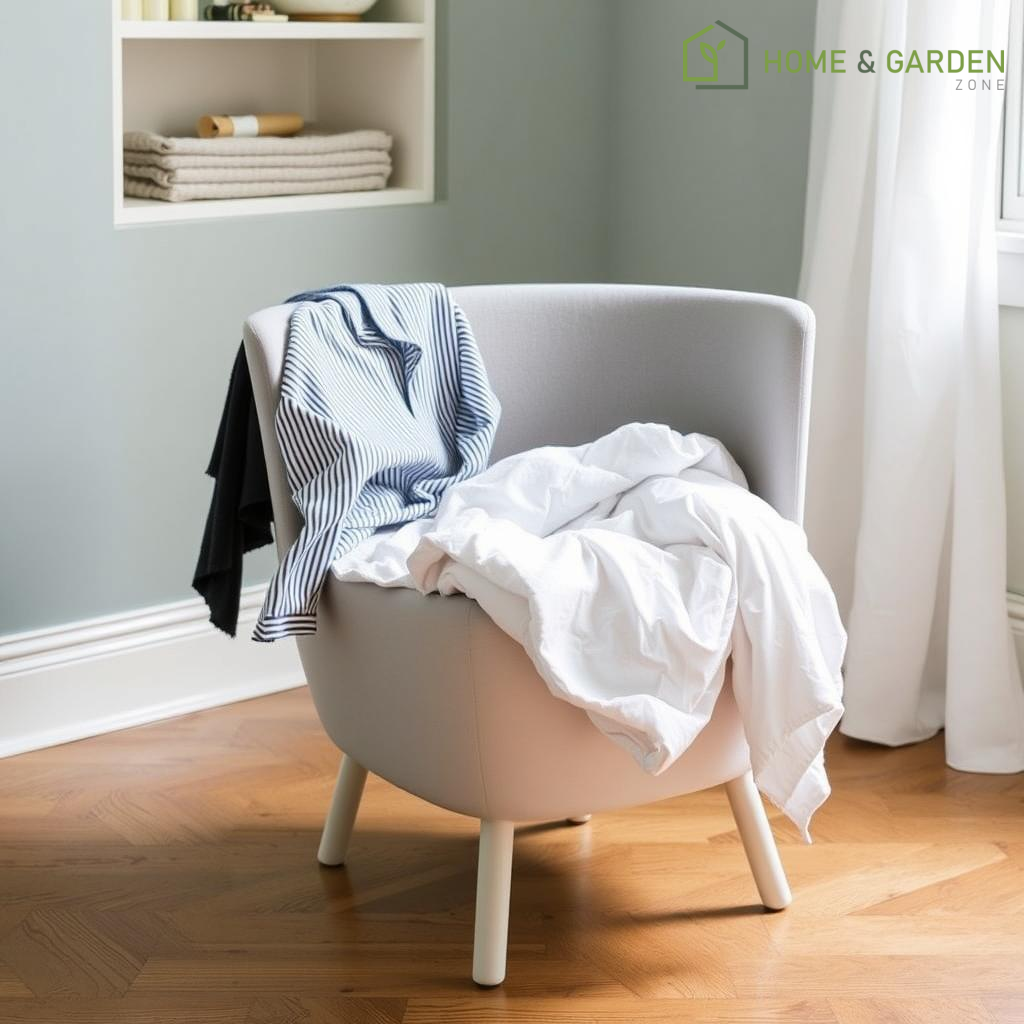
The Unspoken Problem: The Clothes Chair
For many, the "clothes chair" is not a piece of furniture bought, but rather an inevitable accumulation. That ever-growing mound of "not quite dirty, not quite clean" garments often colonizes a forgotten armchair, a corner of the bed, or indeed, any available surface. It's a common affliction of modern living, a testament to indecision and the minor effort required to put things away. Enter Simone Giertz, the Swedish inventor and YouTuber known for her delightfully impractical (and occasionally practical) "shitty robots" and innovative product designs, who has now directly addressed this ubiquitous domestic challenge.
Introducing the Laundry Chair by Every Day Robots
Giertz, through her design company Every Day Robots, launched the Laundry Chair, a product that cleverly acknowledges and legitimizes the informal "clothes chair" phenomenon. Far from merely being a place to dump clothes, Giertz's design integrates thoughtful features that aim to bring order and intention to the often-chaotic process of managing worn but not dirty attire.
Design and Functionality
The Laundry Chair is not just a chair; it is a system. It features a slatted seat and backrest, allowing clothes to breathe and reducing the likelihood of mildew or permanent creases. Beneath the seat, a spacious drawer or compartment is often incorporated, providing a dedicated space for laundry items awaiting their next journey to the machine or hanger. Some iterations and accessories even include integrated hangers or hooks, encouraging users to sort and air garments rather than simply piling them.
Giertz's approach is characterized by a blend of pragmatism and playful engineering. The chair is designed to be aesthetically pleasing enough to reside in a bedroom or dressing area, elevating the act of temporary clothes storage from an untidy eyesore to a deliberate organizational choice. It acknowledges human behavior rather than fighting against it, providing a designated, ventilated spot that encourages better laundry habits without demanding perfection.
Impact and Reception
The Laundry Chair has resonated strongly with a global audience, tapping into a shared experience of domestic disarray. Its launch was met with enthusiasm from those who had long grappled with the "clothes chair" dilemma. Reviewers and users often praise its clever utility, the quality of its construction, and Giertz's signature blend of wit and practical problem-solving. It represents a shift from purely functional furniture to pieces that understand and adapt to the realities of everyday life, making tidiness a more attainable and less daunting endeavor.
Summary
Simone Giertz's Laundry Chair is more than just a piece of furniture; it is an empathetic design solution to a common household problem. By providing a designated, ventilated, and aesthetically pleasing space for "not quite dirty" clothes, Giertz and Every Day Robots have transformed an accidental pile into an intentional system. It's a testament to design that understands and accommodates human habits, proving that sometimes, the best solutions are those that clean up nicely by acknowledging our imperfections.
Resources
Details
Author



Latest articles




 }})
You can now watch HBO Max for $10
The Unspoken Problem: The Clothes Chair
For many, the "clothes chair" is not a piece of furniture bought, but rather an inevitable accumulation. That ever-growing mound of "not quite dirty, not quite clean" garments often colonizes a forgotten armchair, a corner of the bed, or indeed, any available surface. It's a common affliction of modern living, a testament to indecision and the minor effort required to put things away. Enter Simone Giertz, the Swedish inventor and YouTuber known for her delightfully impractical (and occasionally practical) "shitty robots" and innovative product designs, who has now directly addressed this ubiquitous domestic challenge.
Introducing the Laundry Chair by Every Day Robots
Giertz, through her design company Every Day Robots, launched the Laundry Chair, a product that cleverly acknowledges and legitimizes the informal "clothes chair" phenomenon. Far from merely being a place to dump clothes, Giertz's design integrates thoughtful features that aim to bring order and intention to the often-chaotic process of managing worn but not dirty attire.
Design and Functionality
The Laundry Chair is not just a chair; it is a system. It features a slatted seat and backrest, allowing clothes to breathe and reducing the likelihood of mildew or permanent creases. Beneath the seat, a spacious drawer or compartment is often incorporated, providing a dedicated space for laundry items awaiting their next journey to the machine or hanger. Some iterations and accessories even include integrated hangers or hooks, encouraging users to sort and air garments rather than simply piling them.
Giertz's approach is characterized by a blend of pragmatism and playful engineering. The chair is designed to be aesthetically pleasing enough to reside in a bedroom or dressing area, elevating the act of temporary clothes storage from an untidy eyesore to a deliberate organizational choice. It acknowledges human behavior rather than fighting against it, providing a designated, ventilated spot that encourages better laundry habits without demanding perfection.
Impact and Reception
The Laundry Chair has resonated strongly with a global audience, tapping into a shared experience of domestic disarray. Its launch was met with enthusiasm from those who had long grappled with the "clothes chair" dilemma. Reviewers and users often praise its clever utility, the quality of its construction, and Giertz's signature blend of wit and practical problem-solving. It represents a shift from purely functional furniture to pieces that understand and adapt to the realities of everyday life, making tidiness a more attainable and less daunting endeavor.
Summary
Simone Giertz's Laundry Chair is more than just a piece of furniture; it is an empathetic design solution to a common household problem. By providing a designated, ventilated, and aesthetically pleasing space for "not quite dirty" clothes, Giertz and Every Day Robots have transformed an accidental pile into an intentional system. It's a testament to design that understands and accommodates human habits, proving that sometimes, the best solutions are those that clean up nicely by acknowledging our imperfections.
Resources
Latest articles
You can now watch HBO Max for $10
Similar posts


This is a page that only logged-in people can visit. Don't you feel special? Try clicking on a button below to do some things you can't do when you're logged out.
Example modal
At your leisure, please peruse this excerpt from a whale of a tale.
Chapter 1: Loomings.
Call me Ishmael. Some years ago—never mind how long precisely—having little or no money in my purse, and nothing particular to interest me on shore, I thought I would sail about a little and see the watery part of the world. It is a way I have of driving off the spleen and regulating the circulation. Whenever I find myself growing grim about the mouth; whenever it is a damp, drizzly November in my soul; whenever I find myself involuntarily pausing before coffin warehouses, and bringing up the rear of every funeral I meet; and especially whenever my hypos get such an upper hand of me, that it requires a strong moral principle to prevent me from deliberately stepping into the street, and methodically knocking people's hats off—then, I account it high time to get to sea as soon as I can. This is my substitute for pistol and ball. With a philosophical flourish Cato throws himself upon his sword; I quietly take to the ship. There is nothing surprising in this. If they but knew it, almost all men in their degree, some time or other, cherish very nearly the same feelings towards the ocean with me.
Comment