Wallmakers Transforms 18,000 Discarded Terracotta Cups into a Sinuous Pavilion, Redefining Sustainable Architecture in India
A Poetic Reclamation: Wallmakers' Kulhad Pavilion Redefines Sustainable Design
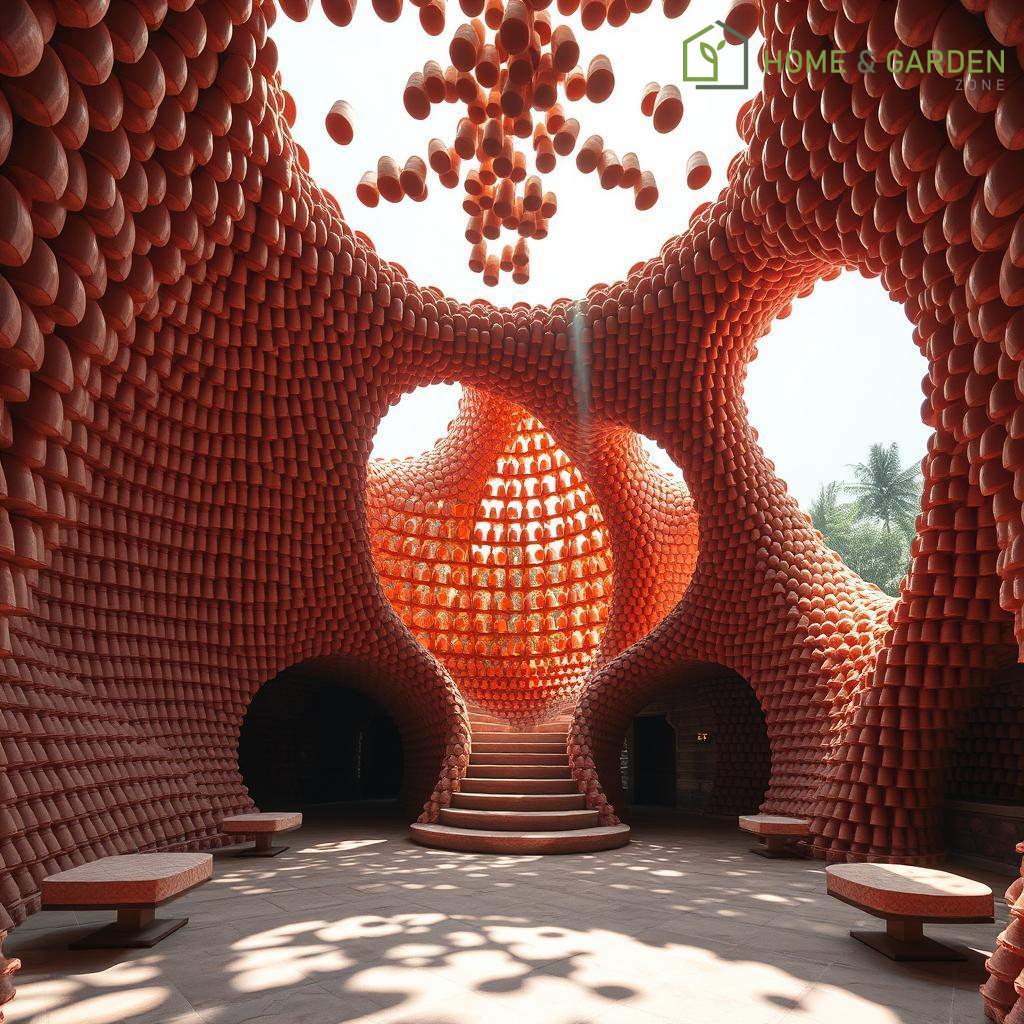
In a compelling demonstration of architectural innovation fused with profound environmental consciousness, the Kerala-based firm Wallmakers has unveiled its "Kulhad Pavilion," a striking structure meticulously crafted from 18,000 disused terracotta cups. This project, situated in Auroville, India, transcends mere aesthetics, serving as a powerful statement on the potential for repurposing waste materials into functional and inspiring spaces.
The Genesis of a Sustainable Vision
The Kulhad Pavilion emerged from a design brief that challenged conventional construction practices, pushing the boundaries of material reuse. Wallmakers, renowned for its commitment to sustainable and vernacular building techniques, identified the ubiquitous "kulhad" – traditional disposable terracotta tea cups – as a prime candidate for a monumental repurposing effort. These cups, typically discarded after a single use, contribute significantly to waste streams. By intercepting 18,000 such cups, the firm not only diverted them from landfills but also imbued them with a new life and purpose.
Architectural Ingenuity: The Catenary Vaults
The structural marvel of the pavilion lies in its three sinuous, compressive catenary vaults. This architectural form, inspired by the natural curve of a hanging chain, distributes forces efficiently, allowing for structures that require minimal tensile strength. Wallmakers ingeniously utilized the terracotta cups as individual modular units, carefully stacking and binding them with a thin layer of mortar to form these self-supporting arches. The inherent compressive strength of terracotta, combined with the structural integrity of the catenary form, creates a remarkably robust and stable enclosure. The resulting interior offers a cool, shaded environment, characteristic of traditional Indian building wisdom that leverages material properties for climatic comfort.
An Aesthetic and Environmental Statement
Beyond its structural innovation, the Kulhad Pavilion makes a profound aesthetic and environmental statement. The warm, earthy tones of the terracotta cups create a visually rich and textured surface, celebrating the material's humble origins. The undulating forms of the vaults evoke a sense of fluid movement and organic growth, harmonizing with the natural surroundings of Auroville. This project exemplifies how design can not only minimize ecological footprint but also enhance the beauty and narrative of a space. It stands as a testament to the idea that waste is merely a resource in the wrong place, waiting for innovative minds to unlock its potential.
Summary
The Kulhad Pavilion by Wallmakers represents a significant stride in sustainable architecture. By transforming 18,000 discarded terracotta cups into a series of elegant catenary vaults, the project showcases the immense potential of upcycling and vernacular materials. It serves as an inspiring prototype for waste reduction, resourcefulness, and responsible design, offering a blueprint for future architectural endeavors that prioritize ecological harmony alongside structural beauty and functionality.
Resources
Details
Author




Latest articles



 }})
You can now watch HBO Max for $10
A Poetic Reclamation: Wallmakers' Kulhad Pavilion Redefines Sustainable Design
In a compelling demonstration of architectural innovation fused with profound environmental consciousness, the Kerala-based firm Wallmakers has unveiled its "Kulhad Pavilion," a striking structure meticulously crafted from 18,000 disused terracotta cups. This project, situated in Auroville, India, transcends mere aesthetics, serving as a powerful statement on the potential for repurposing waste materials into functional and inspiring spaces.
The Genesis of a Sustainable Vision
The Kulhad Pavilion emerged from a design brief that challenged conventional construction practices, pushing the boundaries of material reuse. Wallmakers, renowned for its commitment to sustainable and vernacular building techniques, identified the ubiquitous "kulhad" – traditional disposable terracotta tea cups – as a prime candidate for a monumental repurposing effort. These cups, typically discarded after a single use, contribute significantly to waste streams. By intercepting 18,000 such cups, the firm not only diverted them from landfills but also imbued them with a new life and purpose.
Architectural Ingenuity: The Catenary Vaults
The structural marvel of the pavilion lies in its three sinuous, compressive catenary vaults. This architectural form, inspired by the natural curve of a hanging chain, distributes forces efficiently, allowing for structures that require minimal tensile strength. Wallmakers ingeniously utilized the terracotta cups as individual modular units, carefully stacking and binding them with a thin layer of mortar to form these self-supporting arches. The inherent compressive strength of terracotta, combined with the structural integrity of the catenary form, creates a remarkably robust and stable enclosure. The resulting interior offers a cool, shaded environment, characteristic of traditional Indian building wisdom that leverages material properties for climatic comfort.
An Aesthetic and Environmental Statement
Beyond its structural innovation, the Kulhad Pavilion makes a profound aesthetic and environmental statement. The warm, earthy tones of the terracotta cups create a visually rich and textured surface, celebrating the material's humble origins. The undulating forms of the vaults evoke a sense of fluid movement and organic growth, harmonizing with the natural surroundings of Auroville. This project exemplifies how design can not only minimize ecological footprint but also enhance the beauty and narrative of a space. It stands as a testament to the idea that waste is merely a resource in the wrong place, waiting for innovative minds to unlock its potential.
Summary
The Kulhad Pavilion by Wallmakers represents a significant stride in sustainable architecture. By transforming 18,000 discarded terracotta cups into a series of elegant catenary vaults, the project showcases the immense potential of upcycling and vernacular materials. It serves as an inspiring prototype for waste reduction, resourcefulness, and responsible design, offering a blueprint for future architectural endeavors that prioritize ecological harmony alongside structural beauty and functionality.
Resources
Latest articles
You can now watch HBO Max for $10
Similar posts



This is a page that only logged-in people can visit. Don't you feel special? Try clicking on a button below to do some things you can't do when you're logged out.
Example modal
At your leisure, please peruse this excerpt from a whale of a tale.
Chapter 1: Loomings.
Call me Ishmael. Some years ago—never mind how long precisely—having little or no money in my purse, and nothing particular to interest me on shore, I thought I would sail about a little and see the watery part of the world. It is a way I have of driving off the spleen and regulating the circulation. Whenever I find myself growing grim about the mouth; whenever it is a damp, drizzly November in my soul; whenever I find myself involuntarily pausing before coffin warehouses, and bringing up the rear of every funeral I meet; and especially whenever my hypos get such an upper hand of me, that it requires a strong moral principle to prevent me from deliberately stepping into the street, and methodically knocking people's hats off—then, I account it high time to get to sea as soon as I can. This is my substitute for pistol and ball. With a philosophical flourish Cato throws himself upon his sword; I quietly take to the ship. There is nothing surprising in this. If they but knew it, almost all men in their degree, some time or other, cherish very nearly the same feelings towards the ocean with me.
Comment