Arctic Echoes and Celestial Whispers: Revisiting Lapland, Lingonberries, and the Enduring Allure of Clouds in Childhood Imagination
The Unlikely Curriculum: Geography and Meteorology in Mid-Century Classrooms
In an era often remembered for its focus on foundational skills, the inclusion of subjects like detailed cloud observation and the remote region of Lapland in late 1950s and early 1960s grade school curricula might appear anachronistic. Yet, these seemingly disparate topics served a vital, often overlooked, purpose: to cultivate curiosity and foster a nascent global awareness in young minds. Far from being mere academic footnotes, these lessons offered windows into vast natural phenomena and distant cultures, igniting an imaginative spark that transcended the confines of the classroom.
Celestial Canvas: The Enduring Fascination with Clouds
For a generation of young learners, the sky became a dynamic textbook. Basic meteorology, with its introduction to different cloud formations—cumulus, stratus, cirrus, nimbus—was not just about weather prediction; it was an exercise in observation and pattern recognition. A "cloudspotter" was born, not out of a formal vocational track, but from an innate human desire to understand the world above. This simple act of looking up, identifying, and interpreting the ever-changing celestial canvas provided a foundational understanding of atmospheric science, subtly encouraging scientific inquiry and an appreciation for nature's subtle complexities. The accessible nature of the subject meant that learning continued long after the school bell, transforming everyday skies into an engaging visual lesson.
Arctic Dreams: Lapland's Mystique and Material Culture
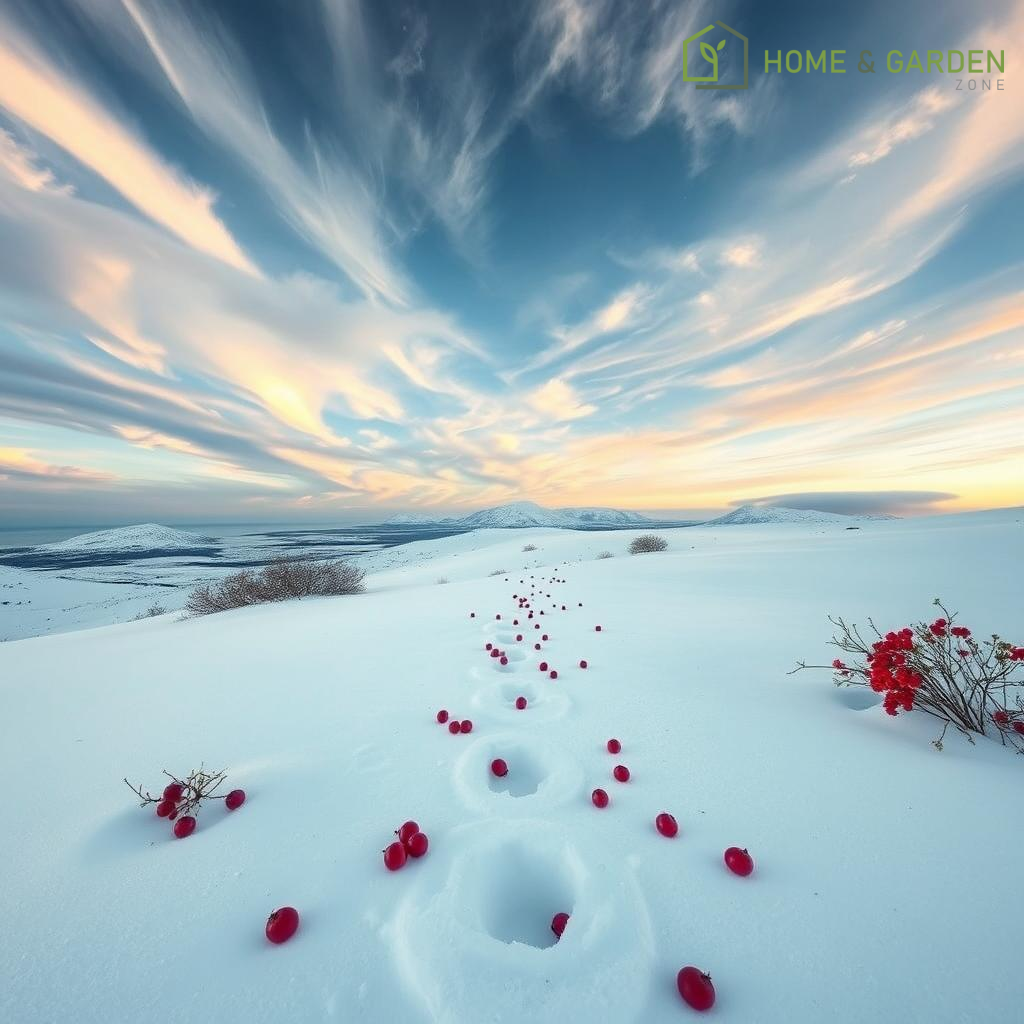
Equally compelling, and perhaps even more exotic for children of the era, was the study of Lapland. This vast, often snow-laden expanse stretching across northern Fennoscandia presented a vivid contrast to familiar landscapes. Lessons about Lapland introduced students to the indigenous Sámi people, their unique reindeer herding traditions, and a distinct way of life shaped by the Arctic environment. It was an early foray into cultural geography, illustrating human adaptability and diversity. Within this curriculum, the lingonberry emerges as a particularly poignant symbol. Not merely a fruit, the lingonberry (Vaccinium vitis-idaea), with its tart flavor and resilience in harsh climates, represented sustenance, tradition, and the intrinsic connection between people and their environment in the Arctic. Its mention likely painted a sensory picture, grounding the abstract concept of a distant land in tangible, edible reality.
Nourishing Imagination: The Lingering Impact of Early Lessons
The threads connecting clouds, Lapland, and lingonberries may seem tenuous at first glance. However, when viewed through the lens of childhood development and educational philosophy, their synergy becomes clear. These were subjects designed to broaden horizons, to cultivate an understanding of both the immediate natural world and the diverse human experience far beyond one's immediate surroundings. They encouraged a sense of wonder, an early appreciation for ecology, and a foundational respect for different cultures. Such early encouragement, particularly when subjects sparked genuine fascination, often lays the groundwork for lifelong learning, fostering analytical skills and nurturing a rich inner world—a tapestry of "dreams" woven from factual lessons and imaginative exploration.
Summary
The seemingly unusual inclusion of clouds and Lapland in mid-20th-century primary education curriculum reflects a subtle yet powerful pedagogical approach. These subjects, from the observable science of meteorology to the cultural geography of the Arctic exemplified by the Sámi and their lingonberries, served to expand children's perspectives. They fostered observational skills, cultural awareness, and an enduring sense of wonder, demonstrating how unconventional lessons can profoundly shape an individual's imagination and worldview.
Resources
- The National Archives (UK) / U.S. National Archives: Educational curriculum records from the 1950s-1960s often provide insights into historical teaching practices and subject matter.
- Sámi Cultural Centre Sajos (Finland): A key resource for information on Sámi culture, traditions, and the significance of their environment, including local flora.
- Royal Meteorological Society (UK) / American Meteorological Society (USA): Historical articles and educational resources on the development of meteorological studies and public understanding of weather phenomena.
Details
Author




Latest articles





 }})
You can now watch HBO Max for $10
The Unlikely Curriculum: Geography and Meteorology in Mid-Century Classrooms
In an era often remembered for its focus on foundational skills, the inclusion of subjects like detailed cloud observation and the remote region of Lapland in late 1950s and early 1960s grade school curricula might appear anachronistic. Yet, these seemingly disparate topics served a vital, often overlooked, purpose: to cultivate curiosity and foster a nascent global awareness in young minds. Far from being mere academic footnotes, these lessons offered windows into vast natural phenomena and distant cultures, igniting an imaginative spark that transcended the confines of the classroom.
Celestial Canvas: The Enduring Fascination with Clouds
For a generation of young learners, the sky became a dynamic textbook. Basic meteorology, with its introduction to different cloud formations—cumulus, stratus, cirrus, nimbus—was not just about weather prediction; it was an exercise in observation and pattern recognition. A "cloudspotter" was born, not out of a formal vocational track, but from an innate human desire to understand the world above. This simple act of looking up, identifying, and interpreting the ever-changing celestial canvas provided a foundational understanding of atmospheric science, subtly encouraging scientific inquiry and an appreciation for nature's subtle complexities. The accessible nature of the subject meant that learning continued long after the school bell, transforming everyday skies into an engaging visual lesson.
Arctic Dreams: Lapland's Mystique and Material Culture
Equally compelling, and perhaps even more exotic for children of the era, was the study of Lapland. This vast, often snow-laden expanse stretching across northern Fennoscandia presented a vivid contrast to familiar landscapes. Lessons about Lapland introduced students to the indigenous Sámi people, their unique reindeer herding traditions, and a distinct way of life shaped by the Arctic environment. It was an early foray into cultural geography, illustrating human adaptability and diversity. Within this curriculum, the lingonberry emerges as a particularly poignant symbol. Not merely a fruit, the lingonberry (Vaccinium vitis-idaea), with its tart flavor and resilience in harsh climates, represented sustenance, tradition, and the intrinsic connection between people and their environment in the Arctic. Its mention likely painted a sensory picture, grounding the abstract concept of a distant land in tangible, edible reality.
Nourishing Imagination: The Lingering Impact of Early Lessons
The threads connecting clouds, Lapland, and lingonberries may seem tenuous at first glance. However, when viewed through the lens of childhood development and educational philosophy, their synergy becomes clear. These were subjects designed to broaden horizons, to cultivate an understanding of both the immediate natural world and the diverse human experience far beyond one's immediate surroundings. They encouraged a sense of wonder, an early appreciation for ecology, and a foundational respect for different cultures. Such early encouragement, particularly when subjects sparked genuine fascination, often lays the groundwork for lifelong learning, fostering analytical skills and nurturing a rich inner world—a tapestry of "dreams" woven from factual lessons and imaginative exploration.
Summary
The seemingly unusual inclusion of clouds and Lapland in mid-20th-century primary education curriculum reflects a subtle yet powerful pedagogical approach. These subjects, from the observable science of meteorology to the cultural geography of the Arctic exemplified by the Sámi and their lingonberries, served to expand children's perspectives. They fostered observational skills, cultural awareness, and an enduring sense of wonder, demonstrating how unconventional lessons can profoundly shape an individual's imagination and worldview.
Resources
- The National Archives (UK) / U.S. National Archives: Educational curriculum records from the 1950s-1960s often provide insights into historical teaching practices and subject matter.
- Sámi Cultural Centre Sajos (Finland): A key resource for information on Sámi culture, traditions, and the significance of their environment, including local flora.
- Royal Meteorological Society (UK) / American Meteorological Society (USA): Historical articles and educational resources on the development of meteorological studies and public understanding of weather phenomena.
Latest articles
You can now watch HBO Max for $10
Similar posts

This is a page that only logged-in people can visit. Don't you feel special? Try clicking on a button below to do some things you can't do when you're logged out.
Example modal
At your leisure, please peruse this excerpt from a whale of a tale.
Chapter 1: Loomings.
Call me Ishmael. Some years ago—never mind how long precisely—having little or no money in my purse, and nothing particular to interest me on shore, I thought I would sail about a little and see the watery part of the world. It is a way I have of driving off the spleen and regulating the circulation. Whenever I find myself growing grim about the mouth; whenever it is a damp, drizzly November in my soul; whenever I find myself involuntarily pausing before coffin warehouses, and bringing up the rear of every funeral I meet; and especially whenever my hypos get such an upper hand of me, that it requires a strong moral principle to prevent me from deliberately stepping into the street, and methodically knocking people's hats off—then, I account it high time to get to sea as soon as I can. This is my substitute for pistol and ball. With a philosophical flourish Cato throws himself upon his sword; I quietly take to the ship. There is nothing surprising in this. If they but knew it, almost all men in their degree, some time or other, cherish very nearly the same feelings towards the ocean with me.
Comment